Plant Overview
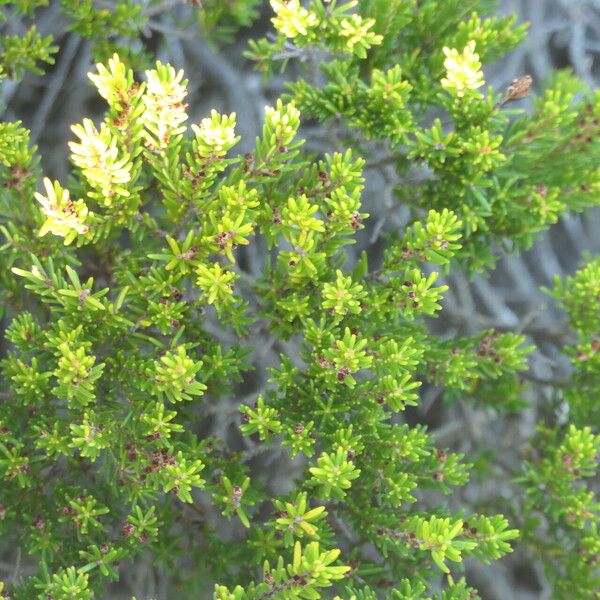
Known as the Tight-flowered Heath, Erica coarctata is a resilient beauty hailing from the rugged Cape Floristic Region of South Africa. This hardy shrub belongs to the fynbos biome, a unique ecosystem where plants have adapted to thrive in nutrient-poor soil and survive periodic wildfires. It is cherished by enthusiasts for its ability to transform rocky landscapes into a dense tapestry of delicate, crowded textures.
🔍 How to Identify
- 🌿 Needle-like Foliage: The leaves are tiny, stiff, and needle-like, growing in tight whorls along the stems. This shape helps the plant conserve water in windy or sunny environments.
- 🌸 Crowded Blooms: The flowers are small, tubular, or urn-shaped, typically appearing in shades of white, cream, or pale pink. They are "coarctate," meaning they are squeezed tightly together at the tips of the branches.
- 📏 Compact Growth: It maintains a low, mounding, or upright shrubby habit, rarely becoming leggy if it receives enough sunlight.
🏡 In Your Garden
- 🧪 The Acid Test: This plant is an "ericaceous" species, meaning it strictly requires acidic soil. In alkaline or lime-heavy gardens, it will suffer from iron deficiency, causing its vibrant green needles to turn a sickly yellow.
- 💧 Refined Roots: It possesses a very fine, fibrous root system that is sensitive to disturbance. It is best to plant it in its "forever home" immediately, as it may go into shock if transplanted later.
- ☀️ Sun Seeker: To produce those iconic crowded flower clusters, it needs plenty of direct sunlight. In the shade, the plant becomes sparse and loses its signature compact charm.
⚠️ Safety & Toxicity
- ✅ Non-Toxic: Erica coarctata is generally considered safe and non-toxic for humans, cats, and dogs.
- 🌵 Mechanical Irritation: While not poisonous, the dried stems and stiff, needle-like leaves can be quite scratchy. It’s best to wear gloves when pruning to avoid minor skin irritation.
✨ Fun Fact
The specific epithet coarctata is derived from the Latin word for "compressed" or "crowded." It was named this because the flower clusters look as if they are all trying to occupy the same tiny space at the end of the stem!

Detailed Care Instructions

Place in a bright room that is sun drenched almost all day. Or directly in a south-facing window.

Some plants require more regular watering than others, which should be done every few days. It's critical to maintain the soil moist all of the time. The water requirements of the same plant placed in pots with varying sizes will differ. Because the water in the smaller pot evaporates faster than the water in the larger pot, it will require more watering. Regardless of pot size, the surface should constantly be maintained moist.








