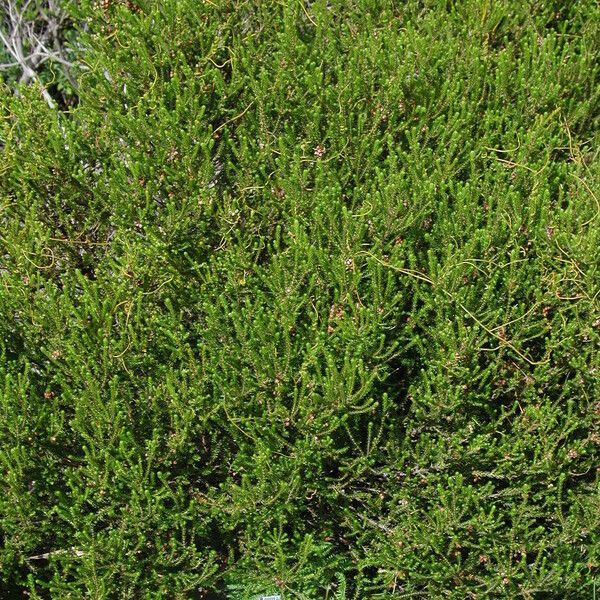
Plant Overview
Often called the Snake-Heath, this South African beauty is a resilient gem from the Cape Floristic Region. It looks like a miniature, needle-leaved forest topped with delicate, pearly bells that seem to drip from the stems. While it may look fragile, it is a product of the rugged Fynbos biome, evolved to thrive in sandy soils and withstand the salty coastal winds of the Western Cape.
🔍 How to Identify
- 🌿 Folliage: Features tiny, needle-like leaves (ericoid) that are tightly packed along the stems, giving the plant a soft, feathery appearance even when not in bloom.
- 🔔 Flowers: Tiny, tubular, or urn-shaped flowers that are typically white or pale pink. They cluster densely at the ends of branches, often resembling the scales of a snake—hence the common name.
- Growth Habit:** A low-growing, woody shrub that usually stays under two feet tall, making it an excellent choice for ground cover or rock gardens.
🏡 In Your Garden
- 🧪 Soil Nuance: Like most members of the Heath family, this plant is an "acid-lover." It requires acidic, low-nutrient soil. It will struggle or turn yellow in alkaline soils because it cannot properly absorb iron.
- 💧 Drainage is Key: It possesses a fine, sensitive root system that hates "wet feet." Ensure your potting mix is sandy and well-draining; once established, it is remarkably drought-tolerant.
- ✂️ Pruning: To keep it from becoming leggy or woody, give it a light "haircut" immediately after the flowering season ends. This mimics the natural grazing it would experience in the wild.
⚠️ Safety & Toxicity
- ✅ Status: Non-toxic and generally safe.
- 🐾 Details: Unlike its cousins the Rhododendrons, Erica ericoides is not known to be poisonous to cats, dogs, or horses. It is a "friendly" addition to a pet-owner's garden, though its needle-like leaves aren't particularly tasty for grazing.
✨ Fun Fact
In its native South African habitat, this plant is part of a "fire-driven" ecosystem. Many Erica species have evolved to either resprout from a woody base after a wildfire or have seeds that only germinate after being "cracked" open by the intense heat and chemicals in the smoke!

Detailed Care Instructions
To grow Erica Ericoides plant, also known as winter heather, follow these steps:
- Select a suitable location: Erica Ericoides prefers full sun to partial shade and well-draining, acidic soil.
- Planting: Choose a location with good air circulation and plant the Erica Ericoides in early spring, after the last frost. Dig a hole slightly larger than the root ball and place the plant in the hole, ensuring the top of the root ball is level with the soil surface. Water well after planting.
- Watering: Keep the soil consistently moist, especially during dry periods. Avoid overwatering as this can lead to root rot.
- Fertilizing: Fertilize Erica Ericoides with a balanced, slow-release fertilizer in the spring, following package instructions.
- Pruning: Prune the plant after flowering to encourage bushy growth and remove any dead or leggy branches.
- Mulching: Apply a layer of mulch around the base of the plant to help conserve moisture and suppress weeds.
- Winter care: Erica Ericoides is cold hardy but may require protection during harsh winter temperatures. Mulch around the base of the plant to insulate the roots.
By following these tips, you can successfully grow Erica Ericoides plant in your garden.

Place in a bright room that is sun drenched almost all day. Or directly in a south-facing window.

To water Erica Ericoides, it is important to provide consistent moisture to the soil without allowing it to become waterlogged. This plant prefers well-draining soil, so it is important to water it thoroughly when the top inch of soil feels dry to the touch. Watering from the base of the plant is recommended to avoid getting water on the foliage, which can lead to fungal diseases. It is also best to water in the morning to allow any excess moisture to evaporate during the day. Adjust the frequency of watering based on the plant's specific needs and environmental conditions.
To fertilize Erica Ericoides plants, use a balanced, water-soluble fertilizer with an N-P-K ratio of 10-10-10. Dilute the fertilizer according to package instructions and apply it to the soil around the base of the plant. Fertilize the plant once in early spring and again in mid-summer to promote healthy growth and blooming. Avoid over-fertilizing, as this can cause harm to the plant. Water the plant after fertilizing to help the nutrients reach the roots.
Erica ericoides is a plant that thrives in well-draining acidic soil. It prefers a soil mix that is rich in organic matter, such as peat moss or compost, to retain moisture while also preventing waterlogging. A sandy loam soil is also ideal for this plant as it promotes good drainage and prevents the roots from becoming waterlogged. Adding perlite or sand to the soil mix can also help improve drainage and aeration for the plant. Additionally, incorporating a slow-release fertilizer specifically formulated for acid-loving plants can provide the necessary nutrients for healthy growth and blooming.
To propagate Erica Ericoides, you can take softwood cuttings in the spring or early summer. Choose healthy, non-flowering stems and cut them to around 4-6 inches in length. Remove the lower leaves to expose the nodes where roots will form.
Dip the cut end of the stem in a rooting hormone powder to promote root development. Plant the cutting in a well-draining potting mix, making sure to keep the soil moist but not waterlogged. Place the pot in a warm, bright location, but out of direct sunlight.
Keep the soil consistently moist and mist the cutting regularly to maintain humidity. After a few weeks, you should start to see roots forming. Once the cutting has established a healthy root system, you can transplant it into a larger pot or into the garden.
It's important to provide consistent care and monitor the plant for any signs of stress or disease during the propagation process. With proper care, your Erica Ericoides cutting should grow into a healthy, mature plant.








