Plant Overview
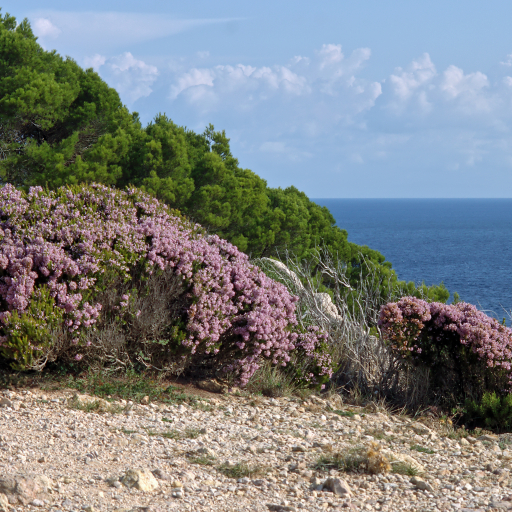
Known as the Multi-flowered Heath, this Mediterranean gem is a beacon of color when the rest of the garden begins to fade. While most plants prepare for winter dormancy, Erica multiflora bursts into a cloud of pink and purple bells, earning it a reputation as a "winter warrior." It has long been a staple of coastal landscapes, where it thrives against salty winds and rocky terrains, painting the hillsides in vibrant hues during the coldest months.
🔍 How to Identify
- 🌸 The Blooms: Dainty, bell-shaped flowers ranging from pale pink to deep rose-purple, appearing in incredibly dense clusters along the upper branches.
- 🍃 The Foliage: Small, needle-like dark green leaves that grow in tight "whorls" (circles) around the stems, staying green all year round.
- 🐜 The Stamens: If you look closely, the dark brown or blackish anthers (pollen-bearing parts) stick out noticeably beyond the flower petals, giving the blooms a delicate, "fuzzy" appearance.
🏡 In Your Garden
- 🪨 The Limestone Exception: Unlike many of its "acid-loving" heather cousins, this species is remarkably tolerant of alkaline (calcareous) soils. This makes it a rare and valuable choice for gardeners with lime-rich soil who usually struggle to grow Heathers.
- 🦋 A Winter Feast: Because it blooms from late autumn through winter, it serves as a vital "emergency" nectar source for honeybees and pollinators that emerge on unseasonably warm days when other food is scarce.
- ✂️ Pruning Nuance: To keep it from becoming "leggy" or woody, it’s best to give it a light haircut immediately after the flowers fade. However, avoid cutting back into old, brown wood, as it may struggle to regrow from the base.
⚠️ Safety & Toxicity
- ✅ Non-Toxic Status: Erica multiflora is generally considered safe and non-toxic for humans, dogs, and cats. It is a very "friendly" garden inhabitant.
- 🧤 Physical Texture: While not poisonous, the fine, needle-like leaves and woody stems can be slightly scratchy. If you have sensitive skin, wearing gloves during a heavy pruning session is a good idea to avoid minor irritation.
✨ Fun Fact
Erica multiflora is "ambophilous"—a fancy scientific way of saying it has two ways to win! It can be pollinated by both the wind and by insects, ensuring it can still produce seeds even if it’s too cold for the bees to fly.

Detailed Care Instructions
| Humidity | Dry |
| Lighting | Full Sun |
| Difficulty | Easy |
| Hibernation | Cold Period |
To grow Erica Multiflora plant, here are some steps you can follow:
- Climate and location: Erica Multiflora is a South African native plant that thrives in Mediterranean climates. It requires full sun and well-draining soil. Ensure that the temperature is not below freezing.
- Soil preparation: Use a well-draining acidic soil with a pH between 4.5 to 6.5. If necessary, amend the soil with organic matter such as peat moss or compost to improve drainage.
- Planting: Dig a hole in the prepared soil, slightly larger than the rootball of the Erica Multiflora plant. Place the plant in the hole, making sure it is level with the surrounding soil. Backfill the hole with soil, gently firming it around the roots.
- Watering: Erica Multiflora plants prefer moderate moisture, so water the plant regularly. Avoid over-watering, as it can lead to root rot. Ensure that the soil remains evenly moist but not waterlogged.
- Mulching: Apply a layer of organic mulch, such as wood chips or pine needles, around the base of the plant. Mulching helps retain moisture, suppress weeds, and insulate the roots.
- Fertilization: Erica Multiflora plants are generally not heavy feeders. However, you can apply a slow-release acidic fertilizer once or twice a year, following the manufacturer's instructions. Avoid using high-nitrogen fertilizers, as they can promote vegetative growth at the expense of flowering.
- Pruning: After the plant finishes flowering, you can lightly prune it to maintain a compact shape and encourage new growth. Remove any dead or damaged branches.
- Winter care: In colder regions, protect the plant from freezing temperatures by covering it with a frost cloth or moving it indoors to a cool, well-lit area. Avoid placing it near heat sources.
- Pest and disease control: Erica Multiflora plants are generally resistant to most pests and diseases. However, you should monitor for common issues like aphids, spider mites, or root rot. Treat any problems promptly with appropriate insecticides or fungicides.
By following these steps, you can successfully grow Erica Multiflora plants and enjoy their beautiful flowers.

Place in a bright room that is sun drenched almost all day. Or directly in a south-facing window.

To water this plant, it is important to ensure that the soil stays moist but not waterlogged. Watering should be done a few times per week, depending on the climate and temperature in the area. Before watering, it is important to check the top layer of soil to see if it feels dry or moist. If it feels dry, it is time to water the plant. It is best to water early in the morning or later in the evening to avoid evaporation. When watering, ensure that the water is applied evenly around the base of the plant, avoiding getting water on the leaves. Overwatering can lead to root rot, so care must be taken to avoid this. Additionally, it is important to use a well-draining soil mix to prevent water from sitting in the pot and causing issues.
When fertilizing this plant, it is important to use a slow-release fertilizer with a balanced ratio of nitrogen, phosphorus, and potassium. Apply the fertilizer in small amounts twice a year, once in early spring before new growth appears and again in late summer after flowering has ended. Avoid over-fertilizing as it can lead to excessive growth and weak stems. Water the plant thoroughly after fertilizing to prevent fertilizer burn and ensure proper absorption.
The best soil to use for this plant is a well-draining, acidic soil with a pH level ranging from 4.5 to 5.5. It should have a high content of organic matter and be rich in nutrients such as iron, magnesium, and sulfur. Avoid using soil mixes with high levels of lime or alkaline materials. Additionally, adding peat moss or pine needles can help maintain adequate acidity levels.
To propagate this plant, take a cutting from the stem of a mature plant. The cutting should be about 4-6 inches long and have a few sets of leaves. Strip the leaves off the lower half of the stem, and dip the cut end into rooting hormone. Plant the cutting into a well-draining potting mix, and water thoroughly. Place the pot in a warm, bright area, and keep the soil consistently moist. After a few weeks, the cutting should start to grow new roots and shoots. Once the plant has established a strong root system, it can be transplanted into a larger pot or outside in the garden. Care for the plant as usual, ensuring it receives adequate water and sunlight.








