Plant Overview
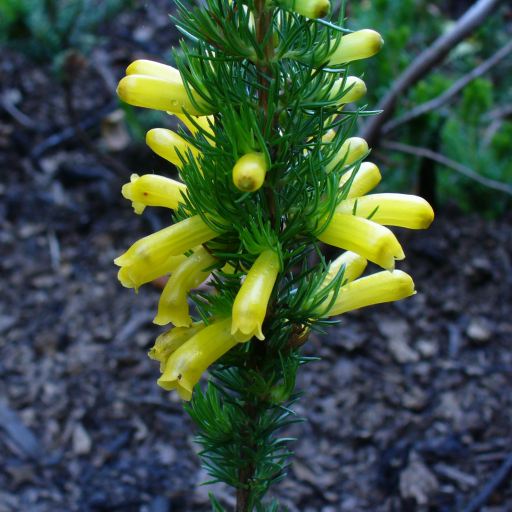
Often called the "Mealie-heath," this striking South African native gets its nickname from the uncanny resemblance its flower spikes have to "mealies" (ears of corn). Standing as a golden sentinel in the coastal fynbos, it is celebrated for its architectural shape and vibrant, waxy blooms that look almost too perfect to be real.
🔍 How to Identify
- 🌼 The Flowers: Densely packed, tubular yellow blossoms that cluster tightly at the ends of branches, creating a "corn cob" effect.
- 🌿 The Foliage: Fine, needle-like green leaves that grow in crowded circles (whorls) around the stems, giving the plant a soft, textured look.
- 📏 Growth Habit: A stiffly upright, evergreen shrub that typically reaches about 3 feet (1 meter) in height, maintaining a neat, vertical form.
🏡 In Your Garden
- 🌬️ Coastal Champion: This plant is naturally adapted to damp, sandy coastal flats, making it exceptionally resistant to salt spray and buffeting sea winds.
- 🧪 Acidic Needs: It is a "calcifuge," meaning it will struggle in alkaline soil. It requires acidic, well-draining earth and mimics its wild habitat best when tucked into rockeries or fynbos-style gardens.
- 🚫 Root Sensitivity: Like many members of the Ericaceae family, it has a delicate "fine-hair" root system. It hates being transplanted once established and reacts poorly to heavy fertilizers—stick to organic mulch instead.
⚠️ Safety & Toxicity
- ✅ General Safety: Erica patersonii is considered non-toxic to humans and common household pets like cats and dogs.
- 🧤 Garden Comfort: While not poisonous, the fine foliage can be slightly prickly to the touch for those with very sensitive skin, though it lacks true thorns or irritants.
✨ Fun Fact
The Mealie-heath is a favorite "fast-food stop" for the Cape Sunbird. The bird's long, curved beak is perfectly evolved to fit into the tubular flowers to drink nectar, while the plant conveniently dusts the bird's forehead with pollen to carry to the next bloom.

Detailed Care Instructions








