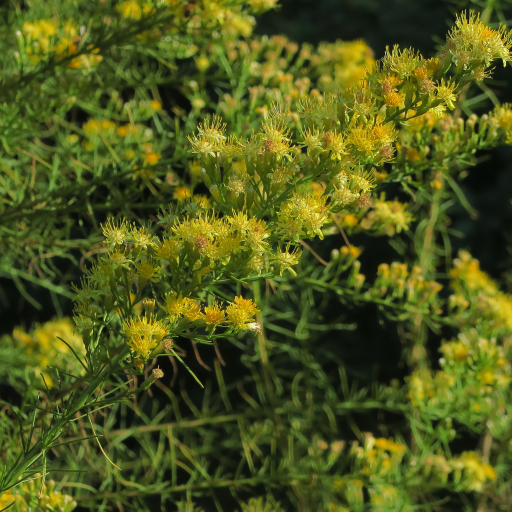
Plant Overview
Commonly known as Palmer’s Goldenbush, this hardy evergreen shrub is a staple of the coastal sage scrub and chaparral landscapes of Southern California and Baja California. Named after the prolific 19th-century botanist Edward Palmer, it is often celebrated for its ability to thrive in harsh, rocky soils where other plants might wither. In late summer, when much of the landscape has turned brown, Palmer's Goldenbush lights up with a profusion of bright yellow blooms.
🔍 How to Identify
- 🌿 The Foliage: Look for narrow, almost needle-like leaves that are bright green and slightly resinous or "sticky" to the touch.
- 🌼 The Flowers: Small, golden-yellow flower heads appear in dense, flat-topped clusters at the ends of the branches, resembling miniature sunbursts.
- 🎋 Growth Habit: It typically forms a rounded, bushy mound that reaches between 2 to 4 feet in height, with woody stems that become more textured as the plant ages.
🏡 In Your Garden
- ☀️ Drought Specialist: This plant is a "fire and forget" addition to water-wise gardens; it has evolved to survive long periods without rain and actually prefers soil that is poor in nutrients.
- 🦋 The Late-Season Diner: Because it blooms in late summer and autumn, it serves as a critical "nectar bridge" for butterflies and bees when most other spring-blooming wildflowers have disappeared.
- ✂️ Pruning Nuance: To prevent the shrub from becoming "leggy" or woody in the center, give it a light trim after the flowers fade to encourage a tighter, more attractive shape for the following year.
⚠️ Safety & Toxicity
- 🟢 Status: Generally non-toxic and safe for residential landscapes.
- 🤧 Allergy Note: Like many members of the Aster family, its pollen can be a trigger for seasonal hay fever sufferers during its peak blooming period in the fall.
- 🐾 Pet Safety: There are no documented cases of major toxicity toward cats or dogs, making it a safe choice for pet-friendly yards.
✨ Fun Fact
Palmer’s Goldenbush is often called a "pioneer species." This means it is one of the first plants to move back into an area after a wildfire or land disturbance, helping to stabilize the soil and pave the way for other plants to return.

Detailed Care Instructions
To successfully grow Ericameria palmeri (known as Palmer’s goldenbush or Palmer’s rubber rabbitbrush), you can follow these steps:
- Climate: Palmer’s goldenbush is native to arid regions of southwestern North America, so it prefers a dry, desert-like climate. It tolerates full sun but can also handle some shade.
- Soil: This plant grows well in sandy, well-draining soil. It is adapted to poor soil conditions and can tolerate alkaline soils. Prior to planting, improve the soil drainage by adding compost or sand.
- Watering: Ericameria palmeri is drought-tolerant once established but requires regular watering until it develops a strong root system. Water deeply but infrequently, allowing the soil to dry before the next watering to prevent root rot.
- Planting: Choose a suitable location where the plant can receive enough sunlight. Dig a hole larger than the root ball and place the plant in the hole. Backfill the hole with soil, gently firming it around the base of the plant. Water thoroughly after planting.
- Propagation: Palmer’s goldenbush can be grown from seeds or cuttings. If starting from seeds, plant them in well-draining soil and maintain moisture until germination. If using cuttings, take 4- to 6-inch long stem cuttings from a healthy plant and dip the cut end in rooting hormone. Plant the cuttings in a well-draining mixture of potting soil and sand, keeping them moist until they root.
- Pruning: Palmer’s goldenbush benefits from occasional pruning to maintain a compact shape. Prune in late winter or early spring before new growth emerges. Remove any dead, damaged, or overcrowded branches. Trim back about one-third of the plant's overall size to promote bushier growth.
- Fertilizer: In general, Ericameria palmeri does not require frequent fertilization. However, if your soil is nutrient-poor, you can apply a balanced slow-release fertilizer in early spring.
- Pest and disease control: This plant is typically resistant to pests and diseases. However, aphids or spider mites may occasionally infest the foliage. Use insecticidal soap or a strong stream of water to control these pests.
By following these guidelines, you can cultivate a healthy and thriving Ericameria palmeri plant. Remember to consult with local gardening experts or professionals for region-specific recommendations.

Place in a bright room that is sun drenched almost all day. Or directly in a south-facing window.

To water Ericameria palmeri, it is recommended to follow specific guidelines to ensure the plant's health and vitality. Here are some detailed instructions:
1. Assess the moisture levels: Before watering the Ericameria palmeri plant, check the soil's moisture level to determine if watering is necessary. Insert your finger about two inches into the soil near the plant's root zone. If it feels dry at that depth, it is time to water.
2. Watering frequency: Ericameria palmeri plants generally thrive in arid regions and have adapted to survive with minimal water. Therefore, it is crucial not to overwater the plant. Water the plant deeply and thoroughly but allow the soil to dry out completely before watering again. This interval typically ranges from 2 to 3 weeks in well-draining soil conditions.
3. Watering technique: When watering, aim to provide a deep soaking rather than light, frequent watering. Use a gentle flow or a soaker hose to prevent water run-off and allow the soil to absorb water slowly. Avoid overhead watering, as it may promote fungal diseases and wasteful evaporation.
4. Target the root zone: Direct the water to the root zone of the Ericameria palmeri plant, where it needs moisture the most. Avoid wetting the foliage, as it may increase the risk of pests or diseases.
5. Mulching: Applying a layer of organic mulch around the base of the plant can help retain moisture and regulate soil temperature. This is particularly beneficial during hot and dry seasons. Apply 2-3 inches of mulch, being careful not to let it touch the plant's stem.
6. Seasonal adjustments: Adjust the watering schedule according to the plant's changing needs during different seasons. During the active growing season in spring and summer, you may need to water more frequently. In fall and winter, reduce the watering frequency as the plant enters its dormant phase.
7. Monitor the plant's response: Regularly observe the Ericameria palmeri plant for signs of overwatering or underwatering. If the leaves appear wilted or the plant shows signs of root rot, reduce the watering frequency. Conversely, if the leaves are yellowing or the plant exhibits signs of drought stress, increase the watering frequency slightly.
Remember, watering requirements may vary depending on climate, soil type, and plant size. It is essential to adapt these guidelines to your unique growing conditions and always prioritize the plant's well-being.
To fertilize the Ericameria Palmeri plant, follow these instructions:
- Choose a balanced, slow-release fertilizer specifically formulated for use with native plants or desert plants. Look for a product with an NPK ratio close to 10-10-10 or 14-14-14.
- Start fertilizing in early spring, just as new growth begins. This will provide a nutrient boost for the plant to support healthy development.
- Measure the recommended amount of fertilizer according to the instructions provided on the packaging. Take care not to exceed the recommended dosage, as over-fertilizing can harm the plant.
- Sprinkle the fertilizer evenly around the base of the plant, avoiding direct contact with the stems or foliage. Keep the fertilizer at least 6 inches away from the plant to prevent potential burning.
- Gently rake the soil or mulch around the plant to incorporate the fertilizer and mix it with the surrounding soil.
- Water the plant thoroughly after applying the fertilizer to help dissolve and distribute the nutrients into the root zone. This will also prevent any potential fertilizer burn.
- Repeat the fertilization process annually in early spring, following the same steps. However, if your plant shows signs of nutrient deficiency or slow growth, you may fertilize it again in late summer or early fall for an additional boost.
- Regularly monitor the plant for any signs of over-fertilization, such as leaf burn or yellowing. If you notice any adverse effects, flush the soil with water to help leach out excess nutrients.
Remember, it is important to always read and follow the specific instructions provided on the fertilizer packaging, as different products may have varying guidelines for application. Additionally, consider conducting a soil test to determine if any specific nutrient deficiencies need to be addressed to provide the best care for your Ericameria Palmeri plant.
The Ericameria Palmeri plant thrives best in a specific soil type that provides optimal growing conditions for its unique needs. It requires well-drained soil that is sandy or gravelly in texture. This specific soil composition, in combination with adequate drainage, ensures that water does not accumulate around the roots, reducing the risk of root rot or other moisture-related issues.
The ideal soil for the Ericameria Palmeri plant is moderately fertile, with sufficient organic matter content to support healthy growth. However, it is important to note that excessive organic matter can hinder proper drainage, which is crucial for this plant's vitality. Therefore, a balanced amount of organic matter should be integrated into the soil to provide the necessary nutrients without compromising drainage.
In terms of pH levels, the Ericameria Palmeri plant prefers slightly acidic to neutral soil, with a pH range between 5.5 and 7.0. This pH range ensures that the plant can effectively absorb nutrients from the soil, promoting overall growth and vitality.
Additionally, it is essential to consider the climatic conditions of the plant's native habitat when choosing the appropriate soil type. Ericameria Palmeri plants predominantly grow in arid or semi-arid regions, where they have adapted to survive in low-water environments. Therefore, the soil should not retain excessive moisture, as this can lead to root rot or other fungal diseases.
To summarize, the best soil for the Ericameria Palmeri plant is well-drained, sandy or gravelly in texture, moderately fertile with a balanced amount of organic matter, and slightly acidic to neutral in terms of pH levels. Providing these optimal soil conditions will help ensure the healthy growth and development of the Ericameria Palmeri plant.
Ericameria palmeri is a perennial plant that can be propagated through several methods. Here are the details on how to propagate this plant:
- Seeds: Collect mature seeds from the plant during the fall season when the seedheads have dried up. Gently shake the plant to release the seeds into a container. Clean the seeds by removing any debris or plant material. Store the seeds in a cool, dry place until you're ready to propagate.
To propagate using seeds:
- Fill a seed tray or small pots with a well-draining soil mix. You can use a combination of sand, perlite, and peat moss.
- Moisten the soil lightly, but avoid oversaturating it.
- Sprinkle the seeds evenly across the surface of the soil and gently press them in, but do not bury them too deeply.
- Cover the tray or pots with a plastic cover or place them in a plastic bag to create a humid environment.
- Place the seeds in an area with indirect light and maintain a temperature between 60-70°F (15-21°C).
- Keep the soil slightly moist until germination, which usually takes around 2-4 weeks.
- Once the seedlings have grown a few inches tall and have developed a few sets of true leaves, they can be transplanted into individual pots or directly into the garden.
- Division: This method involves separating an established plant into multiple sections to create new plants. Division is best done during the early spring before new growth begins.
To propagate through division:
- Dig up the mature Ericameria palmeri plant carefully, ensuring you do not damage the roots.
- Gently separate the plant into smaller sections, ensuring each section has a sufficient amount of roots and foliage.
- Transplant the divided sections into individual pots or directly into the desired location in the garden.
- Water the newly divided sections thoroughly and provide appropriate care to encourage root growth and adaptation.
- Softwood cuttings: This propagation method involves taking cuttings from young, green stems of the plant during the spring or early summer.
To propagate using softwood cuttings:
- Select healthy, non-flowering stems that are about 4-6 inches long.
- Trim the cutting just below a leaf node and remove the lower leaves from the stem, leaving only a few on the top.
- Dip the base of the cutting in a rooting hormone powder to encourage root development.
- Insert the cutting into a container filled with a moistened, well-draining soil mix or a mixture of perlite and peat moss.
- Place the container in a warm, bright location with indirect sunlight.
- Mist the cutting regularly to maintain humidity around the leaves.
- After a few weeks, the cutting should develop roots. You can check the rooting progress by gently tugging the cutting; if you feel resistance, roots have likely formed.
- Once the roots have developed, transplant the cutting into an individual pot or directly into the garden. Continue providing appropriate care for the newly propagated plant.
Remember, Ericameria palmeri propagation may require specific conditions and care. It is essential to provide the right amount of light, water, and temperature to ensure the success of the propagation process.








