Plant Overview
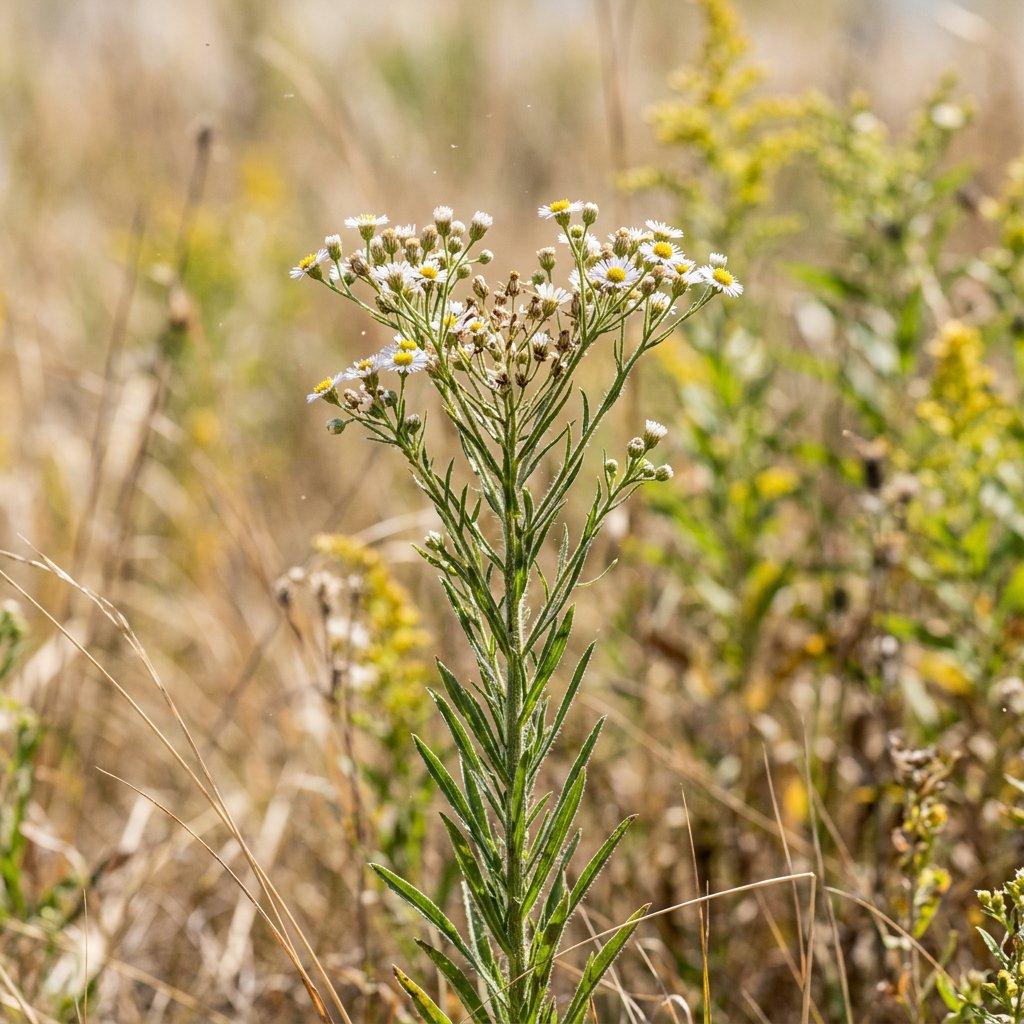
Often called Horseweed or Mare's-tail, Erigeron canadensis is a hardy pioneer plant that seems to appear overnight in gardens and sidewalk cracks. While many modern gardeners view it as a stubborn weed, it was historically valued by Indigenous North Americans for its astringent properties, earning it the nickname "Bloodstanch." Its tall, straight silhouette is a common sight across temperate regions worldwide.
🔍 How to Identify
- 📏 The Stalk: It features a single, central, hairy stem that can shoot up remarkably fast, reaching heights of 3 to 7 feet if left unchecked.
- 🍃 Leaf Arrangement: The narrow, lance-shaped leaves are crowded along the stem in an alternate pattern, giving the plant a somewhat "shaggy" or fuzzy appearance from a distance.
- 🌼 Tiny Blooms: Unlike its showy daisy cousins, this plant produces massive branched clusters of tiny, cream-colored flower heads that are only about 1/8 inch wide.
🏡 In Your Garden
- 🌱 Disturbed Soil Specialist: Horseweed loves "new" dirt. If you’ve recently tilled a bed or cleared a patch of land, expect this plant to be the first to arrive to stabilize the soil.
- 🛡️ Herbicide Hero: This plant is famous in the botanical world for its toughness; it was one of the first weeds to develop a widespread resistance to common chemical weed killers, making manual pulling the most effective way to manage it.
⚠️ Safety & Toxicity
- 🌿 Skin Sensitivity: While not considered a "poisonous" plant, the stiff hairs on the stem and the oils within the leaves can cause mild skin irritation or "contact dermatitis" in sensitive individuals.
- 🐾 Pet Safety: It is generally non-toxic to household pets, though its bitter taste usually prevents dogs or cats from wanting to munch on it.
✨ Fun Fact
🌬️ A Seed Machine: A single, healthy Horseweed plant is capable of producing over 200,000 seeds! Each seed is attached to a tiny, white, feathery "parachute" that allows it to catch the wind and travel miles away to colonize new territory.

Detailed Care Instructions
| Color | White To Yellow |
| Soil Ph | Acid, Neutral, Alkaline |
| Humidity | Dry |
| Invasive | Weed |
| Lighting | Part Sun |
| Toxicity | Poisonous |
| Soil Type | Well-Drained |
| Bloom Time | Spring, Summer, Fall |
| Difficulty | Easy |
| Plant Type | Perennial, Herbaceous |
| Hibernation | Cold Period |
| Mature Size | 0.5-7 Ft. |
| Native Area | Mexico |
| Sun Exposure | Full Sun, Partial Shade |
| Hardiness Zones | 6-9 |
To grow the Erigeron Canadensis plant, commonly known as the Canada fleabane or horseweed, you can follow the steps below:
- Climate and Soil: Canada fleabane thrives in moist, well-draining soil and prefers full sun to partial shade. It is a hardy perennial that can tolerate a wide range of conditions but grows best in USDA hardiness zones 4-9.
- Seeds or Transplants: Erigeron Canadensis can be grown from seeds or transplants. Seeds are readily available online or from local nurseries. If using transplants, purchase healthy specimens from a reputable nursery.
- Seed Starting: If starting from seeds, sow them indoors about 6-8 weeks before the last frost date for your region. Sow the seeds in seed trays or small pots filled with seed-starting mix. Lightly cover the seeds with a thin layer of soil and keep them consistently moist until they germinate.
- Transplanting: Once the seedlings have grown to about 2-3 inches tall, they can be transplanted outdoors. Choose a location in your garden with the right amount of sunlight and well-draining soil. Space the plants about 12-18 inches apart to allow for proper growth.
- Outdoor Care: Water the transplanted seedlings regularly, keeping the soil evenly moist but not waterlogged. Weeding is particularly important during the early stages of growth to prevent competition for nutrients. Mulching around the plants can help suppress weeds and retain moisture.
- Pruning and Maintenance: As the Erigeron Canadensis grows, it may benefit from occasional pruning to encourage bushier growth and remove any dead or damaged foliage. Pinching back the plant in early summer can also promote more compact growth and more flowering.
- Division: Over time, Canada fleabane plants can become overcrowded. To maintain their vigor, divide the clumps every 2-3 years. Dig up the clump in early spring or late fall, separate the plant into smaller sections, and replant them at appropriate distances.
- Pest and Disease Control: While relatively pest-resistant, keep an eye out for aphids, spider mites, or caterpillars. Treat any infestations with organic insecticides or by manually removing them. Proper plant spacing, good air circulation, and avoiding overhead watering can help prevent diseases such as powdery mildew.
By following these guidelines and providing your Erigeron Canadensis plant with the proper care, you should be able to grow a healthy and attractive specimen in your garden.

Place in a window with dappled sun or a spot in the middle of a room. Or directly in a window facing west or east.

Erigeron Canadensis is a herbaceous perennial plant that originates from North America. Before watering the plant, it is essential to check the soil's moisture level using a moisture meter or by touching the soil's surface. If the soil is dry, then it's time to water the plant.
To water the Erigeron Canadensis, fill a watering can with lukewarm water and pour it gently at the base of the plant, avoiding the leaves and flowers. The water should saturate the soil and reach the roots without being too shallow or too deep. Watering once a week is typically sufficient, but weather conditions and the plant's growth rate can affect the frequency and amount of water needed.
It is important to note that overwatering Erigeron Canadensis can lead to root rot and other diseases. Therefore, it is best to avoid excessive watering and ensure proper drainage in the soil. Additionally, it is also advisable to water the plant in the early morning or late evening to prevent evaporation and ensure optimum absorption by the plant.
Proper watering techniques are essential to maintaining a healthy and thriving Erigeron Canadensis plant. By providing adequate moisture and attention, the plant will grow vigorously and produce beautiful flowers.
To fertilize this plant, you should apply an all-purpose fertilizer in the spring before new growth appears. Use a slow-release fertilizer with a balanced ratio, and follow the package instructions for application rates. Avoid over-fertilizing, as this can lead to excessive foliage growth at the expense of flowers. Water thoroughly after fertilizing to help distribute the nutrients throughout the soil.
It is recommended to use well-draining soil with good organic content for this particular plant. The soil pH should be slightly acidic to neutral, with a range of 6.0 to 7.0. Avoid using heavy, clay-based soils as they can retain too much moisture and suffocate the roots. A sandy loam or loamy soil mix will provide the ideal environment for the Erigeron Canadensis plant to grow and thrive. It is also important to ensure that the soil is consistently moist but not waterlogged, as overwatering can lead to root rot and other issues.
Erigeron Canadensis plant can be propagated by collecting its seeds or by dividing its roots. To collect seeds, allow the flowers to mature fully and let them dry out on the plant. Once they are fully dry, remove the seeds and store them in a cool, dry place until planting. To divide the roots, dig up the plant in early spring or fall and carefully separate the roots into smaller sections, making sure each section has a good root system and some foliage. Plant the divisions in well-draining soil and water thoroughly. Provide them with regular watering and sunlight to encourage healthy growth.
Common pests of the horseweed include Spider mites, aphids, larvae. Make a habit of checking your horseweed frequently for pests so that any infestations can be caught and managed early.








