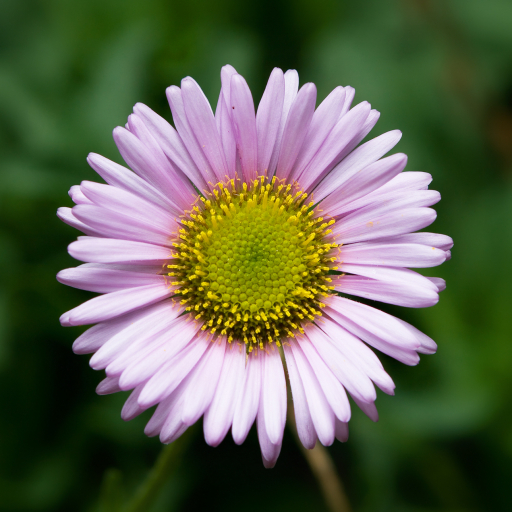
Plant Overview
Often called the Seaside Daisy or "Beach Aster," this rugged beauty is the ultimate coastal survivor. Clinging to the rocky bluffs of the Pacific Northwest, it transforms harsh, salt-sprayed cliffs into a carpet of lavender and gold. It is a favorite for those who want a "set it and forget it" plant that looks like a delicate wildflower but possesses the grit of a mountaineer.
🔍 How to Identify
- 🌸 The "Shaggy" Bloom: The flowers feature a dense fringe of narrow, thread-like petals (ray florets) in shades of lavender, pink, or white, surrounding a bright golden-yellow central disc.
- 🍃 Succulent-like Foliage: Unlike many daisies with thin leaves, the Seaside Daisy has thick, spoon-shaped, blue-green leaves that feel slightly fleshy to the touch—an adaptation to help it store water.
- 📏 Low-Profile Habit: It grows in tidy, rounded mounds that rarely exceed a foot in height, making it look like a lush cushion tucked between rocks or garden borders.
🏡 In Your Garden
- 🌊 Salt and Wind Specialist: This plant is one of the few that actually thrives in the "salt spray zone." If you live near the ocean or have a windy balcony, this is your champion.
- 🌱 Drainage is Non-Negotiable: Because it evolved on rocky cliffs, it hates "wet feet." In a garden setting, it needs gritty, fast-draining soil. It will thrive in a rock garden or a terracotta pot where the soil can breathe.
- ✂️ Deadheading Rewards: While it is a tough plant, pinching off the faded flowers will encourage it to keep pumping out new blooms from spring all the way into late summer.
⚠️ Safety & Toxicity
- ✅ Safe for All: Erigeron glaucus is generally considered non-toxic to humans, dogs, and cats.
- 🐜 Pollinator Friendly: While safe for pets, it is a high-traffic area for beneficial insects. It is a vital nectar source for coastal butterflies and native bees.
✨ Fun Fact
The name "Fleabane" comes from an old folk belief that dried bundles of these flowers could be burned or tucked into straw beds to drive away fleas. While it doesn't actually have insecticidal properties, the name has stuck for centuries!

Detailed Care Instructions
| Humidity | Normal |
| Toxicity | Poisonous |
| Difficulty | Medium |
| Hibernation | Cold Period |
| Hardiness Zones | Max 6 |
To grow Erigeron glaucus, also known as beach aster or seaside daisy, follow these steps:
- Choose a sunny location: Erigeron glaucus thrives in full sun. Select a spot in your garden that receives at least six hours of direct sunlight each day.
- Soil preparation: The plant prefers well-drained soil. If your soil is heavy or clayey, amend it by adding compost or organic matter to improve drainage.
- Planting: Dig a hole that is slightly larger than the plant's root ball. Place the Erigeron glaucus in the hole, ensuring that the top of the root ball is level with the soil surface. Space the plants about 12-18 inches apart to allow for sufficient airflow and growth.
- Watering: After planting, water the plant thoroughly to settle the soil around the roots. Maintain consistent moisture during the plant's establishment phase, but avoid overwatering, as this can cause root rot. Once established, water the plant deeply but infrequently, allowing the top inch of soil to dry out before the next watering.
- Mulching: Apply a layer of organic mulch around the base of the plant to suppress weeds and conserve soil moisture. Take care to keep the mulch away from the stems to prevent stem rot.
- Fertilization: Erigeron glaucus is not a heavy feeder. Apply a balanced, slow-release fertilizer in early spring or use a liquid fertilizer diluted to half strength every two to three months during the growing season.
- Pruning: Trim back any dead or spent flowers regularly to encourage additional blooms. The plant can also benefit from a light pruning in late winter or early spring to maintain compact growth.
- Propagation: Erigeron glaucus can be propagated through division or by taking stem cuttings. For division, lift the plant in early spring or fall, separate the clumps, and replant them. Stem cuttings can be taken in summer or early fall, dipped in rooting hormone, and planted in a well-draining medium.
- Pests and diseases: Erigeron glaucus is typically resistant to most pests and diseases. However, it can occasionally be susceptible to aphids or powdery mildew. Monitor the plant regularly and take appropriate action if any issues arise.
By following these guidelines, you can successfully grow Erigeron glaucus in your garden and enjoy its lovely flowers throughout the season.

Place in a bright room that is sun drenched almost all day. Or directly in a south-facing window.

1. Observe the soil moisture level – Before watering the plant, check the soil moisture level. Insert a finger around two inches into the soil. If it feels dry, then it needs watering.
2. Watering methods – You can water the plant by using a watering can or hose. Make sure the water flows gently and at low pressure to avoid damaging the plant.
3. Watering frequency – Erigeron Glaucus plant needs regular watering especially during the growing season. Water it once a week or more frequently if the weather is hot and dry.
4. Watering amount – The amount of water needed depends on the size of the plant and the soil type. Water until the soil is evenly moist but not waterlogged. Avoid overwatering as it can lead to root rot.
5. Watering time – Water the plant in the morning or evening when the sun is not too hot to minimize evaporation and allow the plant to absorb the water.
6. Drainage – Make sure the pot has drainage holes to allow excess water to drain out. If the plant is in a garden bed, ensure the soil has good drainage to prevent water from pooling around the roots.
7. Mulching – Adding a layer of organic mulch around the plant can help retain soil moisture and reduce the frequency of watering.
8. Monitor – Observe the plant to see how it responds to watering. If the leaves turn yellow or start to droop, it may be a sign of underwatering or overwatering. Adjust the watering accordingly.
To fertilize this plant, it is best to use a balanced, all-purpose fertilizer. Apply the fertilizer during the plant's active growing season, which is typically in the early to mid-summer. Be sure to follow the instructions on the fertilizer package, as over-fertilizing can harm the plant. If using a liquid fertilizer, dilute it with water before applying to the soil around the plant. Additionally, it is beneficial to incorporate organic matter, such as compost, into the soil before planting to provide nutrients and improve soil structure.
Erigeron Glaucus plant is a species of flowering plant that belongs to the aster family. When it comes to choosing soil for this plant, it is important to keep in mind that it requires well-draining soil that is rich in nutrients. The ideal soil should be slightly acidic with a pH level ranging between 5.5 to 6.5. It should be composed of a mixture of organic matter such as compost or decayed leaves, along with sand or perlite to improve drainage.
Avoid using heavy clay soil as it retains too much moisture and can lead to root rot. Similarly, soil that is too sandy will not retain enough moisture, causing the plant to dry out quickly. It is recommended to amend the soil with organic matter before planting to improve its structure and nutrient content.
In addition to soil, Erigeron Glaucus plant also requires adequate sunlight, water, and regular fertilization to thrive. It prefers full sun or partial shade and requires regular watering to keep the soil moist but not waterlogged. Fertilize the plant with a balanced fertilizer every 4-6 weeks during the growing season to promote healthy growth and abundant flowering.
Erigeron Glaucus plant can be propagated either from seeds or by division of the root clumps.
To propagate using seeds, collect the matured seeds from the plant, and sow those in seed starting trays or small pots filled with a suitable potting mix. Scatter the seeds in the soil and cover them lightly with a thin layer of soil. Water the soil well and keep it moist until the seedlings emerge.
Alternatively, Erigeron Glaucus plants can be propagated by dividing the plant's root clumps. To do this, gently dig up the plant and separate the roots into several clumps with one or two shoots each. Replant the separated clumps at the same soil depth as the original plant, and water them well. Keep the soil moist but not waterlogged until the new plants are established.
Regardless of the method you choose, it's recommended to propagate the Erigeron Glaucus plant in the spring or early fall, when the weather is mild and the plants have the best chance to establish themselves before harsh conditions arrive.
Common pests of the seaside daisy include Spider mites, aphids, larvae. Make a habit of checking your seaside daisy frequently for pests so that any infestations can be caught and managed early.








