Plant Overview
The Sumatran Fleabane, often called the "Guernsey Fleabane," is a tall, resilient traveler that has successfully colonized almost every corner of the globe. Despite its name, this plant actually hails from South America, though it earned its "Sumatran" title after being mistakenly identified there by early botanists. It is a classic "pioneer species," often being the first plant to bravely sprout in abandoned lots, sidewalk cracks, and recently cleared fields.
🔍 How to Identify
- 🌿 Towering Stems: It grows remarkably straight and tall, sometimes reaching over 6 feet (2 meters) in height, with a single main stalk that is densely covered in fine, stiff hairs.
- 🍃 Gray-Green Foliage: The leaves are narrow and lance-shaped with coarsely toothed edges; they have a distinct grayish-green hue due to the fine hairs covering their surface.
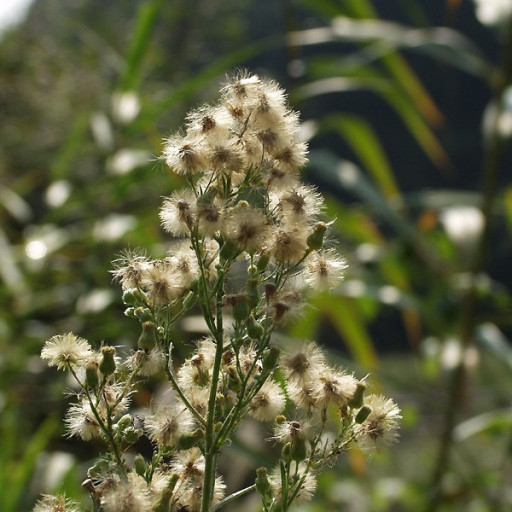
- ☁️ Cloud-like Clusters: Instead of large petals, it produces massive, branching sprays of tiny, inconspicuous flower heads that look like yellowish-cream tufts.
- 💨 Parachute Seeds: Once mature, the flowers turn into fluffy white seed heads (similar to dandelions) that allow the wind to carry its offspring for miles.
🏡 In Your Garden
- 🌱 The Master of Disturbance: This plant thrives in "tired" or compacted soil. If you see it in your garden, it’s usually a sign that the ground has been recently moved or is lacking a dense groundcover to compete with it.
- 💪 The Taproot Challenge: It develops a surprisingly deep and sturdy taproot very quickly. If you plan to remove it, do so while it is small; once it reaches knee-height, pulling it out becomes a real workout.
- 🦋 Pollinator Pitstop: While many gardeners treat it as a weed, its tiny flowers provide a late-season nectar source for small hoverflies and micro-bees that other showier flowers might ignore.
⚠️ Safety & Toxicity
- 🛡️ Low Risk: The Sumatran Fleabane is not considered a high-danger plant, but it does contain volatile oils that can be bothersome.
- 🚫 Skin Sensitivity: Some gardeners report "contact dermatitis" (an itchy red rash) after pulling the plants with bare hands. It is always best to wear gloves when weeding this species.
- 🐾 Pet Caution: While not deathly toxic, if curious dogs or cats munch on the hairy leaves, the texture and oils can cause mild mouth irritation or an upset stomach.
✨ Fun Fact
The Sumatran Fleabane is a true "cosmopolitan" weed. Because its seeds are equipped with tiny built-in "parachutes" (called a pappus), it has been known to hitch rides on high-altitude winds and even travel between continents by sticking to shipping containers and airplane wheels!

Detailed Care Instructions
| Hibernation | Cold Period |
To grow Erigeron Sumatrensis, also known as Seaside Daisy, you can follow these steps:
- Location: Choose a sunny location for planting. Erigeron Sumatrensis prefers full sun to partial shade.
- Soil: The plant thrives in well-draining soil. Make sure the soil is rich in organic matter and loose. You can enhance the soil with compost or organic fertilizer before planting.
- Planting: Dig a small hole that is slightly larger than the plant's root ball. Place the Seaside Daisy in the hole and gently fill it with soil, ensuring that the crown of the plant is level with the soil surface. Space multiple plants about 12-18 inches apart to provide adequate room for growth.
- Watering: After planting, give the plant a thorough watering. Keep the soil evenly moist, but not waterlogged, during the growth period. Once established, Erigeron Sumatrensis is reasonably drought-tolerant and only requires occasional watering.
- Mulching: Apply a layer of organic mulch around the base of the plant. Mulching helps retain moisture, suppress weeds, and insulate the plant's roots.
- Maintenance: Deadhead faded flowers regularly to promote continuous blooming. This will also prevent the plant from self-seeding too abundantly. Pruning can be done in early spring or late fall to shape the plant and increase branching.
- Propagation: Erigeron Sumatrensis can be propagated by seeds or by dividing mature clumps. Seeds can be sown directly outdoors in the spring, or you can start them indoors a few weeks before the last frost. Division is typically done in early spring or late fall by carefully separating the clump into smaller sections.
- Pests and diseases: Erigeron Sumatrensis is generally not susceptible to many pests or diseases. However, keep an eye out for aphids, slugs, and snails. If necessary, use organic pest control methods to manage these issues.
By following these steps, you should be able to successfully grow Erigeron Sumatrensis and enjoy its beautiful flowers throughout the growing season.

Place in a bright room that is sun drenched almost all day. Or directly in a south-facing window.

To water this plant, it is important to thoroughly soak the soil until water comes out of the drainage holes at the bottom of the container or until the soil in the garden bed is moistened to the root level. It is recommended to water deeply and less frequently, allowing the soil to partially dry out between watering sessions. Be sure to avoid getting water on the foliage or flowers as this can lead to fungal diseases. In addition, consider watering this plant in the morning or evening when temperatures are cooler and the water is less likely to evaporate quickly.
To fertilize this plant, use a balanced fertilizer with equal amounts of nitrogen, phosphorus, and potassium. Apply the fertilizer in early spring before new growth begins, and again in mid-summer. Follow the instructions on the fertilizer package and be careful not to over-fertilize, as this can damage the plant. Water the plant thoroughly after fertilizing to help the nutrients reach the roots.
Erigeron Sumatrensis is best planted in a well-draining soil mix that is enriched with organic material. The soil should not be overly compacted and should be capable of retaining adequate moisture without becoming waterlogged. A pH range of 6-7 is ideal for this plant, and a nutrient-rich soil composition can be achieved through the use of compost, leaf mold, and garden soil. It's essential to avoid using heavy clay soils or those that are overly sandy, as these can lead to drainage problems and nutrient deficiencies. Additionally, this plant prefers soil that is slightly acidic, but not too alkaline. Sand, perlite, and peat moss may be added to the soil mix to improve its drainage and ensure that the plant's roots have access to the necessary nutrients.
To propagate this plant, you will need to take stem cuttings from a healthy and mature plant. Use a clean and sharp pair of scissors or pruning shears to cut a 3-5 inch long stem from the plant, making sure to cut just below a leaf node.
Remove the lower leaves from the stem and dip the cut end in rooting hormone powder. Plant the stem cutting in a pot filled with potting soil and keep it moist but not waterlogged.
Place the pot in a warm and bright location, but not in direct sunlight. Within a few weeks, roots should begin to form and new growth should appear on the stem.
After a few months, the plant should be large enough to transplant into a larger pot or into the garden. Make sure to give it plenty of sunlight and well-draining soil to thrive.








