Plant Overview
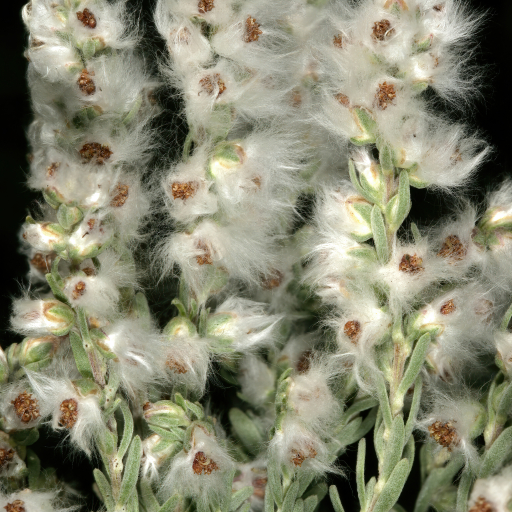
Known as the Cape Snowbush or Kapokbos, this hardy South African shrub is a master of disguise. For most of the year, it looks like a soft, silvery-green cloud, but as it goes to seed, it appears to be covered in a dusting of fresh snow. It is a member of the daisy family, though you wouldn’t know it until you smell its intense, rosemary-like fragrance.
🔍 How to Identify
- 🍃 Silvery Foliage: The leaves are thin, needle-like, and covered in tiny silver hairs that help the plant reflect harsh sunlight and trap moisture.
- 🌸 Cluster Blooms: In late winter, it produces small, inconspicuous white and purple flowers that grow in racemes (long clusters) at the tips of the branches.
- ☁️ Cotton-Top Seeds: Its most striking feature is the "Kapok"—fluffy, white, woolly seed heads that envelop the branches after flowering, giving the plant its snowy appearance.
🏡 In Your Garden
- 🌊 Coastal Champion: This plant is a specialist in coastal survival. It thrives in salty sea breezes and sandy soils where other plants might struggle with the wind and salt spray.
- ☀️ Drought Endurance: Because of its deep root system and "hairy" leaves, it is exceptionally water-wise. It prefers a sunny spot with excellent drainage; if its "feet" stay wet for too long, the roots may rot.
⚠️ Safety & Toxicity
- ✅ Safe for All: Eriocephalus racemosus is considered non-toxic to humans, cats, and dogs.
- 🌿 Medicinal History: It is actually prized for its essential oils, which are used in aromatherapy to help with stress. However, as with any aromatic plant, the concentrated oils can cause minor skin irritation for those with sensitive skin.
✨ Fun Fact
The common name "Kapokbos" comes from the Afrikaans word for "Snow Bush." In the past, the woolly seed fluff was so abundant that early settlers would harvest it to stuff pillows and mattresses, creating a fragrant and soft bedding material!

Detailed Care Instructions

Place in a bright room that is sun drenched almost all day. Or directly in a south-facing window.

Some plants require more regular watering than others, which should be done every few days. It's critical to maintain the soil moist all of the time. The water requirements of the same plant placed in pots with varying sizes will differ. Because the water in the smaller pot evaporates faster than the water in the larger pot, it will require more watering. Regardless of pot size, the surface should constantly be maintained moist.








