Plant Overview
Known as the "Holy Herb" or "Mountain Balm," Eriodictyon californicum has been a staple of the California wilderness and its natural medicine cabinet for centuries. Spanish missionaries were so impressed by the indigenous use of the plant for respiratory issues that they christened it "Yerba Santa." This aromatic, resin-coated shrub is a tough survivor, often found clinging to dry, sun-drenched hillsides.
🔍 How to Identify
- 🍃 The "Varnished" Leaf: The most striking feature is the thick, leathery leaves that look like they’ve been coated in a shiny dark-green resin. They are lance-shaped and have jagged, saw-like edges.
- ☁️ Fuzzy Undersides: If you flip a leaf over, the underside is a stark contrast—it’s pale and covered in a dense, felt-like layer of white hairs.
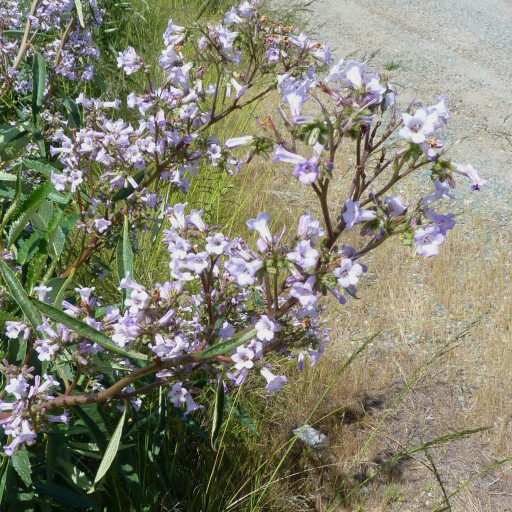
- 🎺 Trumpet Blooms: In late spring and summer, the plant produces clusters of delicate, tubular flowers. These are usually a pale lavender or white and are highly attractive to local pollinators.
🏡 In Your Garden
- ☀️ Sun Seeker: Yerba Santa is a true sun-worshipper. It requires full sun and exceptionally well-draining soil. It is a "pioneer species," meaning it is often the first plant to sprout back after a wildfire, thanks to seeds that are triggered by heat.
- 💧 Drought Specialist: Once established, this plant is incredibly water-wise. It has a deep taproot that allows it to survive long California droughts, but this also means it hates being moved—pick its "forever home" in your garden carefully to avoid transplant shock.
⚠️ Safety & Toxicity
- ✅ Status: Generally considered safe for human contact and traditional medicinal use, but caution is advised for domestic animals.
- 🐾 Details: While the leaves have been used for teas and tinctures by humans, the high concentration of resins and volatile oils can cause stomach upset in pets if ingested in large quantities. Always consult a professional before using any wild plant medicinally.
✨ Fun Fact
Yerba Santa is a natural "sugar-coater." The leaves contain a compound that temporarily numbs the taste buds responsible for detecting bitterness. In the 1800s, it was frequently used by pharmacists to mask the foul, bitter taste of quinine medicine!

Detailed Care Instructions
Growing Eriodictyon californicum, commonly known as Yerba Santa, can be a rewarding endeavor if you follow these steps. This plant is native to California and the southwestern United States, and it's known for its medicinal properties and aromatic leaves. Here’s a step-by-step guide to help you grow Yerba Santa:
Site Selection
- Climate: This plant thrives in Mediterranean climates with hot, dry summers and mild, wet winters.
- Sunlight: Choose a location that receives full sun to partial shade.
- Soil: Well-draining soil is crucial. Yerba Santa prefers sandy or rocky soils and can tolerate poor soil conditions.
Planting
- Seed Collection: If you’re starting from seed, collect seeds from mature pods when they dry out.
- Seed Preparation: Stratify the seeds by placing them in a moist paper towel and refrigerating them for 1-2 months. This helps break dormancy.
- Sowing Seeds: Plant seeds in pots or directly in the ground after the last frost. Sow them about 1/4 inch deep and keep the soil moist until germination.
- Spacing: When planting directly in the ground, space the plants about 2-3 feet apart to allow room for growth.
Watering
- Initial Phase: Water frequently to keep the soil moist during the initial germination and seedling phase.
- Established Plants: Once established, Yerba Santa is drought-tolerant and will need minimal watering. Overwatering can lead to root rot.
Maintenance
- Mulching: Apply mulch around the base of the plant to retain moisture and suppress weeds.
- Pruning: Light pruning can help shape the plant and remove dead or damaged branches. Do this in late winter or early spring.
- Pests and Diseases: Yerba Santa is relatively pest-resistant but watch out for common garden pests like aphids and spider mites. Use organic insecticides if necessary.
Propagation
- Cuttings: You can also propagate Yerba Santa from cuttings. Take semi-hardwood cuttings in late summer, dip the cut end in rooting hormone, and plant it in a well-draining soil mix. Keep it moist until roots develop.
Harvesting
- Leaves: Harvest the leaves as needed for medicinal or aromatic uses. It’s best to pick them in the morning after the dew has dried but before the day heats up.
By following these steps, you'll be well on your way to successfully growing Eriodictyon californicum. Enjoy your gardening!

Place in a bright room that is sun drenched almost all day. Or directly in a south-facing window.

The best way to water this plant is to give it a deep watering once every week or two, depending on weather conditions and soil type. Before watering, check the top inch or so of soil to make sure it is dry to the touch. If it is still moist, wait a few more days before watering.
When you are ready to water, use a hose or watering can to apply water slowly and evenly to the soil around the base of the plant. Avoid getting water on the leaves, as this can lead to fungal diseases.
It is important not to overwater this plant, as it prefers well-drained soil and can be sensitive to waterlogged conditions. If you notice the leaves starting to yellow or droop, it may be a sign of overwatering.
In general, it is better to underwater than overwater this plant. It is adapted to dry, rocky soils and can handle some drought stress. During hot, dry periods, you may need to water more frequently to prevent the soil from completely drying out.
Fertilizing Eriodictyon Californicum requires attention to its natural habitat and nutritional needs. Here are the steps to follow:
- Soil Preparation: Before planting, amend the soil with organic matter to improve its structure and drainage. This prepares a healthy foundation for the plant’s growth.
- First-Year Fertilization: In the first year after planting, you generally do not need to apply additional fertilizer if the soil is already well-amended. The organic matter incorporated into the soil should provide adequate nutrients.
- Type of Fertilizer: Use a balanced, slow-release granular fertilizer with an N-P-K ratio such as 10-10-10, or a specialized fertilizer for native plants, which can promote healthier growth.
- Application Timing: The best time to fertilize is in early spring before new growth begins. This timing ensures that the nutrients are available during the active growing season.
- Application Method:
- Spread the fertilizer evenly around the base of the plant, keeping it at least a few inches away from the stem to prevent root burn.
- Lightly work the fertilizer into the top inch of soil using a hand trowel.
- Water the area thoroughly to help the fertilizer penetrate the soil and reach the root zone.
- Spread the fertilizer evenly around the base of the plant, keeping it at least a few inches away from the stem to prevent root burn.
- Frequency: For established plants, repeat the application annually in early spring. If the plant shows signs of nutrient deficiency (e.g., yellowing leaves, stunted growth), a mid-season application can be done, but typically one annual fertilization is sufficient.
- Watering: Ensure the plant receives adequate moisture following fertilization but avoid over-watering, which can lead to root rot in poorly drained soils.
- Natural Mulch: Consider using a natural mulch, such as leaf litter or wood chips, to help retain soil moisture and gradually improve soil fertility as the mulch decomposes.
- Monitoring: Observe the plant’s response to fertilizer and adjust the amount or frequency if necessary. Over-fertilizing can lead to excessive growth, which may not be sustainable in its natural habitat.
By following these guidelines, you can help promote healthy growth and sustain the unique ecological role of Eriodictyon Californicum.
A suitable soil for Eriodictyon Californicum should be well-draining, with good aeration. It should also be rich in organic matter, with a slightly acidic to neutral pH. Avoid soils that are heavy, clayey, or waterlogged, as these can lead to root rot and other issues. A sandy loam or rocky soil may be preferable, as it allows for better drainage. It is also recommended to add a layer of mulch or organic matter to the soil surface to help retain moisture and provide nutrients over time.
Propagating Eriodictyon californicum can be accomplished through both seed collection and vegetative cutting methods. Here are the steps for each approach:
Seed Collection and Propagation
- Seed Collection:
- Harvest seeds from mature plants when the seed capsules are dry and brown, usually in late summer or early fall.
- Gently crush the capsules to release the tiny seeds.
- Harvest seeds from mature plants when the seed capsules are dry and brown, usually in late summer or early fall.
- Seed Treatment:
- Stratification can improve germination rates. Store the seeds in a sealed plastic bag with a moistened medium (like sand, vermiculite, or peat moss) in the refrigerator for 1-3 months. This simulates the natural wintering process.
- Stratification can improve germination rates. Store the seeds in a sealed plastic bag with a moistened medium (like sand, vermiculite, or peat moss) in the refrigerator for 1-3 months. This simulates the natural wintering process.
- Sowing:
- After stratification, prepare a well-draining seed starting mix.
- Sow the seeds on the surface of the mix and lightly press them in without covering them completely, as they need light to germinate.
- Mist the surface gently to moisten the seeds.
- After stratification, prepare a well-draining seed starting mix.
- Germination:
- Place the seed trays in a location that receives indirect sunlight and maintains temperatures between 65-75°F (18-24°C).
- Keep the soil moist but not waterlogged. Germination can take several weeks to a few months.
- Place the seed trays in a location that receives indirect sunlight and maintains temperatures between 65-75°F (18-24°C).
- Transplanting:
- Once the seedlings have developed a few sets of true leaves and are sturdy enough to handle, transplant them into individual pots or directly into a well-prepared garden bed.
Vegetative Cuttings
- Once the seedlings have developed a few sets of true leaves and are sturdy enough to handle, transplant them into individual pots or directly into a well-prepared garden bed.
- Cutting Selection:
- Choose healthy, non-flowering stems from a mature plant during the growing season, typically late spring to early summer.
- Cut 4-6 inch (10-15 cm) lengths of stem, making the cut just below a node (the point where a leaf joins the stem).
- Choose healthy, non-flowering stems from a mature plant during the growing season, typically late spring to early summer.
- Preparation:
- Remove the leaves from the bottom half of the cutting to reduce water loss and direct energy to root development.
- Optionally, dip the cut end in a rooting hormone powder to enhance root growth.
- Remove the leaves from the bottom half of the cutting to reduce water loss and direct energy to root development.
- Planting the Cuttings:
- Fill pots or trays with a well-draining rooting medium, such as a mix of perlite and peat moss.
- Insert the cuttings into the medium, burying the lower nodes to ensure good contact.
- Firm the medium around the cuttings.
- Fill pots or trays with a well-draining rooting medium, such as a mix of perlite and peat moss.
- Humidity and Care:
- Maintain high humidity to prevent the cuttings from drying out. This can be done by covering the pots with a plastic dome or placing them inside a plastic bag.
- Ensure good air circulation to prevent mold growth yet keep the medium moist.
- Place the cuttings in a warm, bright location with indirect sunlight.
- Maintain high humidity to prevent the cuttings from drying out. This can be done by covering the pots with a plastic dome or placing them inside a plastic bag.
- Root Development:
- Roots should begin to develop in a few weeks. You can check progress by gently tugging on the cuttings; resistance indicates root growth.
- Once a strong root system has developed, gradually acclimate the new plants to outdoor conditions before transplanting them.
Both seed and cutting methods can be quite effective, but cuttings often provide a quicker and more reliable way to propagate Eriodictyon californicum.
- Roots should begin to develop in a few weeks. You can check progress by gently tugging on the cuttings; resistance indicates root growth.








