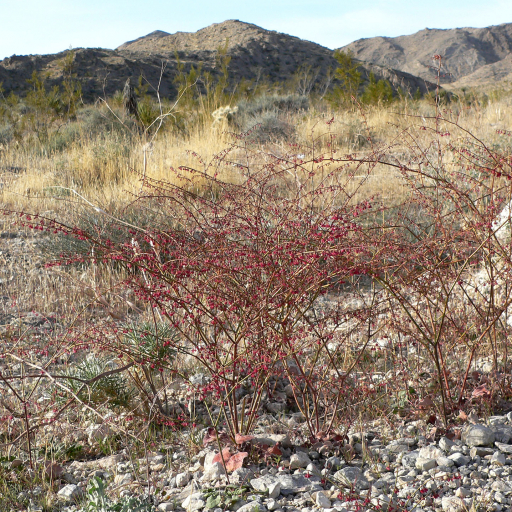
Plant Overview
Often called the Skeleton Weed or Flatcrown Buckwheat, Eriogonum deflexum is a master of desert architecture. While it begins its life with a soft, leafy base, it quickly transforms into an intricate network of wiry, zig-zagging stems that look like a delicate bronze sculpture. In the harsh heat of the Mojave and Sonoran deserts, this plant stands as a resilient ghost, holding its structure long after the summer sun has withered its neighbors.
🔍 How to Identify
- 🍃 Basal Rosette: Look for a small cluster of round, heart-shaped leaves at the very base of the plant. These are often covered in fine, white hairs that help the plant reflect intense desert sunlight.
- 🕸️ Skeletal Stems: The most striking feature is the branching, leafless upper structure. The stems zig-zag upward and outward, turning from green to a deep cinnamon or silvery-grey as they age.
- 🔔 Nodding Flowers: Tiny, bell-shaped flowers in shades of white or pale pink hang downward (deflexed) from the stems. They look like miniature pearls strung along a wire.
🏡 In Your Garden
- 🌵 Desert Drainage: This plant thrives on what many would call "neglect." It requires extremely well-draining, sandy, or gravelly soil. If kept in heavy, wet soil, the roots will succumb to rot almost overnight.
- 🏗️ Taproot Tenacity: It develops a long, sturdy taproot to find moisture deep underground. Because of this, it hates being transplanted; once you tuck it into a spot in your xeriscape or rock garden, it’s best to let it stay there permanently.
- 🐝 Late-Season Lifeline: While many garden plants fade in the peak of summer heat, Skeleton Weed remains active, providing a vital nectar source for native bees and tiny butterflies when they need it most.
⚠️ Safety & Toxicity
- ✅ Safe Status: Eriogonum deflexum is generally considered non-toxic to humans, cats, and dogs. It is a "friendly" addition to a nature-focused backyard.
- 🧤 Brittle Texture: While not poisonous, the stems become very brittle and sharp as they dry out. Wear light gardening gloves if you plan to prune them to avoid minor pokes or "hay-fever" style irritation from the dust of the dried flowers.
✨ Fun Fact
- 🏜️ The specific name "deflexum" is Latin for "bent downward." This refers to the plant's clever engineering: by pointing its flowers toward the ground, it protects its precious pollen from the drying effects of the desert wind and the direct overhead sun!

Detailed Care Instructions
To grow Eriogonum deflexum, also known as the Truncate Buckwheat, you can follow these steps:
- Choose an appropriate location: Eriogonum deflexum is native to dry, rocky areas, so choose a sunny spot in your garden with well-draining soil.
- Prepare the soil: Amend the soil with organic matter, such as compost, to improve drainage and fertility. This plant prefers slightly alkaline soil, so if your soil is acidic, add some lime to raise the pH levels.
- Planting: Plant Eriogonum deflexum in the spring or fall. Dig a hole that is slightly larger than the root ball of the plant. Place the plant in the hole, making sure it is level with the soil surface. Backfill the hole with soil, gently firming it around the plant.
- Watering: Water the plant thoroughly after planting to help it establish. After that, water the plant deeply but infrequently. Eriogonum deflexum is drought-tolerant, so it does not require excessive watering. Allow the top layer of soil to dry out between waterings.
- Mulching and weed control: Apply a layer of mulch around the plant to help retain moisture and prevent weed growth. Keep the area around the plant free from weeds, as they can compete for nutrients and water.
- Pruning: Eriogonum deflexum generally does not require much pruning. However, you can trim back any dead or damaged branches in late winter or early spring to maintain its shape.
- Fertilizing: Eriogonum deflexum is a low-maintenance plant and typically does not require regular fertilization. If the plant appears weak or lacks vigor, you can apply a slow-release, balanced fertilizer in early spring.
- Propagation: Eriogonum deflexum can be propagated through seeds or by dividing existing plants. Collect seeds from the plants in late summer or early fall, and sow them in containers or directly into the soil. Division can be done in spring, early fall, or when the plant is dormant.
Remember to check for any specific growing requirements of this plant in your region, as climate and soil conditions can vary.

Eriogonum Deflexum plant requires regular watering during its active growing season. However, it is essential to carefully monitor the soil's moisture level to avoid overwatering. The best way to water it is by allowing the soil to slightly dry out between watering intervals. Before watering, check the soil to determine if it requires water. If the soil feels dry to the touch, it is time to water the plant. Use a watering can or a garden hose to water the plant until the water drains entirely from the bottom of the pot or the soil. Avoid splashing water on the leaves as it can cause foliage damage and attract pests. It is recommended to water the plant in the early morning or late evening when the sun is not intense to prevent water evaporation and allow the plant to absorb water efficiently. During the plant's dormant season, reduce watering frequency and allow the soil to dry out completely to prevent root rot.
To fertilize this plant, use a slow-release, balanced fertilizer with an NPK ratio of 10-10-10. Apply the fertilizer in the spring when new growth appears and again in midsummer. Apply according to the manufacturer's instructions and water well after application. Avoid fertilizing in the fall as it may encourage new growth that can be damaged by winter frost.
In order to cultivate the plant species known as Eriogonum deflexum, it is recommended to use soil that is well-draining and moderately fertile. A mix of sandy loam and perlite may be ideal, as it promotes proper drainage while still holding enough moisture to support growth. Additionally, adding organic matter such as compost or aged manure to the soil can enhance the fertility and structure. It is important to ensure that the soil pH is neutral to slightly acidic, with a range of 6.0 to 7.5. Avoid using heavy clay soils or soils that retain too much water, as this can lead to waterlogged root systems and poor growth. Finally, it is advisable to amend the soil with a slow-release fertilizer high in phosphorus, to promote healthy root development and flowering.
There are various ways to propagate the Eriogonum Deflexum plant. One method involves collecting seeds from the plant when they are fully ripe. The seeds can then be sown directly into fertile soil in a sunny location. It is important to keep the soil moist until germination occurs. Alternatively, cuttings can be taken from the plant in the spring or early summer. The cuttings should be taken from the newer growth and rooted in a well-draining mixture of sand and soil. Once the cutting has rooted, it can be planted in a sunny location or in a container with fertile soil. It is important to keep the soil moist until the new plant becomes established.








