Plant Overview
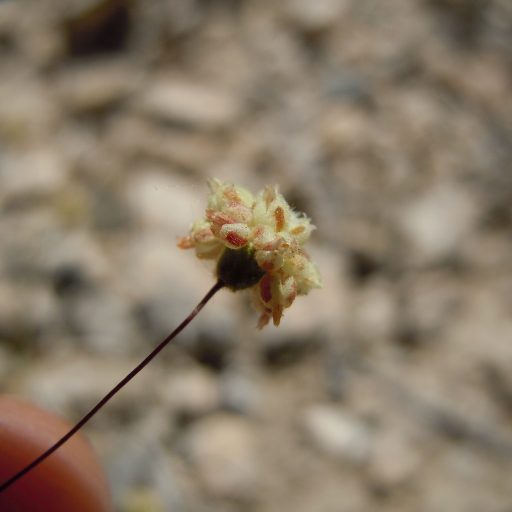
Often called the Spotted Buckwheat, this delicate annual is a master of the arid American West. In the middle of a dry desert wash, it looks like someone sprinkled tiny, painted confetti across an airy, wire-like frame. It is a tough survivor that brings intricate, miniature beauty to rocky landscapes where few other things thrive.
🔍 How to Identify
- 🌸 The "Spots": The tiny, bell-shaped flowers are cream to pale pink, featuring a distinct reddish-purple spot on each petal—this is the "maculatum" (spotted) feature that gives it its name.
- 🍃 Fuzzy Foundation: Most of the foliage sits at the very base in a flat rosette. The leaves are grayish-green and covered in fine, woolly hairs to help the plant trap moisture and reflect harsh sunlight.
- 🕸️ Lacy Structure: As the plant grows, it produces highly branched, leafless stems that create a delicate, "skeleton-like" appearance, often turning a beautiful reddish-brown as it matures.
🏡 In Your Garden
- 🏜️ Desert Specialist: This plant thrives on "neglect." It specifically requires sandy, rocky, or gravelly soil with excellent drainage. It is a perfect candidate for rock gardens or "unimproved" areas of a yard where irrigation is minimal.
- 🐝 A Butterfly Magnet: Despite its small flowers, it is a high-value nectar source. It is particularly important for native hairstreak and blue butterflies, which rely on buckwheats for both food and a place to lay their eggs.
⚠️ Safety & Toxicity
- ✅ Safe Profile: Spotted Buckwheat is generally considered non-toxic and is not known to be a threat to humans or common household pets.
- 🐾 Wildlife Forage: While safe, it is primarily a food source for desert tortoises and bighorn sheep in the wild. In a home setting, it doesn't pose a skin irritation or poisoning risk to curious cats or dogs.
✨ Fun Fact
✨ Dried Art: When the growing season ends, the plant doesn't just disappear; it dries into a sturdy, intricate "everlasting" skeleton that can persist through the winter, often used by desert birds as a light nesting material!

Detailed Care Instructions

Place in a bright room that is sun drenched almost all day. Or directly in a south-facing window.

Some plants require more regular watering than others, which should be done every few days. It's critical to maintain the soil moist all of the time. The water requirements of the same plant placed in pots with varying sizes will differ. Because the water in the smaller pot evaporates faster than the water in the larger pot, it will require more watering. Regardless of pot size, the surface should constantly be maintained moist.








