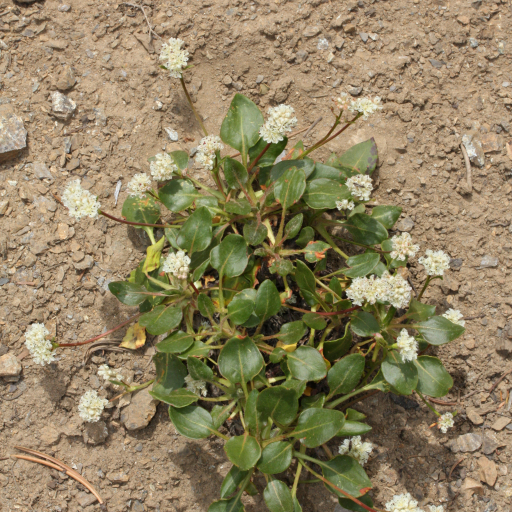
Plant Overview
Known affectionately as the Oarleaf Buckwheat or Shasta Buckwheat, this rugged alpine beauty is a true survivor of the high peaks. Named for its leaves that resemble the Pyrola (wintergreen) plant, it is often found clinging to volcanic scree and pumice fields where little else can grow. It forms low, elegant mats that look like miniature, ancient forests tucked between gray stones.
🔍 How to Identify
- 🍃 The Leaves: Small, leathery, and shaped like tiny oars or spoons. They are typically dark green and smooth on top but have a dense, felt-like coating of white hairs underneath to trap moisture.
- 🌸 The Blooms: Tiny, bell-shaped flowers sprout in dense, pom-pom-like clusters. They emerge as a creamy white or pale pink and gradually deepen into a rusty rose color as they age.
- Compact Form:** It grows in a "prostrate" habit, meaning it hugs the ground closely to avoid harsh mountain winds, rarely reaching more than a few inches in height.
🏡 In Your Garden
- 🌋 Volcanic Vibes: This plant is a specialist in "starvation" soil. If you try to grow it in rich, potting soil, it will likely perish. It requires extreme drainage—think gravel, grit, and volcanic rock—to mimic its high-altitude home.
- 💧 Dry Feet Only: The Oarleaf Buckwheat is highly susceptible to root rot. It has evolved to survive on melting snow and occasional summer mist; in a garden setting, "less is more" when it comes to watering.
- 🏔️ The Taproot: Like many alpine species, it develops a long, sturdy taproot to anchor itself in shifting scree. Because of this, it is very difficult to transplant once established, so choose its "forever home" carefully.
⚠️ Safety & Toxicity
- 🟢 Non-Toxic: This buckwheat is generally considered safe and is not known to be poisonous to humans, dogs, or cats.
- 🦋 Wildlife Magnet: While not a food source for humans, it is a vital nectar source for high-altitude butterflies and bees, making it a "safe" and helpful addition to a rock garden.
✨ Fun Fact
The Oarleaf Buckwheat is a legendary survivor! After the 1980 eruption of Mount St. Helens, it was one of the first "pioneer" species to emerge through the thick layer of volcanic ash, helping to jumpstart the return of life to the devastated landscape.

Detailed Care Instructions
To grow Eriogonum Pyrolifolium, also known as the buckwheat plant or firewheel, follow these steps:
- Choose the right location: Eriogonum Pyrolifolium prefers full sun to partial shade. It can tolerate various soil types but thrives in well-draining, sandy or loamy soil.
- Prepare the soil: Ensure the soil is well-draining by amending it with compost or sand if necessary. Remove any weeds or grass from the planting area.
- Plant the seeds or seedlings: You can either sow the seeds directly into the ground in early spring or start them indoors 6-8 weeks before the last frost date. If starting them indoors, transplant the seedlings once they are a few inches tall.
- Plant spacing: Space the plants about 12-18 inches apart to allow airflow and prevent overcrowding.
- Watering: Water the plants deeply after planting and keep the soil evenly moist until they become established. Once established, Eriogonum Pyrolifolium is drought-tolerant and requires minimal watering. Water during prolonged dry spells or when the soil becomes dry.
- Mulching: Apply a layer of organic mulch around the plants to help retain moisture and suppress weeds. Avoid covering the plant's base to prevent stem rot.
- Fertilization: Eriogonum Pyrolifolium generally doesn't require fertilization. However, if your soil lacks nutrients, you can apply a balanced slow-release fertilizer in spring.
- Pruning: Deadhead the spent flowers to encourage more blooms and maintain a tidy appearance. Cut back any dead or damaged stems in early spring, before new growth begins.
- Pests and diseases: Eriogonum Pyrolifolium is generally resistant to pests and diseases. However, keep an eye out for common garden pests like aphids, spider mites, or snails, and apply appropriate control methods if necessary.
- Propagation: Eriogonum Pyrolifolium can be propagated from seeds, cuttings, or division. Seeds should be harvested when the plants are mature and dry. Cuttings should be taken from healthy stems in late spring or early summer. Divide the plant in early spring or fall by carefully separating the roots and replanting the divided sections.
By following these steps, you should be able to grow Eriogonum Pyrolifolium successfully. Remember to provide adequate sunlight, well-draining soil, and minimal water once established for optimal growth and health.

Place in a bright room that is sun drenched almost all day. Or directly in a south-facing window.

The best way to water this plant is to provide it with a deep, thorough watering once a week during the growing season. It is important to avoid overwatering, as this can lead to root rot and other problems. The soil should be allowed to dry out slightly between waterings, but not completely. When watering, it is best to direct the water towards the base of the plant rather than getting the leaves wet. Additionally, this plant prefers well-drained soil, so be sure to choose a pot or planting location with good drainage. Finally, it is recommended to reduce watering during the winter months when the plant goes dormant.
- Choose a well-draining soil mix with low to moderate fertility.
- Apply a balanced fertilizer in early spring, before new growth emerges.
- Use a low-nitrogen, high-phosphorus, and high-potassium fertilizer.
- Apply fertilizer again in early summer, just after blooms have finished, to encourage regrowth.
- Water the plant deeply after each fertilizer application to help the nutrients reach the roots.
- Do not over-fertilize, as this can lead to excessive growth and reduced plant health.
- Monitor the plant throughout the growing season and adjust fertilization as needed based on its overall health and vigor.
Eriogonum Pyrolifolium is a plant that requires well-drained soil. It grows best in sandy or gravelly soil that is low in organic matter. The soil pH should be neutral to slightly acidic, with a range between 6.0 and 7.5. The plant does not tolerate heavy clay soils or poorly drained soils. It is also important to ensure that the soil is not too compacted, as this can limit root growth and lead to poor plant health. When planting, it is recommended to amend the soil with coarse sand and/or gravel to improve drainage and alkaline rock powder to adjust the pH if necessary.
To propagate this plant, one can take stem cuttings or root cuttings. Stem cuttings should be taken from the current year's growth in the spring or early summer. The cuttings should be about 4-6 inches long and should have at least two pairs of leaves. The lower pair of leaves should be removed, and the stem should be dipped in rooting hormone before being planted in a well-draining soil mix.
Root cuttings should be taken in the fall or winter when the plant is dormant. The roots should be dug up and cut into sections about 2-3 inches long. These sections should be planted in a well-draining soil mix and kept moist. New growth should appear in the spring.
Both methods require consistent moisture and bright, indirect light. Once the new growth is established, the plants can be transplanted to their permanent location.








