Plant Overview
Often referred to as the Blue Mountain Buckwheat, this resilient perennial is a master of survival in the rugged landscapes of Western North America. Its name, strictum, refers to its "strict" or upright growth habit, looking like a collection of delicate pom-poms perched atop thin, wiry stems. While it may look fragile, it is a high-desert champion that thrives where other plants wither.
🔍 How to Identify
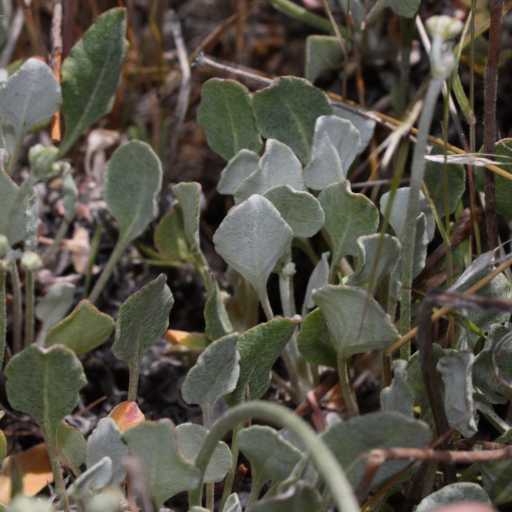
- ☁️ The Foliage: Small, oval leaves form a dense, silvery-green mat at the base of the plant. They are covered in fine, wooly hairs that help the plant trap moisture and reflect harsh sunlight.
- 🎈 The Blooms: Tiny flowers cluster together into tight, spherical "umbels" that look like little pincushions. These can range from creamy white to buttery yellow, often aging to a beautiful rusty pink or orange.
- 📏 The Stems: The flower stalks are mostly leafless and stand remarkably straight (hence the "strict" name), rising 6 to 15 inches above the leafy base.
🏡 In Your Garden
- 🏜️ Drainage is King: This buckwheat is a "lithophyte," meaning it loves rocky, gravelly soil. In a garden setting, it will fail in heavy clay; it requires exceptionally sharp drainage to prevent root rot during the winter.
- 🦋 Pollinator Magnet: It is a vital resource for native bees and tiny butterflies, such as the Mormon Metalmark. If you are building a "wildlife corridor" or a rock garden, this is a cornerstone species that provides high-quality nectar in arid conditions.
⚠️ Safety & Toxicity
- ✅ Status: Generally non-toxic and safe.
- 🐾 Details: There are no known records of Eriogonum strictum being poisonous to dogs, cats, or horses. However, because it is a wild-type plant not intended for consumption, it is best to keep curious pets from grazing on it to avoid minor stomach upset.
✨ Fun Fact
Native American tribes, including the Sahaptin, historically used various parts of the buckwheat plant to create medicinal teas for treating sore throats and colds, proving that this "tough-as-nails" plant is as useful as it is beautiful!

Detailed Care Instructions
| Humidity | Dry |
| Lighting | Full Sun |
| Difficulty | Easy |
| Hibernation | Cold Period |
| Hardiness Zones | 4 - 8 |
To grow Eriogonum strictum (desert trumpet), you can follow these steps:
- Determine the appropriate planting location: Eriogonum strictum is native to sandy or gravelly soils found in dry regions, such as prairies, plains, and desert foothills. It prefers full sunlight.
- Prepare the soil: This plant prefers well-draining soil. If your soil is heavy or has poor drainage, consider amending it with organic matter like compost to improve its drainage capabilities.
- Sow the seeds: Eriogonum strictum can be grown from seeds. Plant the seeds directly in the desired location, either in the fall or early spring. Gently press the seeds into the soil's surface, ensuring they are in contact with the soil.
- Watering: Keep the soil consistently moist until the seeds germinate. Once established, desert trumpet is drought-tolerant and requires little additional watering. Water sparingly during dry periods.
- Mulching: Apply a layer of organic mulch, such as straw or wood chips, around the base of the plant to help retain moisture and suppress weeds.
- Maintenance: Eriogonum strictum is relatively low-maintenance. Remove any weeds that may compete with the plant for nutrients or water. However, avoid disturbing the plant's roots.
- Pruning: Desert trumpet does not require regular pruning. However, if you want to maintain a particular shape or size, prune in the late winter or early spring before new growth begins.
- Propagation: You can also propagate Eriogonum strictum by collecting seeds from mature plants and sowing them in pots or trays indoors. Transplant the seedlings into the garden once they have grown several inches tall.
Remember that plants have different requirements and adaptability based on climate, soil, and other environmental factors. It's always helpful to research any specific considerations for your region or consult with local gardening experts for personalized advice.

Eriogonum Strictum plants should be watered deeply and infrequently. It is important to avoid overwatering, as these plants are drought-tolerant and can be damaged by excessive moisture. When watering, aim to saturate the roots, rather than just the surface soil. This can be achieved by watering slowly and deeply, allowing the water to penetrate to the root zone. It is also important to avoid getting the foliage wet when watering, as this can increase the risk of disease. In general, Eriogonum Strictum plants should be watered once a week during the growing season, and less frequently during the winter months. It is important to monitor the soil moisture levels and adjust the watering schedule as needed based on weather conditions.
To fertilize this plant, it is recommended to use a slow-release, granular fertilizer in the early spring. Scatter the fertilizer around the base of the plant, being careful not to sprinkle it directly on the leaves or stems. Water the plant thoroughly after fertilizing. Repeat this process once or twice during the growing season, depending on the plant's needs and the fertilizer's instructions. Avoid over-fertilizing, as it may cause the plant to grow too quickly and become weak or susceptible to pests and diseases.
Eriogonum strictum is a plant that prefers a well-draining soil that is neutral to slightly acidic in pH. Soil with a high proportion of sand and minimal clay content is ideal for this plant. The plant prefers moderate to low fertility and does not tolerate heavy or waterlogged soil. The soil should be kept moist but not overly wet. Adding organic matter, such as compost, to the soil can help improve drainage and fertility. It is important to avoid using soils that may contain pathogens or pests that could harm the plant.
Propagation of this plant involves taking a stem cutting from a mature, healthy plant and rooting it in well-draining soil. The cutting should be approximately 4-6 inches in length, with several leaves at the top and a few nodes along the stem. Remove the lower leaves and dip the cut end in rooting hormone powder to stimulate root growth. Plant the cutting in a container filled with a mix of sand, perlite, and peat moss, keeping the soil moist but not waterlogged. Place the container in a warm, bright location, but avoid direct sunlight. Roots should form within a few weeks, and once the new plant has established itself, it can be transplanted into a larger container or into the ground.








