Plant Overview
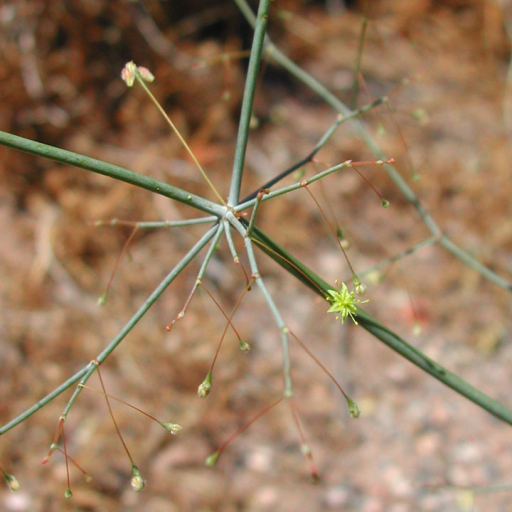
Often called the "Little Desert Trumpet," Eriogonum trichopes is a sculptural standout of the American Southwest. It is famous for its curious, hollow "inflated" stems that look like miniature yellow-green balloons scattered across the desert floor. This hardy survivor brings a minimalist, architectural beauty to xeric landscapes and rock gardens.
🔍 How to Identify
- 🌿 The Base: Look for a ground-hugging rosette of oval-to-round leaves with slightly wavy, hairy edges that stay close to the soil to conserve moisture.
- 🎺 Swollen Stems: The most iconic feature is the "trumpet"—the stems swell at the joints (internodes), creating hollow, inflated segments that give the plant its nickname.
- 🌼 Lacy Bloom: Tiny, brilliant yellow flowers appear in airy, branch-like clusters at the top, giving the entire plant a misty, golden appearance from a distance.
🏡 In Your Garden
- 🏜️ Drainage is Key: This plant is a true desert specialist. It thrives in lean, sandy, or gravelly soil and will quickly succumb to root rot if left in heavy, water-retaining garden soil or rich organic mulch.
- 🐝 Pollinator Magnet: Despite its delicate appearance, it is a powerhouse for local biodiversity. It provides a vital nectar source for tiny native bees and butterflies during the hottest months of the year when other plants have withered.
⚠️ Safety & Toxicity
- ✅ Non-Toxic: Eriogonum trichopes is generally considered safe and non-toxic for humans, dogs, and cats.
- 🌾 Brittle Texture: While it lacks thorns, the plant becomes very "twiggy" and brittle as it dries. Be mindful that the skeletal stems can be sharp enough to poke sensitive paws or ankles if stepped on.
✨ Fun Fact
Scientists are still debating the exact purpose of those "inflated" stems! Some believe the hollow chambers store extra carbon dioxide for photosynthesis, while others think they act as a physical barrier to stop crawling insects from reaching the flowers.

Detailed Care Instructions
To grow Eriogonum trichopes, also known as the little desert trumpet plant, you can follow these steps:
- Climate and soil: Eriogonum trichopes is native to desert regions, so it requires well-draining soil and a sunny location. Check if your climate replicates its native habitat or if it requires additional protection in colder regions.
- Seeds or transplants: You can grow this plant from seeds or purchase transplants from a nursery. If using seeds, sow them in early spring or fall, and follow the seed packet instructions for proper planting depth and spacing.
- Planting: Prepare the soil by removing any weeds or grass from the planting area. Dig a hole slightly larger than the root ball of the transplant or seedling. Backfill the hole with soil, gently firming it around the roots. Space multiple plants according to their mature size, usually around 12-18 inches apart.
- Watering: Eriogonum trichopes is a drought-tolerant plant that prefers minimal watering once established. Water new plants deeply and regularly until they are established, then gradually reduce watering frequency. Be careful not to overwater as this can cause root rot.
- Mulching: Apply a layer of mulch around the base of the plant to retain moisture, suppress weeds, and insulate the roots during extreme temperatures. Use organic materials such as wood chips or compost.
- Pruning: Little pruning is required for Eriogonum trichopes. However, you can lightly trim back any dead or damaged stems in late winter or early spring to promote healthy growth.
- Fertilization: These plants generally do not require frequent fertilization. If your soil is poor, you can apply a slow-release, balanced fertilizer once a year in early spring.
- Pests and diseases: Eriogonum trichopes is generally resistant to most pests and diseases. However, keeping an eye out for common garden pests and promptly addressing any issues can help maintain plant health.
Remember to consult local gardening resources or consult a nursery for region-specific guidance on growing Eriogonum trichopes.

Place in a bright room that is sun drenched almost all day. Or directly in a south-facing window.

Eriogonum Trichopes plants require frequent and consistent watering during the first growing season to become established. The soil should be moist but not waterlogged. In subsequent years, they can tolerate drought and sporadic watering. Watering should be reduced or stopped during the dormant season, typically from late fall until early spring. It is important to avoid overhead watering as this can cause the leaves to become waterlogged and potentially lead to disease. Instead, aim to water at the base of the plant to avoid wetting the foliage. Mulching around the base of the plant can help retain moisture in the soil and reduce the frequency of watering. Overall, it is recommended to water Eriogonum Trichopes plants deeply, but infrequently to encourage deep root growth.
- Choose a balanced, slow-release fertilizer with equal parts nitrogen, phosphorus, and potassium.
- Apply the fertilizer in early spring or late fall, when the plant is not actively growing.
- Use a light hand when applying the fertilizer, as Eriogonum Trichopes is sensitive to excess nutrients.
- Water the plant well after fertilizing to help distribute the nutrients throughout the soil.
- Avoid fertilizing during hot, dry weather, as this can stress the plant.
- Monitor the plant for signs of nutrient deficiency or excess, such as yellowing leaves or stunted growth, and adjust the fertilizer application accordingly.
Eriogonum trichopes thrives in a well-draining soil that is rich in organic matter. It prefers a soil with a slightly acidic to neutral pH ranging from 5.5 to 7.5. The plant also requires a well-aerated soil that allows excess water to drain easily. It is recommended to use loamy or sandy soil that is gritty in texture as it allows for proper movement of air and nutrients. Conversely, it is essential to avoid heavy clay or compacted soils, which can restrict water and nutrient movement, leading to poor plant growth. The plant also needs full sun exposure to grow healthily; hence it is recommended to plant it in an area with at least six hours of direct sunlight.
To propagate this plant, you can collect seeds in the fall and sow them in a well-draining soil mix. Cover the seeds with a thin layer of soil and keep them moist until they germinate. Alternatively, you can take stem cuttings from the plant in the spring or fall and place them in a rooting hormone before planting them in a well-draining soil mix. Keep the cuttings moist until they root and begin to grow. With proper care and attention, your propagated plants should thrive and produce new growth.








