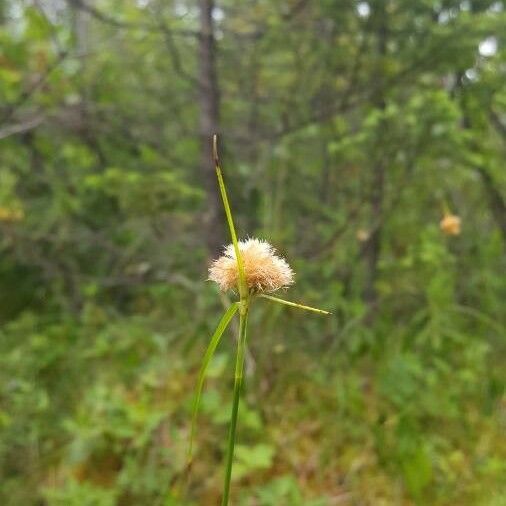
Plant Overview
Often called "Tawny Cottongrass," this enchanting sedge looks as though a handful of wild silk or cotton has been snagged by the tips of tall meadow grasses. Native to the acidic bogs and wetlands of eastern North America, it transforms soggy, difficult terrain into a shimmering landscape of copper and cream. While it isn't a true grass, its delicate, fluffy seed heads have earned it a legendary reputation in folklore as "the wool of the bog."
🔍 How to Identify
- ☁️ The "Cotton" Head: Unlike other species that are pure white, this plant features dense, tawny or brownish-orange bristles that form a soft, rounded tuft about an inch wide.
- 📏 Stiff Stems: It grows on slender, upright stalks that can reach up to 3 feet tall, often appearing more rigid and woody than standard lawn grass.
- 🌿 Narrow Foliage: The leaves are very thin, flat, and grass-like, usually concentrated at the base of the plant or sparsely along the lower stem.
🏡 In Your Garden
- 💧 The Bog Specialist: This is not a plant for a standard flower bed. It requires "wet feet" and highly acidic, peaty soil. It is a perfect choice for the edges of a backyard pond or a dedicated bog garden where other plants might drown.
- ☀️ Sun Seeker: To produce those iconic fluffy plumes, it needs full sun. In the shade, the plant will become leggy and the "cotton" will be sparse and dull.
- 🌾 Winter Interest: While many wetland plants collapse in the cold, the tawny heads of Eriophorum virginicum often persist into the autumn, providing a unique texture to the winter landscape.
⚠️ Safety & Toxicity
- ✅ Non-Toxic: Tawny Cottongrass is generally considered safe and non-toxic to humans, dogs, and cats.
- 🧤 Rough Texture: While not "sharp," the edges of the leaves can be slightly abrasive or "saw-like" if handled roughly, which may cause minor skin irritation for those with sensitive hands. It is best enjoyed visually rather than as a snack for curious pets.
✨ Fun Fact
In historical times, the fluffy "wool" of the Cottongrass was collected by resourceful locals to stuff pillows and mattresses. It was also once used as a makeshift wick for oil lamps and candles when real cotton was too expensive or unavailable!

Detailed Care Instructions
To grow Eriophorum virginicum, also known as tawny cotton grass or Virginia cottongrass, you can follow these steps:
- Climate: Eriophorum virginicum is a wetland plant that requires a moist growing environment, preferably in full sun or partial shade. Make sure you have suitable conditions, including a high water table or a consistently moist soil.
- Soil preparation: Prepare the planting area by removing any weeds or grass. The soil should be slightly acidic to neutral (pH 5.5-7) and rich in organic matter. You can amend the soil with compost or well-rotted manure.
- Planting: Plant the Eriophorum virginicum seeds or seedlings in the prepared soil. Space them at least 12 inches apart to give the plants room to grow. Gently cover the seeds with a thin layer of soil or place the seedlings in shallow holes.
- Watering: Keep the soil consistently moist, but avoid overwatering and water stagnation. Regularly check the moisture level and water as needed to maintain a damp growing environment.
- Mulching: Apply a layer of organic mulch, such as straw or wood chips, around the plants to help retain moisture and suppress weeds. Ensure the mulch does not cover the seedlings or touch the stems directly to prevent rotting.
- Maintenance: Monitor the plants for any signs of pests or diseases. Regularly remove any weeds that may compete with the Eriophorum virginicum for nutrients and water.
- Propagation: If you have an existing Eriophorum virginicum plant, you can propagate it by dividing the clumps every few years. Dig up the clump and carefully separate the individual plants, ensuring each division has a good set of roots. Replant the divisions in a suitable location.
- Winter care: Eriophorum virginicum is a hardy perennial that can withstand winters in cold climates. However, in extremely cold regions, it may benefit from a layer of mulch or straw for added protection during harsh winter weather.
Remember to consult local gardening resources or native plant experts to ensure specific care requirements for your region, as environmental conditions can vary.

Place in a bright room that is sun drenched almost all day. Or directly in a south-facing window.

The Eriophorum Virginicum plant prefers to grow in moist soil and requires regular watering. When watering, be sure to provide enough moisture to saturate the root system, but avoid overwatering as it can lead to root rot. Wait until the top inch of soil is dry before watering again. Consider using a drip irrigation system to provide consistent, gradual watering without getting the leaves wet. Alternatively, you can water by hand, making sure to direct the water at the base of the plant and not the foliage. In the winter, reduce watering frequency as the plant enters dormancy.
To fertilize this plant, it is recommended to use a slow-release fertilizer during the growing season. Apply the fertilizer in early spring and then again in mid-summer. Avoid over-fertilizing as it can lead to excessive growth and weak stems. Additionally, it is important to water the plant thoroughly after fertilization to ensure the nutrients are absorbed properly.
Eriophorum Virginicum is a type of plant that grows well in a specific soil type. The recommended soil for this plant is highly organic and acidic. The pH level should be between 4.5 to 6.0, as this plant thrives in acidic environments. A suitable soil mix for this plant can be composed of a blend of sphagnum moss, peat moss, and sand. It requires a lot of water, so a well-draining soil mix is essential to prevent root rot and other issues caused by waterlogged soil. The soil should also be nutrient-rich and have a good structure. Adding fertilizer to the soil can enhance the nutrient content and improve the growth of the plant. In summary, Eriophorum Virginicum grows best in a highly organic, acidic, well-draining, and nutrient-rich soil mix.
Eriophorum Virginicum is a plant that can be easily propagated by division. This is best done in the early spring when the plant is just starting to grow. First, carefully dig up the plant and gently separate the root mass into sections. Each section should have a good amount of roots and at least one stem with leaves. You can then replant each section in a new location or container with well-draining soil and adequate moisture. It may take some time for the transplanted sections to establish themselves, but with proper care and attention, they will begin to grow and thrive.








