Plant Overview
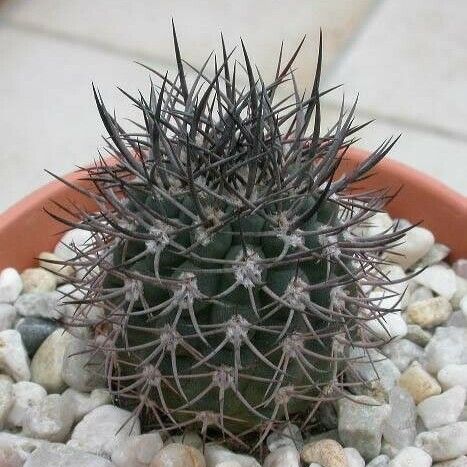
Known for its fierce, cage-like armor of curved spines, Eriosyce bulbocalyx is a desert gem hailing from the arid slopes of Argentina. Collectors often call it the "Bulbous-Calyx Cactus" because of the strangely fuzzy, rounded flower base that emerges from its woolly crown. It looks like a miniature copper fortress, perfectly adapted to survive some of the harshest, sun-drenched landscapes on Earth.
🔍 How to Identify
- 🌵 Body Shape: It starts as a perfect, solitary sphere but can stretch into a short cylinder as it ages, wearing a dusty, blue-gray or olive-green skin.
- ⚔️ Spine Armor: The plant is densely covered in thick, upward-curving spines that range from deep reddish-brown to a weathered gray, creating a protective "nest" around the body.
- 🌸 The Bloom: It produces funnel-shaped flowers in shades of creamy yellow or pale rose, characterized by a distinctively thick, woolly tube that looks like a tiny cotton ball tucked between the spines.
🏡 In Your Garden
- ☀️ Sun & Stress: This cactus thrives on intense light; high UV exposure is actually what helps it maintain its tight, colorful spine growth and prevents it from becoming "leggy" or weak.
- 🪨 Mineral Roots: In its native habitat, it grows in rocky, mineral-rich soil. To keep it happy at home, avoid standard potting soil; it requires a gritty, volcanic substrate that dries out almost instantly to mimic its mountain home.
- 🌬️ Airflow is Key: Because of its woolly top, it can trap moisture easily. It prefers "breezy" conditions and low humidity to prevent rot from setting in between its ribs.
⚠️ Safety & Toxicity
- 🛡️ Physical Hazard: This plant is non-toxic to humans and pets, meaning it won't cause poisoning if accidentally nibbled.
- 🌵 Sharp Warning: While not chemically toxic, the spines are incredibly stiff and hooked. It is "pet-hazardous" due to the risk of deep punctures. Always use thick leather gloves or a "towel wrap" technique when moving the plant, as the spines easily snag on skin and fabric.
✨ Fun Fact
The genus name Eriosyce comes from the Greek words erion (wool) and syke (fig). This refers to the plant's seed pods, which look like tiny, fuzzy figs nestled in the cactus's woolly apex!

Detailed Care Instructions








