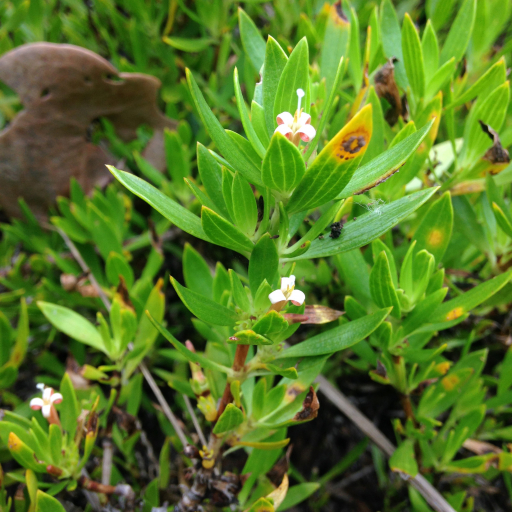
Plant Overview
Known affectionately as the Golden Creeper or Beach Creeper, this resilient native of the Caribbean and Florida is a true coastal survivor. It is often found hugging the sandy dunes, acting as a living golden carpet that protects the shoreline from erosion. With its sun-kissed foliage and tiny, star-like flowers, it’s a favorite for gardeners looking to add a "beachy" vibe to harsh, salty environments.
🔍 How to Identify
- 🌿 The Foliage: Small, narrow, and leathery leaves that are typically a bright yellowish-green. In high sun, the entire plant can take on a distinct golden hue.
- 🌸 The Flowers: Tiny, four-petaled tubular flowers that range from white to pale pink. They appear sporadically throughout the year, peeking out from the leaf axils.
- 🌕 The Berries: Small, round, translucent fruits that turn a vibrant golden-yellow when ripe, looking like tiny glowing beads scattered across the branches.
🏡 In Your Garden
- 🌊 Coastal Champion: This is one of the few plants that genuinely enjoys salt spray and wind. It is an "obligate halophyte," meaning it thrives in salty conditions that would wither most other garden plants.
- 🦋 Butterfly Buffet: While it stays low to the ground, it is a high-value plant for pollinators. It is a specific nectar source for the rare Martial Scrub-Hairstreak butterfly, making it a must-have for conservation-minded gardeners.
- ✂️ Low Maintenance: Because it possesses a deep taproot, it is incredibly drought-tolerant once established. However, this same taproot means it dislikes being moved, so choose its permanent "forever home" carefully before planting.
⚠️ Safety & Toxicity
- ✅ Status: Generally considered non-toxic.
- 🐾 Details: There are no reported toxic effects for cats, dogs, or humans. While the berries are a favorite snack for tropical birds, they are generally not considered palatable for humans and should not be consumed.
✨ Fun Fact
In the Bahamas, this plant is sometimes called "Coughbush." Historically, it was used in traditional folk medicine to create a tea intended to soothe respiratory issues and persistent coughs.

Detailed Care Instructions
To grow Ernodea Littoralis, also known as beach creeper or helepidendron, follow these steps:
- Climate and Soil Requirements:
- Ernodea Littoralis thrives in coastal areas with sandy or loamy soil.
- The plant prefers a warm and humid climate.
- It can tolerate salt spray and mild drought conditions.
- Ernodea Littoralis thrives in coastal areas with sandy or loamy soil.
- Planting:
- Choose a location that receives full sun or partial shade.
- Dig a hole slightly larger than the root ball of the plant.
- Place the Ernodea Littoralis in the hole, ensuring that the plant is planted at the same depth as it was in the pot.
- Fill the hole with soil and gently firm it around the plant.
- Choose a location that receives full sun or partial shade.
- Watering:
- Water the plant deeply after planting to ensure proper establishment.
- Once established, Ernodea Littoralis requires moderate watering.
- Water the plant when the top inch of soil feels dry, but make sure the soil is not constantly wet.
- Water the plant deeply after planting to ensure proper establishment.
- Pruning:
- Regular pruning helps maintain the shape and health of the plant.
- Prune Ernodea Littoralis in early spring or after flowering.
- Remove any dead or damaged branches.
- You can also lightly trim the plant to control its size and encourage bushy growth.
- Regular pruning helps maintain the shape and health of the plant.
- Fertilizing:
- Apply a balanced slow-release fertilizer in spring to provide essential nutrients for the plant.
- Follow the manufacturer's instructions for the appropriate dosage and application method.
- Avoid over-fertilizing, as it can lead to excessive growth and weak branching.
- Apply a balanced slow-release fertilizer in spring to provide essential nutrients for the plant.
- Pests and Diseases:
- Ernodea Littoralis is generally resistant to pests and diseases.
- However, be on the lookout for signs of common garden pests like aphids or spider mites.
- If necessary, use organic pest control methods or consult a professional.
By following these guidelines, you can successfully grow Ernodea Littoralis and enjoy its lush foliage and vibrant flowers in your garden.
- Ernodea Littoralis is generally resistant to pests and diseases.

Place in a bright room that is sun drenched almost all day. Or directly in a south-facing window.

Ernodea Littoralis plant is a type of greenery that requires careful consideration when it comes to watering. To keep this plant healthy and thriving, it is essential to follow proper watering techniques. First, it is important to understand that watering Ernodea Littoralis should be done based on its growth cycle and environmental factors.
To water Ernodea Littoralis, begin by checking the moisture levels of the soil. It is best to test the soil by inserting your finger about an inch deep into the soil. If the soil feels dry, it is time to water the plant. However, if the soil feels moist, you should wait a few days before watering.
Make sure that you water the plant thoroughly, allowing the water to soak into the soil and reach the roots. However, you should also ensure that the soil is not becoming waterlogged, as this can lead to root rot and other issues.
To prevent waterlogging, water the plant lightly and slowly, giving the soil time to absorb the water before adding more. Also, if possible, try to water the plant early in the morning or just before sunset when temperatures are cooler. This will help prevent water from evaporating too quickly and provide the plant with enough time to absorb the water it needs.
Lastly, be mindful of the plant's growth cycle and environmental factors. During the growing season, the Ernodea Littoralis plant may require more water than in the dormant period. Additionally, if the plant is exposed to direct sunlight or is planted in a wind-prone area, it may require more frequent watering.
Overall, to water the Ernodea Littoralis plant, it is important to check the soil moisture levels, water thoroughly but lightly, and be mindful of the plant's growth cycle and environmental factors.
The Ernodea Littoralis plant should be fertilized with a balanced fertilizer every two weeks during the growing season. Fertilizer should be applied according to the manufacturer's instructions. It is important to avoid over-fertilization, as this can lead to plant stress and damage. It is also recommended to water the plant thoroughly before and after fertilization to help the fertilizer reach the roots.
Ernodea Littoralis prefers a well-draining soil that is sandy and has adequate levels of organic matter. The pH of the soil should be slightly acidic to neutral, ranging from 6.0 to 7.5. It is essential to avoid using heavy clay soil or heavy soil mixes that can cause drainage issues and root rot.
In addition, soil should be enriched with organic matter, such as compost, peat moss, or aged manure, to increase nutrient availability and water retention. Ernodea Littoralis is a salt-tolerant plant and thrives in sandy soils that have moderate levels of salinity. Therefore, adding crushed sea shells, oyster shells, or seaweed can also benefit the growth of this plant.
The soil should be kept moist but not waterlogged, and it is essential to avoid overwatering, which can lead to root rot. Adding a layer of mulch around the plant can help conserve moisture and protect the roots from extreme temperatures. It is crucial to monitor the soil moisture and adjust watering according to the plant's needs.
Ernodea Littoralis can be propagated through the process of stem cuttings. To do this, select a healthy stem from the parent plant and cut a section of it, around 4-6 inches in length, with a clean and sharp pair of scissors.
Remove the leaves from the bottom few inches of the stem and dip this end in rooting hormone powder. This will encourage the development of roots in the newly established plant.
Fill a small pot with well-draining soil and use a pencil or chopstick to create a hole in the center of the soil. Plant the cutting in the hole and press the soil gently around it to ensure it has good contact.
Water the cutting and cover the plant with a plastic bag to create a mini greenhouse. This will help to retain moisture and provide ideal growing conditions for the plant.
Place the pot in a warm and bright location, but avoid direct sunlight. Keep the soil moist but not waterlogged, and ensure the cutting is protected from strong winds or drafts.
After a few weeks, the plant should establish roots and begin to grow new leaves. Once this occurs, remove the plastic bag and continue to care for the plant as usual.








