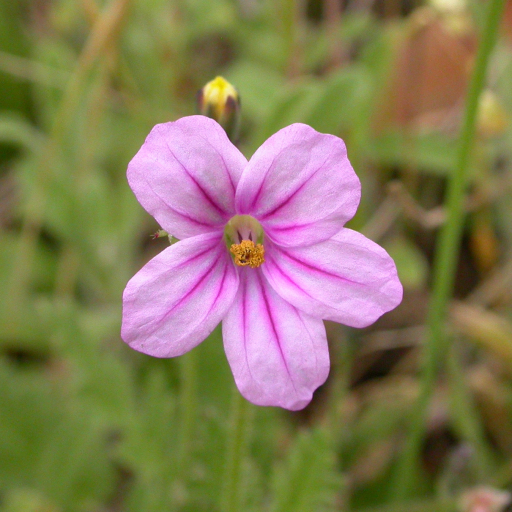
Plant Overview
The Longbeak Stork’s-bill is a hardy traveler from the Mediterranean that has successfully colonized dry grasslands across the globe. Known for its "explosive" personality and mechanical seeds, this plant is a master of survival in sun-baked, rocky soils. Its common name comes from its remarkable seed pods, which look exactly like the long, elegant beak of a wading bird.
🔍 How to Identify
- 🍃 Lobed Foliage: The leaves are oval but deeply cut into jagged lobes. They often grow in a flat rosette close to the ground, sometimes showing a reddish tint when stressed by heat or cold.
- 🌸 Lavender Blooms: It produces small, delicate five-petaled flowers in shades of lavender to deep purple. If you look closely, you’ll see dark veins that act as "nectar guides" for visiting insects.
- 📍 The "Beak": The most distinct feature is the fruit. After the flower fades, a needle-like seed pod develops that can grow up to 3 inches long, pointing skyward like a stork’s beak.
🏡 In Your Garden
- ☀️ The Ultimate Survivor: This plant thrives in "disturbed" soil—think gravel paths, dry meadows, or the edges of garden beds. It is extremely drought-tolerant and prefers full sun, making it a common sight in Mediterranean-style climates.
- ⚙️ Mechanical Seeding: You don't need to plant this species; it plants itself. The seeds are equipped with a "tail" that reacts to humidity. It coils when dry and uncoils when wet, effectively drilling the seed into the earth without any human help.
⚠️ Safety & Toxicity
- ✅ Generally Safe: Erodium botrys is not known to be toxic to humans or common household pets if ingested in small amounts.
- 🐕 Paw Protection: The primary safety concern is mechanical. The long, sharp seeds are designed to hook into things. They can easily become embedded in a dog’s fur, ears, or between paw pads, which can cause irritation or painful "foxtail-like" injuries.
✨ Fun Fact
The seeds of the Longbeak Stork's-bill are essentially tiny biological machines. Because of their hygroscopic (water-reacting) tails, a seed lying on the surface of the soil can actually "walk" or "leap" across the ground until it finds a crevice to drill into!

Detailed Care Instructions
To grow an Erodium Botrys plant, follow these steps:
- Climate and location: Erodium Botrys plants prefer a Mediterranean climate with moderate temperatures. Ensure that you have a suitable location with full sun exposure and well-drained soil.
- Soil preparation: Prepare a planting area by removing any weeds or grass. Loosen the soil with a garden fork or tiller and amend it with organic matter such as compost or well-rotted manure to improve drainage and nutrient content.
- Propagation: Erodium Botrys can be propagated by either seeds or cuttings. Seeds can be sown directly in the prepared soil in either spring or fall. Alternatively, you can start seeds indoors 4-6 weeks before the last frost date. For cuttings, take a 4-6 inch cutting from a mature plant, remove the lower leaves, and plant it in a pot filled with well-draining potting mix. Keep the soil moist until root development.
- Planting: If using seeds, sow them at a depth of 1/8 inch and cover lightly with soil. Space the seeds or plants at least 6-12 inches apart. Gently press the soil around the seeds or cuttings to ensure good contact.
- Watering: Initially, water the plant thoroughly to support germination or root establishment. Once established, Erodium Botrys plants are relatively drought-tolerant, but regular watering during dry periods is still beneficial. Aim for deep, infrequent watering sessions to encourage deep root growth.
- Mulching and weed control: Apply a layer of organic mulch around the plants to conserve moisture, suppress weed growth, and regulate soil temperature. Avoid mulching too close to the stem to prevent rotting.
- Fertilization: Erodium Botrys plants generally do not require heavy fertilization. However, if your soil lacks nutrients, you can provide a balanced organic fertilizer once or twice during the growing season to promote healthy growth.
- Pruning: Pruning is generally not necessary for Erodium Botrys plants. However, you can remove any dead or diseased foliage if needed.
- Pests and diseases: Erodium Botrys plants are generally resistant to pests and diseases. However, they may occasionally face issues like aphids or powdery mildew. Monitor your plants regularly, and if any pests or diseases appear, treat them promptly with appropriate organic insecticides or fungicides.
- Harvesting: Erodium Botrys plants produce attractive, delicate pink or purple flowers that can be left to add beauty to your garden. However, if you want to collect seeds for further propagation, allow the flowers to bloom fully and fade before harvesting the seeds from the seed pods.
By following these guidelines, you can successfully grow Erodium Botrys plants and enjoy their lovely foliage and flowers in your garden.

Place in a bright room that is sun drenched almost all day. Or directly in a south-facing window.

To properly water this plant, you should first determine if the soil is dry by inserting a finger into the soil up to the first knuckle. If the soil feels dry, then it's time to water. Fill a watering can or bucket with room temperature water and slowly pour it around the base of the plant, avoiding getting water on the leaves. Water until the soil is moist but not soggy. It is important not to let the plant sit in water, as this can lead to root rot. Watering should be done regularly, about once a week or as needed depending on the plant's location and environment. While it is important to keep the soil moist, it should never be allowed to become completely dry as this can damage the plant.
To fertilize Erodium Botrys plant, apply a balanced fertilizer in spring and mid-summer. Follow the manufacturer's instructions for the amount to use and apply evenly around the plant. Water the plant after fertilizing. Avoid fertilizing during the winter months when the plant is dormant.
Erodium Botrys is a plant that prefers well-draining soil that is slightly alkaline to neutral. The soil should be moist but not waterlogged, and should be mixed with organic matter such as compost to increase its fertility. The plant prefers a sandy or loamy soil texture, and should be grown in a location that receives full sun or partial shade. It is important to avoid over-fertilizing the soil, as this can lead to excess leaf growth and reduced flower production. Overall, a well-draining, nutrient-rich soil is best for growing Erodium Botrys.
To propagate this plant, you will need to collect mature seeds from the parent plant. Wait until the seeds have fully developed and have turned a brownish color before harvesting them. Once they are ready, gently remove them from the seedhead.
Prepare a well-draining, sandy soil mix and moisten it slightly. Place the seed onto the soil surface and gently press them into the soil. Cover the container with plastic wrap to create a mini greenhouse. Place it in a warm, bright location, out of direct sunlight.
The seeds should start to germinate within two to three weeks. Once the seedlings have grown a couple of sets of true leaves, place them into individual pots, and continue to care for them.
Over time, the young plants will grow into mature plants, and you can enjoy their lovely flowers.








