Plant Overview
Often called the Mediterranean Stork’s-bill, this resilient beauty is a master of survival in harsh, sun-drenched landscapes. It earns its nickname from its distinctive seed pods, which look like long, pointed bird beaks ready to take flight. While it may look like a delicate wildflower, it is a rugged traveler that has spread from the coastal rocks of the Mediterranean to various sandy habitats across the globe.
🔍 How to Identify
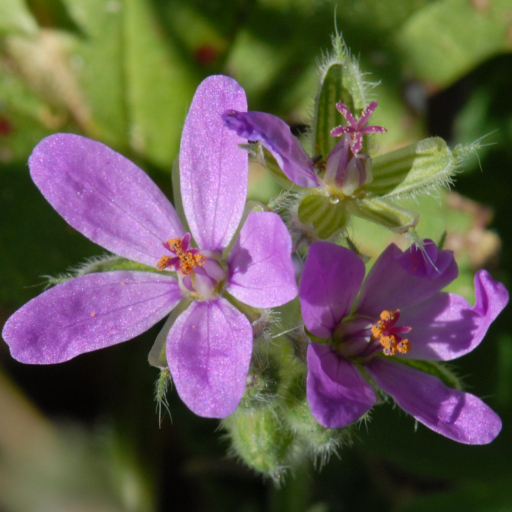
- 🌸 Petals & Blooms: Features five delicate, oval petals that range from soft pink to lavender-violet. If you look closely, you’ll often see tiny, dark veins radiating from the center like a starburst.
- 🌿 Textured Foliage: The leaves are deeply lobed and somewhat heart-shaped at the base, giving the plant a soft, fern-like appearance that forms a lush green carpet over the soil.
- 🕊️ The "Beak": The most iconic feature is the long, slender fruit. After the flower petals fall away, the remaining structure grows into a sharp, beak-like point that stands upright.
🏡 In Your Garden
- 🏜️ Drought Specialist: This plant thrives in "neglected" spots. It prefers well-draining, sandy, or rocky soil and can survive long periods without water, making it an excellent choice for rock gardens or xeriscaping.
- ⚓ Taproot Stability: Like many of its cousins, it grows a sturdy taproot. This makes it very hardy against wind and heat, but it also means it hates being moved—once you plant it, it’s best to leave it where it is.
- 🌱 The Self-Sower: It is a prolific spreader. If you don't want it taking over your garden, be sure to trim the "beaks" before they dry out and launch their seeds.
⚠️ Safety & Toxicity
- ✅ Low Risk: Erodium chium is generally considered non-toxic to humans and is not known for causing skin irritation upon touch.
- 🐾 Pet Watch: While it isn't listed as a major toxin for cats or dogs, the sharp, pointed seed pods can sometimes get stuck in fur or paws, or cause minor mouth irritation if chewed on.
✨ Fun Fact
The seeds of the Stork's-bill are actually "mechanical." When the seed pod dries, it coils into a tight spiral like a spring. When it hits the ground and gets damp from rain or dew, it uncurls with enough force to literally drill itself into the soil!

Detailed Care Instructions
Erodium chium, also known as the Redstem Stork's Bill, is a hardy perennial plant that is relatively easy to grow. Here are some tips on how to successfully grow Erodium chium:
- Choose the right location: Erodium chium prefers full sun and well-draining soil. Make sure to plant it in a location where it will receive at least 6-8 hours of sunlight per day.
- Prepare the soil: Before planting, amend the soil with organic matter such as compost to improve drainage and fertility.
- Planting: Erodium chium can be grown from seeds or cuttings. If planting from seeds, sow them directly into the soil in the spring after the last frost. If using cuttings, take them from a healthy plant and plant them in well-draining soil.
- Watering: Water Erodium chium regularly, keeping the soil evenly moist but not waterlogged. Be careful not to overwater, as this can lead to root rot.
- Fertilizing: Erodium chium does not require a lot of fertilizer, but you can feed it with a balanced fertilizer once or twice during the growing season.
- Pruning: Trim back the plant after flowering to encourage new growth and maintain its shape.
- Pests and diseases: Erodium chium is relatively pest and disease-resistant, but keep an eye out for common garden pests such as aphids and spider mites. Treat any infestations promptly to prevent damage to the plant.
With proper care and attention, your Erodium chium plant should thrive and produce beautiful red flowers throughout the growing season.

Place in a window with dappled sun or a spot in the middle of a room. Or directly in a window facing west or east.

To water this plant, it is important to first check the soil moisture level and determine if watering is necessary. The plant prefers well-draining soil, so it is important not to overwater it. When watering, it is best to do so deeply and infrequently, allowing the soil to dry out slightly between watering sessions. It is also important to avoid getting water on the leaves and stem of the plant, as this can lead to fungal issues. During the winter months, the plant may require less frequent watering, as it is in a state of dormancy. Overall, it is best to monitor the plant's soil moisture levels and adjust watering accordingly.
The Erodium Chium plant should be fertilized once a month during the growing season, from spring to early fall. Use a balanced liquid fertilizer specifically designed for flowering plants, following the instructions on the label for the correct dilution ratio. Avoid over-fertilizing, as this can lead to excessive foliage growth at the expense of flowers. Water the plant thoroughly after fertilizing to help distribute the nutrients.
The soil that is recommended for growing Erodium Chium should be well-draining and should have good fertility. It is best to use a soil mix that is composed of equal parts of sand, loam, and peat moss. The soil should be slightly acidic with a pH range of 5.5 to 6.5. It is important to ensure that the soil is moist but not waterlogged, as this can lead to root rot. The plant prefers a sunny position and should be watered regularly during the growing season. Fertilizing with a balanced fertilizer once a month is recommended.
Erodium chium plants can be easily propagated by division, cuttings, or seed.
To propagate Erodium chium by division, simply dig up the plant and separate the root system into smaller pieces, making sure each division has enough roots and foliage to survive on its own. Replant the divisions in well-draining soil and water thoroughly.
Another way to propagate Erodium chium is by taking stem cuttings. Select a healthy stem with at least two nodes and remove any foliage from the lower part of the cutting. Dip the cut end in rooting hormone and plant it in a pot filled with a well-draining soil mix. Keep the cutting moist and in a warm, sunny location until roots develop.
Lastly, Erodium chium can also be propagated by seed. Collect the seeds from the plant when they are ripe and sow them in a seed-starting mix. Keep the soil consistently moist and place the pot in a warm, well-lit area. Once the seedlings have developed strong roots, they can be transplanted into individual pots or directly into the garden.








