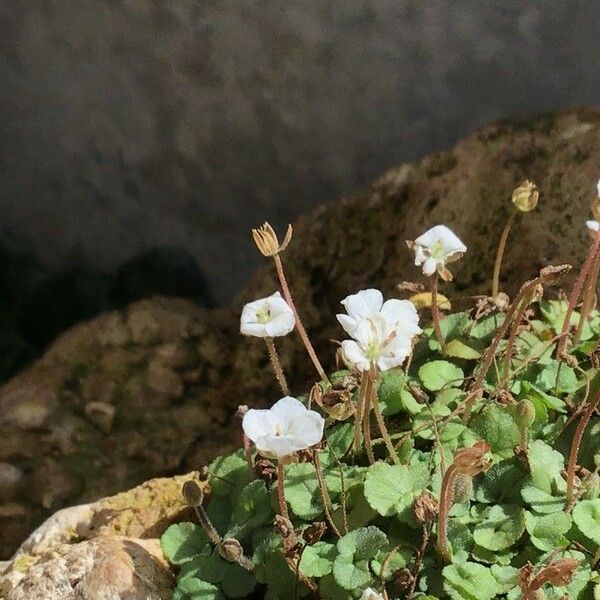
Plant Overview
Known affectionately as the Alpine Geranium or Dwarf Storksbill, this tiny treasure hails from the rocky crevices of the Balearic Islands. Despite its delicate appearance, it is a resilient little survivor that forms dense, velvety carpets of green. It’s a favorite for "fairy gardens" because its perfectly proportioned leaves and blooms look like a miniature version of a classic garden geranium.
🔍 How to Identify
- 🌿 The Foliage: Look for tiny, heart-shaped leaves with scalloped edges. They are deep green, slightly ruffled, and grow in tight, mounding rosettes that hug the ground.
- 🌸 The Blooms: The flowers are dainty and five-petaled, usually appearing in shades of white or soft pink. If you look closely, you’ll see delicate, dark-pink veins etched into the petals like fine pinstripes.
- 📏 Growth Habit: This plant is a true "ground-hugger," rarely rising more than 2-3 inches tall but slowly spreading outward to create a lush, moss-like mat.
🏡 In Your Garden
- 💧 The Drainage Rule: Because it is an alpine native, its biggest enemy is "wet feet." It thrives in gritty, well-draining soil—think rock gardens, stone troughs, or even tucked into the cracks of a dry stone wall.
- ☀️ Sun & Shelter: While it loves the sun, it prefers a bit of afternoon shade in very hot climates to prevent its tiny leaves from scorching. It’s a great "living mulch" for small potted specimens.
- ❄️ Winter Care: It is semi-evergreen, but in colder zones, it may go dormant. Avoid overwatering during the winter, as cold, soggy soil will cause the roots to rot quickly.
⚠️ Safety & Toxicity
- ✅ Pet & Human Safety: Erodium reichardii is generally considered non-toxic to cats, dogs, and horses. It is a very safe choice for accessible garden borders.
- ✋ Skin Sensitivity: Unlike some of its wild cousins, it lacks harsh stinging hairs, though very sensitive individuals might experience mild redness if handling the foliage excessively.
✨ Fun Fact
The name "Storksbill" comes from the plant's unique seed pods. Once the flower fades, the seed head elongates into a sharp, beak-like shape that resembles the head and bill of a stork! When dry, these "beaks" twist like a spring to catapult the seeds away from the parent plant.

Detailed Care Instructions
To grow Erodium reichardii (Reichard's cranesbill), you can follow these steps:
- Planting: Choose a location with well-draining soil and full sun to partial shade. Erodium reichardii prefers sandy or loamy soil. Plant the seeds directly into the ground in spring or summer and space them around 6-12 inches apart.
- Soil preparation: Prepare the soil by removing weeds, rocks, and other debris. Loosen the soil with a garden fork or tiller, and mix in organic matter like compost to improve drainage and fertility.
- Watering: Keep the soil consistently moist during the germination period. Water deeply but less frequently once the plant is established. Avoid waterlogging the soil, as the plant prefers drier conditions.
- Mulching: Apply a layer of organic mulch around the plant to help retain moisture and suppress weed growth. This is especially important during hot and dry periods.
- Fertilizing: Erodium reichardii typically doesn't require heavy fertilization. However, you can apply a balanced slow-release fertilizer or organic compost in early spring before new growth starts.
- Pruning: Deadhead spent flowers regularly to encourage continuous blooming and prevent self-seeding. Additionally, pruning the plant back by one-third in early spring helps maintain its shape and promote better flowering.
- Pests and diseases: Erodium reichardii is generally resistant to pests and diseases. However, keep an eye out for aphids, slugs, and snails, and take appropriate measures if necessary.
- Winter care: Erodium reichardii is typically hardy and can withstand frost and cold temperatures. However, some winter protection may be necessary in extremely cold climates. Apply a layer of mulch around the base of the plant to insulate the roots.
With proper care and attention, your Erodium reichardii plant should thrive and produce attractive pink flowers throughout the growing season.

Place in a bright room that is sun drenched almost all day. Or directly in a south-facing window.

To water Erodium Reichardii effectively, it is essential to understand the specific requirements of this plant. Here are the details on watering practices for Erodium Reichardii:
1. Soil: Erodium Reichardii thrives in well-draining soil. It prefers a sandy or loamy soil mixture that allows excess water to drain freely and does not become waterlogged.
2. Watering frequency: Initially, after planting or potting, the plant should be watered thoroughly to settle the soil and establish healthy root growth. Then, the frequency of watering should be reduced, allowing the soil to partially dry out between each watering session. Overwatering can lead to root rot and other moisture-related issues. Aim to water the Erodium Reichardii plant every 7-10 days, adjusting based on climate and soil conditions.
3. Testing soil moisture: To determine if the plant requires watering, it is crucial to check the moisture level of the soil. This can be done by gently inserting a finger or a moisture meter into the soil, about a couple of inches deep. If the soil feels dry at this depth, it is an indication that the plant needs to be watered.
4. Watering technique: When watering Erodium Reichardii, it is advisable to use a gentle, slow watering technique. This allows the water to penetrate deeply into the root zone without causing soil erosion or water pooling on the surface. Direct the water towards the base of the plant, ensuring even distribution around the root area.
5. Morning watering: It is generally recommended to water Erodium Reichardii in the morning. This allows any excess moisture on the leaves or flowers to dry off during the day, reducing the risk of fungal diseases or other issues associated with prolonged moisture.
6. Rainfall considerations: While Erodium Reichardii requires regular watering, it is important to account for natural rainfall. If there have been consistent rain showers or heavy downpours, it might be necessary to adjust the watering frequency to prevent waterlogging and maintain appropriate moisture levels.
By following these guidelines, you can provide appropriate care and maintain optimal soil moisture for your Erodium Reichardii plant without relying on its common names.
To properly fertilize the Erodium reichardii plant, follow these instructions:
- Use a balanced fertilizer: Choose a fertilizer that has equal amounts of nitrogen, phosphorus, and potassium, often referred to as an NPK fertilizer. This balanced formulation will provide essential nutrients in the right proportions.
- Dilute the fertilizer: Follow the instructions on the fertilizer packaging to determine the proper dilution rate. Mix the appropriate amount of fertilizer with water according to the instructions, usually in a watering can or sprayer.
- Apply during the growing season: Fertilize the Erodium reichardii plant during its active growth period, typically in spring and summer. Avoid fertilizing during winter or when the plant is dormant.
- Apply evenly and carefully: Gently pour the diluted fertilizer over the soil around the plant, ensuring an even distribution. Avoid directly applying the fertilizer on the plant leaves or stem, as this may cause fertilizer burn.
- Water thoroughly: After fertilizing, water the plant deeply. This will help the roots absorb the nutrients and prevent any potential damage caused by concentrated fertilizer.
- Follow a regular fertilizing schedule: Repeat the fertilization every 4-6 weeks throughout the growing season. This will provide a steady supply of nutrients to support healthy growth.
Remember, it is always beneficial to observe the specific needs and preferences of your Erodium reichardii plant to determine the ideal fertilization routine.
When choosing soil for Erodium reichardii, it is important to provide the right growing conditions for the plant's optimal development. The ideal soil should have several characteristics to support its growth.
Firstly, the soil should be well-draining to prevent waterlogging or the accumulation of excessive moisture around the plant's roots. This is crucial as Erodium reichardii prefers slightly drier conditions and is sensitive to overwatering.
Secondly, the soil should have a slightly acidic to neutral pH level. A pH range between 6.0 and 7.0 is typically suitable for this plant. This will support optimal nutrient absorption and overall plant health.
Furthermore, the soil should be rich in organic matter, providing nutrients and ensuring good soil structure. Organic matter helps retain moisture without becoming waterlogged and enhances the soil's fertility, aiding in vigorous growth and blooming.
Additionally, sandy or loamy soil types are usually preferred for Erodium reichardii. These soil types promote good drainage while still retaining enough moisture for the plant's needs. Sandy soils prevent excess water accumulation, while loamy soils offer a balanced mix of clay, sand, and silt, providing excellent aeration and drainage.
Lastly, it is recommended to avoid heavy clay soils as they tend to retain water and can lead to root rot or other moisture-related issues. Erodium reichardii thrives in well-draining soil, so ensuring proper drainage is essential.
Overall, providing a well-draining, slightly acidic to neutral soil, enriched with organic matter and composed of sandy or loamy texture, will create a favorable growing environment for the Erodium reichardii plant.
Erodium reichardii, commonly known as alpine storksbill or Reichard's storksbill, is a species of flowering plant in the family Geraniaceae. It is a perennial herbaceous plant native to the European Alps.
To propagate Erodium reichardii, you can follow these steps:
- Seed Collection: Collect ripe seeds from the plant when the seed pods turn brown and start to split open. Make sure to collect seeds from healthy and vigorous plants.
- Seed Preparation: Remove the seeds from the dried seed pods. Clean the seeds by separating them from any debris or plant material. It is recommended to store the seeds in a cool and dry place until you are ready to sow them.
- Soil Preparation: Prepare a well-draining potting mix suitable for geraniums or succulents. A mix of equal parts of potting soil, perlite, and coarse sand works well. Sterilize the soil mix by baking it in an oven at 180°F (82°C) for 30 minutes to kill any pathogens or weed seeds.
- Sowing Seeds: Fill a small seed tray or individual pots with the prepared soil mix. Moisten the soil lightly with water. Sprinkle the seeds evenly on the soil surface, avoiding overcrowding. Lightly press the seeds into the soil but do not bury them too deep, as they require light to germinate.
- Germination: Place the seed tray or pots in a warm location with bright, indirect sunlight. Maintain a consistent temperature of around 70-75°F (21-24°C). The germination process may take between 14-30 days. Keep the soil evenly moist but not waterlogged.
- Seedling Care: Once the seeds germinate and the seedlings have developed a few sets of true leaves, you can transplant them into individual pots or a larger container. Use the same well-draining potting mix as before.
- Transplanting: Gently remove the seedlings from the tray or pot, taking care not to damage their delicate roots. Dig a small hole in the new container and place the seedling in it, ensuring it is at the same depth it was previously growing. Firmly press the soil around the base of the seedling to stabilize it.
- Watering and Maintenance: Water the newly transplanted seedlings thoroughly after transplanting and then only when the top inch of soil feels dry. Avoid overwatering, as it can lead to root rot. Place the plants in a location that receives bright, indirect sunlight for at least 6-8 hours a day.
- Hardening Off: Before permanently planting the seedlings outdoors, gradually expose them to outdoor conditions. Place them outside in a sheltered spot for a few hours each day, gradually increasing the exposure over a period of one to two weeks. This will help the plants adjust to the harsher outdoor environment.
- Planting Outdoors: Once the plants have been successfully hardened off, you can transplant them into their permanent location in well-draining soil. Choose a spot that receives at least partial sun and has good air circulation. Space the plants according to the specific requirements of Erodium reichardii, typically around 8-10 inches apart.
By following these propagation steps, you can successfully propagate Erodium reichardii and enjoy the beauty of this unique alpine plant in your garden.








