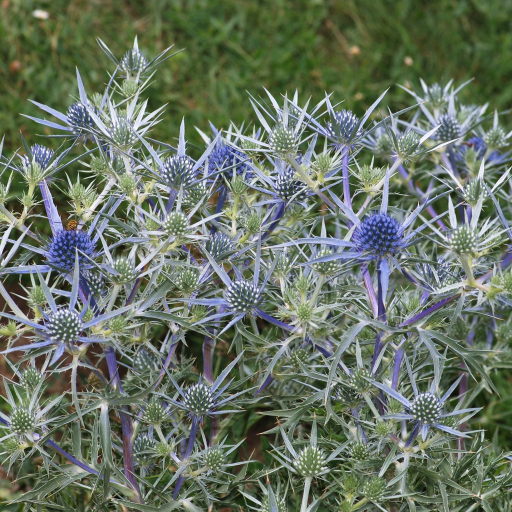
Plant Overview
Often called the Amethyst Sea Holly, this striking perennial looks like it was crafted from metallic silver and violet glass. Native to the sunny, rocky slopes of the Balkans and Italy, it is beloved by gardeners for its "architectural" silhouette and its ability to thrive where other plants wither. In the language of flowers, these prickly beauties often represent independence and attraction.
🔍 How to Identify
- 💎 The "Glow": Unlike other Sea Hollies, the upper stems and bracts of this species turn a vivid, electric amethyst-purple as they mature.
- ⚔️ Spiky Bracts: The flower heads are tight, egg-shaped umbels surrounded by a dramatic "collar" of long, narrow, prickly bracts.
- 🌿 Basal Foliage: At the ground level, the leaves are leathery, deeply lobed, and a muted blue-green, providing a soft contrast to the sharp flowers.
🏡 In Your Garden
- 📍 The Taproot Rule: This plant grows a long, sturdy taproot to find water deep underground. This makes it incredibly drought-tolerant, but it also means it hates being moved once planted—pick its "forever home" carefully!
- 🦋 Pollinator Party: While it looks tough and defensive, its flowers are actually a feast for honeybees and butterflies, who are attracted to the nectar hidden within the tiny florets.
- ☀️ Sun & Sand: It thrives in "lean" soil. If the soil is too rich or moist, the stems may become floppy and lose that iconic metallic purple sheen.
⚠️ Safety & Toxicity
- 🛡️ Mechanical Defense: The plant is generally considered non-toxic to humans and pets, but its sharp spines can cause physical irritation or small puncture wounds if handled without gloves.
- 🐾 Pet Safety: While not poisonous, most curious dogs and cats will give it a wide berth after one quick sniff of its prickly edges.
✨ Fun Fact
The Amethyst Sea Holly is a favorite in the world of floral design because it is an "everlasting" flower. It retains its intense violet color perfectly even after it has been cut and dried, making it a staple for permanent winter bouquets.

Detailed Care Instructions
To grow Eryngium Amethystinum, also known as Amethyst Sea Holly, follow these steps:
- Choose a suitable location: Eryngium Amethystinum prefers full sun to part shade. It can tolerate a range of soil types but prefers well-draining soil.
- Prepare the soil: If your soil is heavy or clayey, amend it with organic matter such as compost to improve drainage and fertility. Mix in sand if needed to improve drainage.
- Start with seeds or nursery-grown plants: You can start Eryngium Amethystinum from seeds or purchase young plants from a nursery. If starting from seeds, sow them indoors 6-8 weeks before the last frost date, or directly in the ground after the last frost.
- Sow the seeds or plant the seedlings: If sowing seeds, lightly press them onto the soil surface and cover with a thin layer of soil. Water gently. Seedlings should emerge in about 2-3 weeks. If using nursery-grown plants, dig a hole slightly larger than the root ball and place the plant in, ensuring that the top of the root ball is level with the soil surface. Backfill the hole with soil and gently firm it around the plant.
- Watering: Water regularly, especially during dry spells or in the first few weeks after planting. Eryngium Amethystinum is somewhat drought-tolerant once established but benefits from consistent moisture.
- Mulch: Apply a layer of organic mulch around the plants to help retain moisture, suppress weeds, and regulate soil temperature.
- Provide support: Eryngium Amethystinum has upright stems that may benefit from staking or using cages to prevent them from flopping over.
- Pruning and deadheading: Remove spent flowers to encourage continuous blooming. In late winter or early spring, cut the plant back to the ground to promote new growth and maintain its shape.
- Protect from pests: Eryngium Amethystinum is generally resistant to pests and diseases, but occasional issues like aphids or slugs may occur. Monitor the plants and take appropriate measures if necessary.
- Enjoy the blooms: Eryngium Amethystinum produces unique, cone-shaped, amethyst-colored flower heads surrounded by spiky bracts. Enjoy the striking beauty of the flowers and their long-lasting presence in the garden or cut for floral arrangements.

Place in a bright room that is sun drenched almost all day. Or directly in a south-facing window.

1. The watering needs of the Eryngium Amethystinum plant should be met by providing an adequate amount of water to ensure its proper growth and development.
2. Start by checking the soil moisture level before watering. Insert your finger about an inch into the soil near the plant and determine if it feels dry. If the soil feels moist, it indicates that watering may not be necessary at that time.
3. When watering the Eryngium Amethystinum plant, aim to provide a thorough watering session rather than shallow, frequent watering. This encourages deep root growth and overall plant health. The water should penetrate the soil and reach the roots.
4. For potted Eryngium Amethystinum plants, ensure that the container has drainage holes to allow excess water to escape. This prevents the plant from sitting in standing water, which can lead to root rot.
5. Water the plant at its base, avoiding overhead watering as it may promote the development of fungal diseases. Direct the water to the root zone instead of wetting the foliage.
6. Depending on environmental factors such as temperature, humidity, and sunlight, the Eryngium Amethystinum plant may require watering every 7-10 days during the growing season. However, this can vary, so it is essential to monitor the soil moisture level and adjust the watering frequency accordingly.
7. During periods of intense heat or drought, the Eryngium Amethystinum plant may require more frequent watering to prevent dehydration. Pay attention to signs of wilting or drooping leaves, as they can indicate water stress.
8. Consider using a watering can or a soaker hose to water the Eryngium Amethystinum plant slowly and evenly. This allows the water to be absorbed by the soil rather than running off the surface.
9. Mulching around the base of the plant can help retain moisture in the soil and reduce water evaporation. Use organic materials such as wood chips or straw, creating a layer about 2-3 inches thick.
10. In winter or during periods of dormancy, when the plant is not actively growing, reduce the frequency of watering. Overwatering during these periods can lead to root rot or other issues.
Remember, every plant's watering needs can differ depending on various factors, so it is essential to observe the specific requirements of your Eryngium Amethystinum plant and adjust accordingly.
To fertilize the Eryngium Amethystinum plant:
- Choose a balanced, water-soluble fertilizer specifically formulated for flowering plants.
- Dilute the fertilizer with water according to the instructions provided on the packaging. It is important to follow the recommended dosage.
- Apply the diluted fertilizer around the base of the plant using a watering can or sprayer, ensuring that the soil absorbs the nutrients.
- Be cautious not to pour the fertilizer directly onto the leaves or stem, as this can potentially burn them.
- Repeat the fertilization process once every 4-6 weeks during the growing season, typically from spring to early fall.
- Keep the plant adequately watered, as proper hydration helps in nutrient absorption.
- Monitor the plant's response to the fertilizer and adjust the frequency or strength of future applications if necessary.
- Remember to always store fertilizers securely and out of reach of children or pets, following the manufacturer's instructions for proper disposal.
When selecting soil for Eryngium Amethystinum plants, it is important to consider their natural habitat and growing conditions. These plants are native to a specific type of soil that offers the ideal environment for their optimal growth and development.
The preferred soil for Eryngium Amethystinum plants is usually well-draining and moderately fertile. It is recommended to use a mix of sandy and loamy soil, as this type of soil allows for proper drainage while retaining some moisture. The soil should not be overly compacted, as it can hinder root growth and make it difficult for the plant to establish itself.
Additionally, Eryngium Amethystinum plants tend to thrive in slightly alkaline to neutral soil pH levels. It is advisable to maintain a pH level between 6.0 to 7.5 for these plants. Soil with the right pH level ensures that essential nutrients are available to the plant, promoting healthy growth and overall vitality.
To enhance the soil quality, organic matter such as compost or well-rotted manure can be added. This helps improve soil structure, water retention, and nutrient availability. Eryngium Amethystinum plants also benefit from the addition of perlite or sand to improve drainage and prevent waterlogging, particularly in heavy soils.
It is crucial not to overwater Eryngium Amethystinum plants, as they are fairly drought-tolerant. Overly moist soil can lead to root rot and other fungal diseases. Therefore, using a well-draining soil mix allows for excess water to freely drain away, preventing potential issues.
Overall, when selecting soil for Eryngium Amethystinum plants, it is paramount to prioritize good drainage, moderate fertility, and a pH level within the preferred range. By providing such suitable soil conditions, you can create an ideal growing environment for these plants, allowing them to flourish and showcase their unique beauty.
Eryngium Amethystinum is a perennial herbaceous plant that belongs to the family Apiaceae. It is primarily propagated through the following methods:
- Seeds: Collect ripe seeds from mature plants in late summer or early autumn. Ensure that the seeds are fully mature and dry before collecting. Sow the seeds directly into well-draining soil in the garden or into seed trays filled with a seed-starting mix. Cover the seeds with a thin layer of soil and water gently. Place the trays or pots in a well-lit area, preferably with indirect sunlight. Maintain consistent moisture levels, and the seeds will germinate within a few weeks. Once the seedlings are well-established, they can be transplanted into individual pots or directly into the desired garden location.
- Division: Divide established Eryngium Amethystinum plants to create new plants. This method is typically done in spring or early autumn. Carefully dig up the entire plant and gently separate the root clumps into smaller sections. Each section should have sufficient roots and shoots for successful propagation. Replant the divided sections into prepared holes in well-draining soil. Ensure that each plant is adequately watered and receives appropriate sunlight during the establishment period.
- Stem cuttings: Take stem cuttings from healthy, mature Eryngium Amethystinum plants during spring or early summer. Use clean, sharp pruning shears to cut 4-6 inch (10-15 cm) long sections of non-flowering stems. Remove the lower leaves, leaving only the top few intact. Dip the cut end of the stem in a rooting hormone powder to promote root development. Plant the cuttings in a container filled with a well-draining soil mixture or a seed-starting mix. Mist the cuttings with water, cover them with a clear plastic bag or a propagator lid to maintain humidity, and place them in a warm and bright location with indirect sunlight. Mist the cuttings regularly to keep the soil moist but not waterlogged. After a few weeks, roots will develop, and the cuttings can be transplanted into individual pots.
- Tissue culture: Tissue culture is a more advanced method of propagating Eryngium Amethystinum and is usually done in a laboratory or specialized facility. It involves the propagation of plant cells or tissues under sterile conditions using nutrient media. This method ensures the production of disease-free plants and allows for the rapid multiplication of a large number of plants within a short period.
Regardless of the propagation method chosen, it is essential to provide the newly propagated plants with adequate care, including regular watering, partial shade (especially for the first few weeks after transplantation), and protection from extreme temperatures or strong winds. With proper care, Eryngium Amethystinum plants will establish themselves and continue to thrive, providing you with their unique beauty and ornamental value.








