Plant Overview
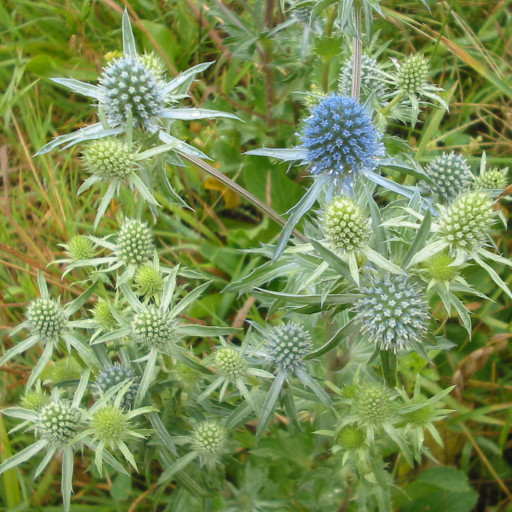
Often called the Blue Eryngo or Flat Sea Holly, this plant looks more like a piece of electric-blue metalwork than a garden perennial. Native to the plains of Europe and Asia, it is beloved by gardeners for its "architectural" silhouette and its ability to thrive in harsh, dry conditions where other flowers might wilt.
🔍 How to Identify
- 🔵 The "Teasel" Heads: The tiny flowers are packed into tight, egg-shaped cones that sit atop a "collar" of stiff, star-shaped bracts.
- 🎨 Metallic Sheen: As the plant matures, the stems and flower heads take on an iridescent, silvery-blue or violet tint that looks almost artificial.
- 🌿 Leaf Contrast: The base of the plant features dark green, heart-shaped leaves, but as you move up the stem, the leaves become deeply lobed, jagged, and prickly.
🏡 In Your Garden
- ⛏️ The "Forever Home" Rule: This plant develops a long, thick taproot that helps it survive droughts. However, this root makes the plant very difficult to transplant. Once you tuck it into the soil, it’s best to leave it where it is.
- ☀️ Stress for Success: To achieve the most vibrant blue color, Eryngium planum actually prefers "lean" or poor soil. If the soil is too rich or fertilized, the plant may grow too tall and floppy, losing its intense metallic hue.
⚠️ Safety & Toxicity
- 🌵 Physical Warning: While the plant is not known to be chemically toxic to humans or pets, the leaves and flower bracts are very sharp. Always wear thick gardening gloves when handling or pruning to avoid painful pricks.
- 🐾 Pet Friendly: It is generally listed as non-toxic to dogs and cats, making it a safe choice for a "sensory" garden, provided your pets don't mind the spikes!
✨ Fun Fact
- 🦋 Pollinator Party: Despite its prickly and defensive appearance, Sea Holly is a nectar superstar. It is a magnet for bees, butterflies, and ladybugs, often serving as the busiest "airport" for insects in a summer garden.

Detailed Care Instructions
| Lighting | Full Sun |
| Hardiness Zones | 4A - 8B |
To grow Eryngium Planum (also known as Blue Eryngo or Sea Holly), follow these steps:
- Obtain seeds or young seedlings: You can purchase Eryngium Planum seeds or young plants from a nursery or online seed supplier.
- Choose a suitable location: Eryngium Planum prefers full sun and well-drained soil. Select a spot in your garden that receives at least 6-8 hours of direct sunlight per day.
- Prepare the soil: Ensure that the soil is well-draining. If the soil is heavy clay or compacted, consider improving it by adding organic matter like compost or aged manure.
- Sow the seeds or transplant seedlings: If starting from seeds, follow the specific instructions on the seed packet for sowing depth and spacing. If transplanting seedlings, dig a hole slightly larger than the root ball and gently place the seedling into the hole, backfilling with soil. Space seedlings according to their mature size, usually around 12-18 inches apart.
- Water regularly: Keep the soil evenly moist during the germination and establishment period. Once the plants are established, they are tolerant of drought and only require supplemental watering during extended dry periods.
- Mulch: Apply a layer of mulch around the base of the plants to help retain soil moisture and suppress weeds.
- Prune and deadhead: Remove any dead or faded flower heads regularly to encourage continuous blooming. During the winter, cut back the spent foliage to ground level to allow for new growth in the spring.
- Fertilize sparingly: Eryngium Planum does not require heavy feeding. However, you can apply a slow-release fertilizer in early spring if desired.
- Watch for pests and diseases: Monitor for common pests like aphids or slugs and treat accordingly if necessary. Eryngium Planum is generally resistant to most diseases.
- Enjoy the blooms: Eryngium Planum will produce unique, spiky blue flowers throughout the summer. These flowers are attractive to bees and other pollinators, making them a great addition to a pollinator garden.
Remember to check with your local gardening resources or consult a horticulturist for specific growing recommendations for your region, as conditions can vary.

Place in a bright room that is sun drenched almost all day. Or directly in a south-facing window.

Eryngium Planum plant prefers to grow in well-draining soil and requires moderate watering. Before watering, check the moisture level in the soil with your finger by inserting it into the soil about 2 inches deep. If it feels dry, it's time to water the plant. Avoid overwatering, as it can lead to root rot. Instead, water the plant deeply once or twice a week, making sure that the water reaches the roots. You can also allow the soil to dry out partially between watering intervals. Water the plant in the morning or evening, as watering during the midday heat can cause water droplets on the leaves, leading to sunburn. Avoid getting the foliage wet while watering, as it can increase the risk of fungal diseases.
For best results, fertilize Eryngium Planum once a month during the growing season. Use a balanced, all-purpose fertilizer and follow the package instructions for proper application rates. Avoid over-fertilizing, as this can lead to weak growth and disease susceptibility. Water the plant thoroughly before and after fertilizing to prevent root burn.
Eryngium Planum plant prefers loamy, well-draining soil with a neutral pH range of 6.5 to 7.5. The soil should be rich in organic matter, with good water retention and air circulation. It is important to avoid soil that is heavy in clay or compacted, as this can lead to poor drainage and root rot. The plant also requires full sun exposure and moderate moisture levels, but be careful not to over-water as this can cause root damage. Adding compost or organic fertilizer to the soil can help provide the necessary nutrients for healthy growth.
Eryngium Planum is a perennial plant that belongs to the family Apiaceae. It is propagated through seeds or cuttings.
Propagation through seeds:
- Collect the seeds from Eryngium Planum plant in late summer or early autumn.
- Soak the seeds in water overnight to soften the outer seed coating.
- Sow the seeds in a well-draining potting mix in a seed tray or individual pots.
- Cover the seeds with a thin layer of potting mix, mist them and cover the tray with a plastic lid or plastic wrap.
- Place the tray in a warm, bright and humid location.
- Check the seedlings daily and mist lightly if necessary.
- Once the seedlings are big enough to handle transplant them into individual pots or directly into the garden.
Propagation through cuttings: - Select a healthy stem from an Eryngium Planum plant with leaves and no flowers.
- Cut the stem at an angle just below a node using a sharp, sterilized knife or pruning shears.
- Remove the lower leaves on the stem, at least two nodes from the bottom.
- Dip the cut end into rooting hormone powder.
- Insert the cutting into a well-draining potting mix in a small pot.
- Water the potting mix well and cover the pot and cutting with a clear plastic bag or plastic wrap to create a humid environment.
- Place the pot in a warm and bright location but out of direct sunlight.
- Check the cutting daily and mist the plastic bag if necessary to keep the humidity level high.
- Once the cutting has rooted, which can take 2-4 weeks, remove the plastic bag and move the pot to a brighter location.
- When the roots fill the pot, transplant the plant to a permanent location.








