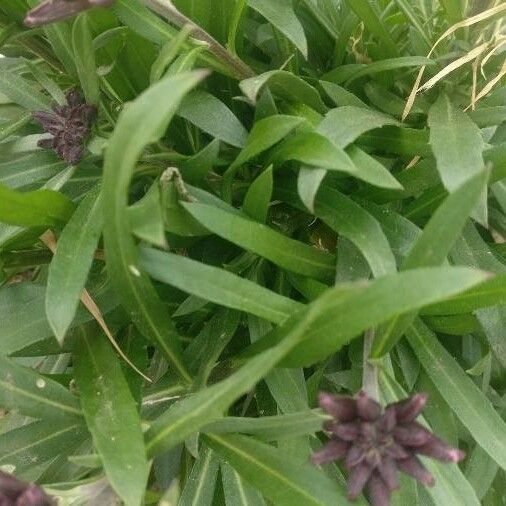
Plant Overview
Known as the Moroccan Wallflower or the Giant Flower Wallflower, Erysimum grandiflorum is a sun-drenched beauty that bridges the gap between wild meadows and manicured borders. Its large, honey-scented blooms make it a favorite for those who want a fragrant garden that feels timeless. In traditional symbolism, wallflowers represent faithfulness in adversity, earned by their ability to thrive in the stoniest, most neglected corners of a landscape.
🔍 How to Identify
- 🌼 Petal Structure: Features four rounded petals arranged in a distinct "cross" shape, a signature trait of the Brassicaceae (mustard) family.
- 🍃 Foliage: Narrow, lance-shaped leaves with a slightly grayish-green tint that form a dense, bushy mound at the base.
- 📏 Growth Habit: A semi-woody perennial that grows upright, typically reaching 30–50 cm, with vibrant yellow or gold flower spikes emerging from the tips of the stems.
🏡 In Your Garden
- ☀️ Sun Worshipper: This plant demands full sun to reach its peak vibrancy. If placed in too much shade, it will become "leggy" and sparse as it stretches desperately toward the light.
- 🪨 The Drainage Rule: It thrives in poor, rocky, or sandy soils where other plants might struggle. The quickest way to lose a Moroccan Wallflower is "wet feet"—oversaturated soil will cause the root system to rot almost overnight.
- ✂️ Short-Lived Vitality: These are often considered "short-lived" perennials. To keep them from becoming overly woody and brittle, prune them back lightly after the first flush of flowers to encourage a second bloom and a tighter shape.
⚠️ Safety & Toxicity
- 🐾 Mildly Toxic: Like many members of the Erysimum genus, this plant contains small amounts of cardiac glycosides. While not as dangerous as Foxglove, it can cause stomach upset or heart rate fluctuations if ingested in large quantities.
- 🐱 Pet Owners: Keep an eye on curious cats or dogs. Ingestion may lead to vomiting or drooling. It is best used in raised beds or areas inaccessible to nibbling pets.
✨ Fun Fact
🏛️ Stone Dwellers: The common name "Wallflower" is literal. These plants are evolutionarily adapted to grow in the crumbling mortar of ancient stone walls and limestone cliffs, utilizing tiny crevices that other plants find uninhabitable.

Detailed Care Instructions
To grow Erysimum grandiflorum, also known as the Poet's Wallflower or Wallflower, follow these steps:
- Select a suitable location: Erysimum grandiflorum prefers a sunny spot with well-draining soil. Ensure the planting area receives at least 6 hours of direct sunlight daily.
- Prepare the soil: Loosen the soil and remove any weeds or debris. Add organic matter, such as compost or well-rotted manure, to improve soil fertility and drainage.
- Sow seeds indoors: Start the seeds indoors about 6-8 weeks before the last frost date in your area. Fill seed trays or small pots with seed-starting mix, and sow the seeds on the surface, lightly pressing them into the soil. Moisture is essential during this stage, so keep the soil consistently damp.
- Transfer seedlings outdoors: Once the seedlings have grown to a manageable size, typically 2-3 inches tall, they can be transplanted outdoors. Choose a day with mild weather conditions, and space the seedlings about 8-12 inches apart.
- Direct sow: Alternatively, the seeds can be directly sown outdoors after the danger of frost has passed. Scatter the seeds on the prepared soil and gently press them into the ground. Keep the soil evenly moist until germination occurs.
- Watering and care: Water the plants regularly, especially during dry periods, to keep the soil consistently moist but not waterlogged. Avoid overhead watering, as it can promote diseases. Mulching around the plants can help retain moisture and suppress weed growth.
- Fertilization: Feed the Erysimum grandiflorum plants with a balanced, slow-release fertilizer once every 4-6 weeks during the growing season to promote healthy growth and vibrant blooms.
- Deadhead spent flowers: To extend the blooming period and encourage continuous flowering, remove faded flowers by gently pinching or cutting them off. This process, known as deadheading, redirects the plant's energy into producing new blooms.
- Overwintering: Erysimum grandiflorum is a perennial plant in some regions but behaves as a biennial in others. In colder climates, mulch around the base of the plant in late fall to protect it from freezing temperatures. In areas with mild winters, the plant may continue to bloom throughout the year.
With proper care and attention, Erysimum grandiflorum should thrive and produce beautiful clusters of colorful flowers, filling your garden with fragrance and charm.
To water this plant, you should first determine the moisture level of the soil by inserting your finger about an inch deep into the soil. If it feels dry to the touch, it is time to water. Use a watering can or hose with a gentle spray nozzle to water the plant, being careful not to overwater. Water at the base of the plant, directing the water away from the leaves and flowers to avoid causing damage or disease. Allow the water to soak in, and then check the moisture level again before watering again. It is important not to let the soil dry out completely between waterings, as this can cause stress and damage to the plant.
- Choose a balanced fertilizer with equal amounts of nitrogen, phosphorus, and potassium.
- Apply the fertilizer during the spring season when the plant is actively growing.
- Water the plant thoroughly before applying the fertilizer to prevent root burn.
- Sprinkle the fertilizer evenly around the base of the plant.
- Use a rake or cultivator to lightly work the fertilizer into the soil.
- Water the plant again after fertilizing to help it absorb the nutrients.
- Repeat the fertilization process every 4-6 weeks during the growing season.
- Avoid over-fertilizing as it can lead to excessive growth and weak stems.
Erysimum Grandiflorum plant grows well in well-draining sandy soil. The ideal soil pH for this plant ranges from neutral to slightly alkaline. It is important to avoid using heavy clay soils or moist soils that retain water, as this can lead to root rot and other plant diseases. The soil should be enriched with organic matter, such as compost or aged manure, to improve soil structure and nutrient content. Before planting, it is recommended to loosen the soil to a depth of 6-8 inches and add any necessary soil amendments, such as lime or sulfur, to adjust the pH level. In addition, regular fertilization and mulching can help maintain healthy soil conditions and promote optimal growth of the Erysimum Grandiflorum plant.
To propagate this plant, one can take stem cuttings in the spring or summer when the plant is actively growing. Select healthy shoots that are not too woody and are around 4-6 inches long. Remove the lower leaves and insert the cuttings into a free-draining potting mix.
Cover the pot with a clear plastic bag or place it in a propagator and keep it in a warm, bright spot, avoiding direct sunlight. Make sure to keep the soil moist but not too wet.
After two to three weeks, check if the cuttings have rooted by gently tugging on the stem; if there is resistance, the roots have formed. Once rooted, remove the plastic bag or propagator and gradually acclimate the new plants to normal growing conditions.
Once established, transplant the new plants into individual pots or into the garden bed. Ensure they are kept moist and protected from harsh sun or frost until they are well-established.








