Plant Overview
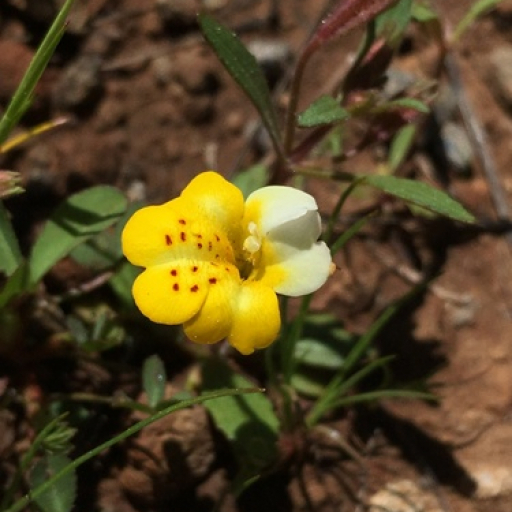
The Yellow-and-white Monkeyflower is a charming, small-scale celebrity of the West Coast foothills. Known for its "grinning" floral face, this delicate annual is a specialist of the California and Oregon wilderness, often appearing in massive, colorful carpets after spring rains. Its name comes from the supposed resemblance of its petals to the face of a tiny, mischievous monkey.
🔍 How to Identify
- 🎨 The "Bicolor" Bloom: The most striking feature is the split-color flower; the upper "lip" is usually pure white, while the lower "lip" is a vibrant, sunny yellow.
- 🖋️ Nectar Guides: If you look closely at the yellow throat, you’ll see tiny, intricate maroon or purple spots that act like landing lights for visiting insects.
- 🌿 Leaf Structure: The leaves are narrow, oval-shaped, and grow in pairs directly opposite each other along a thin, slightly hairy stem.
🏡 In Your Garden
- 💧 The "Live Fast" Strategy: Because this is an annual plant, it completes its entire life cycle in just a few months. It thrives in the moist soil of early spring but is perfectly happy to wither away once the summer heat sets in, leaving seeds behind for next year.
- ⛰️ Specialist Roots: In the wild, it is often found in "serpentine" soils—harsh, mineral-rich ground where other plants struggle to survive. This makes it a tough little survivor despite its fragile appearance.
⚠️ Safety & Toxicity
- ✅ Safe Status: Erythranthe bicolor is generally considered non-toxic and safe for gardens shared with curious pets or children.
- 👐 Skin Sensitivity: While not poisonous, some people find the slightly "sticky" or hairy texture of the leaves a bit irritating to very sensitive skin, so a quick hand-wash after gardening is always a good idea.
✨ Fun Fact
The genus name Erythranthe actually comes from the Greek words for "red" and "flower." This is quite ironic for the Yellow-and-white Monkeyflower, which completely skipped the red pigment in favor of its iconic "fried egg" color palette!

Detailed Care Instructions

Some plants require more regular watering than others, which should be done every few days. It's critical to maintain the soil moist all of the time. The water requirements of the same plant placed in pots with varying sizes will differ. Because the water in the smaller pot evaporates faster than the water in the larger pot, it will require more watering. Regardless of pot size, the surface should constantly be maintained moist.








