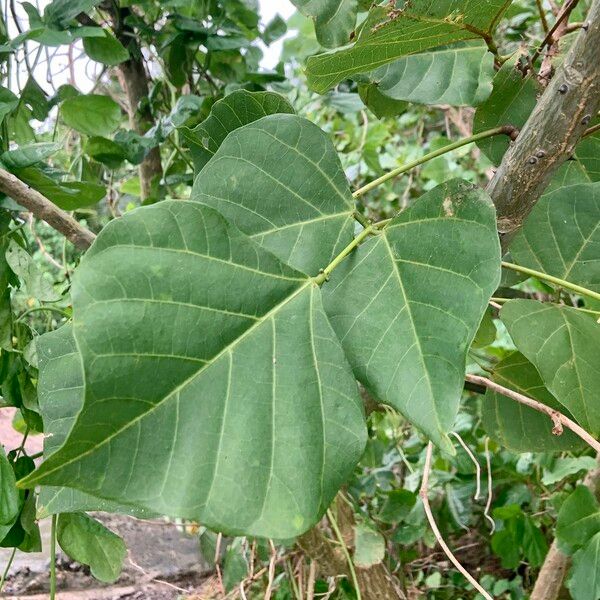
Plant Overview
Known as the Amazon Coral Tree, this South American beauty is a living torch in the rainforest canopy. With its brilliant scarlet blossoms that look like curved claws or glowing embers, it has long been a favorite for tropical landscapes and botanical collectors seeking a "statement piece" that screams exotic elegance.
🔍 How to Identify
- 🍃 Trifoliate Leaves: The foliage grows in sets of three broad, heart-shaped leaflets, creating a lush, vibrant green canopy that provides excellent shade.
- 🔥 Candelabra Blooms: Its most striking feature is the clusters of tubular, blood-red flowers that point upwards like flickering flames or sharpened pieces of coral.
- ⚔️ Prickly Protection: The trunk and branches are often armed with small, sharp prickles (stipular spines), reminding gardeners to handle this beauty with gloves and care.
🏡 In Your Garden
- 💧 Thirsty but Picky: While it loves the high humidity of its Amazonian roots, it hates "wet feet." Ensure your soil is rich in organic matter but drains rapidly to prevent root rot.
- ☀️ Sun Seeker: This tree is a sun-worshipper. To get those iconic red flowers, it needs full, direct light; in the shade, it will focus only on leaves and become "leggy."
- 🌳 Space Requirements: Because it grows relatively fast and develops a sturdy woody structure, it needs plenty of room to spread its wings. Avoid planting it too close to power lines or home foundations.
⚠️ Safety & Toxicity
- 🚫 Toxic Status: High. All parts of the tree, particularly the seeds found in the bean-like pods, contain potent alkaloids.
- 🐾 Pets & Kids: The seeds are often brightly colored and attractive to children or pets, but they are dangerous if ingested, potentially affecting the central nervous system. The sharp spines on the bark can also cause physical injury if brushed against.
✨ Fun Fact
The flowers are specifically designed as "nectar straws" for hummingbirds. The curved, tubular shape perfectly matches the beaks of specific rainforest birds, ensuring that as they drink, they are dusted with pollen to carry to the next tree.

Detailed Care Instructions
To grow Erythrina Amazonica, also known as the Amazon Coral Tree, you can follow these steps:
- Obtain the seeds or seedlings: You can either purchase seeds or seedlings from a reputable plant nursery or obtain them from a mature Erythrina Amazonica plant.
- Choose the right location: Erythrina Amazonica prefer a sunny spot with at least 6-8 hours of direct sunlight per day. They can tolerate partial shade, but full sun is preferable for optimal growth.
- Prepare the soil: Ensure the soil is well-draining and enriched with organic matter. Erythrina Amazonica thrives in fertile soil with a pH of 5.5 to 7.0. If the soil is heavy clay, it's recommended to amend it with compost or perlite to improve drainage.
- Plant the seeds/seedlings: If using seeds, soak them in warm water overnight before sowing. Plant the seeds 1-2 inches (2.5-5 cm) deep in the prepared soil. If using seedlings, dig a hole slightly larger than the container and gently place the root ball into the hole. Backfill with soil and firm it gently around the plant.
- Watering: Erythrina Amazonica does well with regular watering. Keep the soil evenly moist, especially during the establishment period. However, avoid overwatering, as excessive moisture can lead to root rot.
- Pruning: As the plant grows, you may want to prune it to shape and remove dead or damaged branches. Pruning should be done during the dormant season to promote healthy growth.
- Fertilizing: Feed your Erythrina Amazonica with a balanced, slow-release fertilizer in early spring. Follow the manufacturer's instructions for application rates.
- Mulching: Applying a layer of organic mulch around the base of the plant (leaving a gap around the stem) can help conserve moisture and suppress weed growth. It also improves the soil as it breaks down.
- Provide support: Erythrina Amazonica can develop a fairly large size and may require support in the form of stakes or trellises to prevent it from bending or breaking as it grows.
- Pests and diseases: Keep an eye out for common garden pests like aphids, mealybugs, or spider mites. Treat any infestations promptly using an appropriate insecticide. Additionally, Erythrina Amazonica is generally hardy but can be susceptible to fungal diseases in overly moist conditions. Proper watering and good air circulation can help prevent such issues.
With proper care and suitable growing conditions, your Erythrina Amazonica should thrive and provide beautiful, vivid blooms.
It is best to water this plant deeply and infrequently, allowing the soil to dry out slightly between waterings. When watering, be sure to saturate the entire root system and avoid getting water on the leaves as this can increase the risk of fungal infections. The plant should be watered more frequently during hot, dry weather or if it is housed indoors with low humidity. It is also important to ensure adequate drainage in the pot or planting area, as this plant does not tolerate soggy soil.
To fertilize this plant, use a balanced fertilizer with equal amounts of nitrogen, phosphorus, and potassium. During the growing season, apply the fertilizer every 4-6 weeks, following the manufacturer's instructions. Avoid over-fertilizing, as this can lead to burn or damage to the plant. It is also recommended to supplement the fertilizer with organic matter, such as compost or aged manure, to improve the soil quality and encourage healthy growth.
Erythrina Amazonica plant prefers well-draining soil and requires a mix that is rich in organic matter. It is recommended to use a mixture of sand, peat moss, and perlite for optimal growth. The soil pH should be slightly acidic, ideally between 5.5 and 6.5. It is important to make sure the soil is not compacted, as this can lead to waterlogging and root rot. The plant also benefits from regular fertilization with a balanced, slow-release fertilizer to promote healthy growth.
Propagation of this plant can be done through both seeds and cuttings. When propagating through seeds, soak them in water for a few hours before planting them in well-draining soil. The seeds should be planted at a depth of no more than twice their size and kept moist until they germinate.
For cuttings, select a healthy stem and make a cut just below a node. Remove any leaves from the lower part of the stem and dip it in rooting hormone. Plant the cutting in well-draining soil and cover with a plastic bag to maintain humidity. Keep the soil moist and the cutting should root within a few weeks.
Propagation through division can also be done by dividing the plant into smaller sections and replanting them in individual pots or directly into the ground. It is important to ensure that each section has healthy growth and roots before separating them.
No matter the method of propagation, it is important to provide the plant with the appropriate care and conditions for optimal growth and success.








