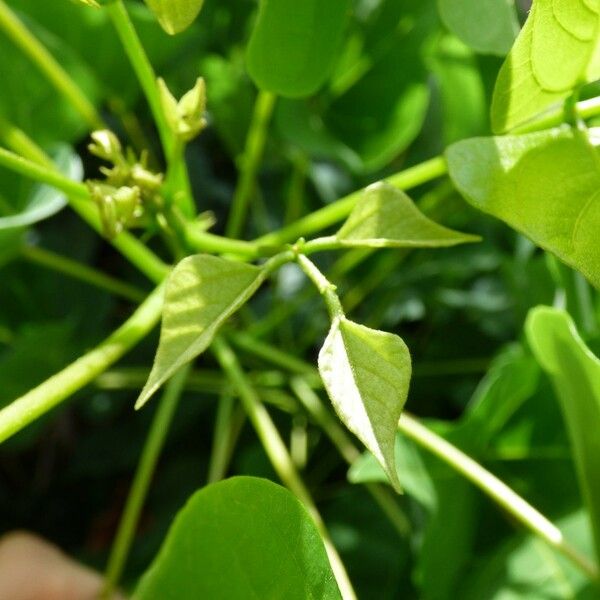
Plant Overview
Often called the Coral Tree or Red Cardinal, Erythrina corallodendrum is a Caribbean superstar known for its fiery, sword-shaped blossoms. It creates a dramatic tropical silhouette, often appearing as if a flock of bright red birds has landed on its branches during the blooming season. In many island cultures, it is celebrated as a symbol of vitality and is a prized ornamental for those who want a "statement" piece in their landscape.
🔍 How to Identify
- 🌺 Flaming Flowers: The blossoms are intense scarlet and shaped like long, slender tubes or swords, clustered together at the tips of the branches.
- 🍃 Broad Foliage: The leaves are trifoliate—meaning they grow in sets of three—and are generally heart-shaped or broad-triangular with a lush, matte green finish.
- 🌵 Armed Branches: Watch your hands! The grayish-brown bark and younger stems are often studded with sharp, dark prickles or thorns, a natural defense against climbing herbivores.
🏡 In Your Garden
- ☀️ Sun Seeker: This tree is a true child of the tropics; it craves intense, full sun and develops its best flower color only when it receives at least 6 to 8 hours of direct light daily.
- 🌬️ Drought Warrior: Once its deep taproot is established, the Coral Tree is remarkably resilient against dry spells. It prefers well-draining soil and can actually suffer if the ground stays "wet-feet" soggy for too long.
- 🌱 Space Requester: Because of its fast growth and brittle wood, it shouldn't be planted too close to power lines or structures. It needs room to spread its canopy and show off its architectural form.
⚠️ Safety & Toxicity
- 🚫 Toxic Potential: Most species in the Erythrina genus, including the Coral Tree, contain alkaloids such as erythroidine. These are toxic if any part of the plant—especially the seeds—is ingested.
- 🐾 Pets & Kids: Keep a close eye on curious pets and children. Ingestion can cause lethargy, muscle weakness, or more severe neurological issues. Additionally, the sharp thorns on the trunk can cause painful punctures if brushed against.
✨ Fun Fact
The wood of the Coral Tree is incredibly lightweight and buoyant. Because of this, it was historically used by Caribbean fishermen to craft floats for their fishing nets and even as a light material for making traditional ceremonial masks!

Detailed Care Instructions
Erythrina corallodendrum, also known as the Coral Tree or Flame Tree, is a species of flowering plant native to Madagascar. Here are some tips on how to grow and care for this plant:
- Climate: Erythrina corallodendrum prefers a warm, subtropical or tropical climate. It can tolerate some cooler temperatures, but it is best suited to regions where temperatures do not drop below freezing.
- Sunlight: Plant your Erythrina corallodendrum in a sunny location with at least 6-8 hours of direct sunlight per day. This will help promote healthy growth and flowering.
- Soil: The Coral Tree prefers well-draining soil with a slightly acidic to neutral pH. A mix of sandy, loamy soil with some organic matter added in is ideal for this plant.
- Watering: Water your Erythrina corallodendrum regularly, especially during the growing season. Make sure the soil is kept consistently moist but not waterlogged. Allow the top layer of soil to dry out slightly between waterings.
- Fertilizing: Feed your Coral Tree with a balanced, slow-release fertilizer during the growing season to promote healthy growth and flowering.
- Pruning: Erythrina corallodendrum can be pruned to maintain its shape and size. Prune back any dead or damaged branches in late winter or early spring before new growth begins.
- Pests and Diseases: Keep an eye out for common pests such as aphids, mealybugs, and scale insects. Treat any infestations promptly with insecticidal soap or neem oil. Watch for signs of powdery mildew or other fungal diseases and treat as needed.
By following these care tips, you can successfully grow and enjoy an Erythrina corallodendrum plant in your garden or landscape.
Erythrina Corallodendrum plants should be watered thoroughly but infrequently to prevent waterlogged conditions. Allow the top inch of soil to dry out between waterings and then provide a deep watering, making sure the water reaches the roots. It is important to water the plant at the base to avoid getting the foliage wet, as this can lead to disease. Additionally, it is best to water in the morning to allow excess moisture to evaporate during the day and to prevent fungal issues. Adjust watering frequency based on the plant's growth stage and environmental conditions.
To fertilize an Erythrina Corallodendrum plant, begin by choosing a balanced, slow-release fertilizer with an equal ratio of nitrogen, phosphorus, and potassium. Apply the fertilizer in early spring, just before the plant begins its growing season. Be sure to water the plant thoroughly after applying the fertilizer to help it absorb the nutrients. Repeat this fertilizing process every 4-6 weeks throughout the growing season, but be cautious not to over-fertilize as this can harm the plant. Additionally, consider using organic fertilizers to ensure the health and growth of the Erythrina Corallodendrum plant.
Erythrina Corallodendrum plants thrive best in well-draining soil that is rich in organic matter. A recommended soil type for these plants is a loamy soil mixture that is slightly acidic to neutral in pH. Avoid using heavy clay soils, as they can compact easily and restrict root growth.
A good planting medium for Erythrina Corallodendrum plants would consist of a mix of garden soil, peat moss, perlite, and coarse sand. This combination provides good aeration and drainage, as well as retaining sufficient moisture for the plant's roots to absorb.
Regularly amending the soil with organic matter such as compost or well-rotted manure can help improve soil structure and nutrient content, which in turn supports healthy plant growth.
Overall, providing a well-draining, nutrient-rich soil mixture is essential for the successful cultivation of Erythrina Corallodendrum plants.
Erythrina Corallodendrum can be propagated through several methods including seed propagation, stem cuttings, and root cuttings.
To propagate Erythrina Corallodendrum from seeds, begin by collecting mature seeds from the plant. Clean the seeds and soak them in water for a few hours to soften the seed coat. Plant the seeds in a well-draining potting mix and keep them moist. Place the pots in a warm, bright location and wait for the seeds to germinate.
Another method of propagating Erythrina Corallodendrum is through stem cuttings. Take a cutting from a healthy and mature plant, making sure it is at least 6 inches long with several nodes. Remove the lower leaves from the cutting and dip the cut end in rooting hormone. Plant the cutting in a pot filled with a well-draining potting mix and keep it moist. Place the pot in a warm, bright location and wait for roots to develop.
Root cuttings can also be used to propagate Erythrina Corallodendrum. Take a cutting from the roots of a mature plant and plant it in a pot filled with a well-draining potting mix. Keep the soil moist and place the pot in a warm, bright location. Wait for roots to develop and the plant to establish itself.
Regardless of the propagation method used, it is important to provide the newly propagated plants with proper care and attention to ensure their growth and development.







