Plant Overview
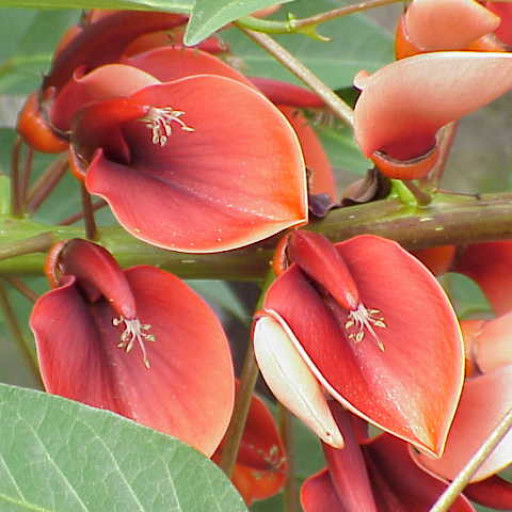
Known as the Ceibo or the "Cockspur Coral Tree," this stunning South American native is the proud national flower of both Argentina and Uruguay. It is famous for its dramatic, velvety red blossoms that look like they belong in a tropical paradise. While it eventually grows into a rugged, twisted tree with a "tough" exterior, its elegant flowers have inspired countless poems and folk songs across Latin America.
🔍 How to Identify
- 🌺 Rooster-Comb Blooms: The flowers are a deep scarlet red and shaped like a large pea flower. They grow in heavy, pendulous clusters and look remarkably like a rooster’s comb—hence the Latin name Crista-galli.
- 🍃 Leathery Foliage: The leaves are dark green and "trifoliate," meaning they grow in sets of three oval leaflets. They have a slightly waxy texture that helps the tree retain moisture.
- ⚔️ Hidden Spurs: The branches and even the leaf stalks are often armed with small, sharp, curved thorns. These "cockspurs" are a key identifying feature even when the tree isn't in bloom.
🏡 In Your Garden
- 🌳 The Sculptural Trunk: This tree develops a gnarled, corky trunk that looks ancient even when the tree is relatively young. Because it develops a deep, sturdy taproot, it is exceptionally drought-tolerant once established, but this also means it hates being transplanted.
- 🍂 Seasonal Personality: Depending on your climate, the Cockspur Coral Tree can be deciduous or a "die-back" perennial. In cooler zones, it may freeze to the ground in winter and surge back with rapid growth in the spring, often blooming on the very tips of its new wood.
⚠️ Safety & Toxicity
- 🚫 Toxic if Ingested: The seeds, bark, and leaves contain erythroidine and other alkaloids. These are toxic to humans, dogs, and cats if eaten, potentially causing respiratory issues or muscle weakness.
- 🧤 Pruning Hazards: Because of the curved thorns hidden along the stems, always wear thick leather gloves when pruning or handling the branches to avoid painful skin punctures.
✨ Fun Fact
💧 In some regions, it is nicknamed the "Crybaby Tree." This isn't because it is difficult to care for, but because the flowers produce such an abundance of nectar that it frequently drips from the petals like tears, creating a sweet treat for visiting hummingbirds.

Detailed Care Instructions
| Humidity | Dry |
| Lighting | Full Sun |
| Difficulty | Easy |
| Temperature | 23°C - 26°C |
| Hardiness Zones | 8 - 11 |
To grow Erythrina crista-galli, also known as the Cockspur Coral Tree, you can follow these steps:
- Climate: Determine if your climate is suitable for growing Erythrina crista-galli. These plants thrive in tropical or subtropical regions with mild winters and hot summers.
- Location: Choose a sunny spot in your garden that receives at least 6-8 hours of direct sunlight per day. The soil should be well-draining and fertile.
- Soil preparation: Prepare the planting area by loosening the soil and removing any weeds or debris. Add organic matter, such as compost or well-rotted manure, to improve the soil's fertility and drainage.
- Planting: Plant the Erythrina crista-galli sapling in the prepared soil. Dig a hole slightly larger than the root ball of the sapling and gently place it in the hole. Backfill the hole with soil and press it firmly around the sapling's base.
- Watering: Water the plant thoroughly immediately after planting. Afterward, water the Erythrina crista-galli regularly to keep the soil evenly moist. However, avoid overwatering as it can lead to root rot. Once the plant is established, it becomes more drought-tolerant.
- Fertilization: Apply a balanced, slow-release fertilizer once or twice a year, following the package instructions. This will provide the necessary nutrients for healthy growth.
- Pruning: Prune the Erythrina crista-galli during the late winter or early spring to remove any dead or damaged branches. This will help improve the plant's overall shape and appearance.
- Pests and diseases: Monitor for common pests like aphids, mealybugs, or scale insects. If detected, treat them with appropriate insecticides or natural remedies such as neem oil. Regularly inspect the leaves for any signs of disease, such as leaf spots or powdery mildew, and take appropriate measures if necessary.
- Support: Erythrina crista-galli can grow into a large tree, so you may need to provide support to the main trunk or branches to prevent breakage or damage during strong winds.
- Propagation: If you want to propagate Erythrina crista-galli, you can do so through softwood cuttings or by collecting and planting the seeds. Softwood cuttings are taken from new growth, and seeds can be soaked in water for 24 hours before planting to increase germination rates.
Remember, Erythrina crista-galli may take several years to reach full maturity and bloom with its vibrant red flowers. Be patient and provide it with the necessary care and conditions for optimal growth.

Place in a window with dappled sun or a spot in the middle of a room. Or directly in a window facing west or east.

To water this plant, make sure you allow the soil to dry out slightly between waterings. When it's time to water, thoroughly soak the soil until water runs out of the drainage holes. Avoid letting the plant sit in water, as this can lead to root rot. During periods of drought or hot weather, you may need to water more frequently to keep the plant hydrated.
This plant requires fertilization during the growing season, typically in spring and summer. Use a balanced, slow-release fertilizer with equal amounts of nitrogen, phosphorus, and potassium, applied according to the manufacturer's instructions. Be sure to water the plant thoroughly before and after fertilization to avoid burning the roots. Avoid fertilizing in the winter when the plant is dormant.
Erythrina Crista-galli prefers well-draining soil that is slightly acidic with a pH level of around 5.5 to 6.5. A fertile soil mix with equal parts of peat moss, perlite, and vermiculite is good for this plant. The soil should also be rich in nutrients and organic matter. The plant does not tolerate wet or waterlogged soil, so it is important to ensure good drainage. Adding sand or grit to the soil mix can improve drainage. Additionally, Erythrina Crista-galli is adapted to sandy soils. The plant prefers full sun to partial shade, so it is best to place it in a location where it can receive at least six hours of sunshine daily.
To propagate this plant, you will need to start by collecting mature seeds from the mother plant. Once you have the seeds, you should soak them in water for 24-48 hours to help soften the outer shell.
Next, you will want to prepare a potting mix of well-draining soil and vermiculite or perlite. Fill each seed pot with the potting mix and then place a single seed in each pot.
Keep the soil evenly moist and place the pots in a warm, bright location. Within a few weeks, you should begin to see sprouts emerge from the soil.
Once the seedlings are several inches tall, you can transplant them into larger pots or directly into the garden. Just be sure to provide them with plenty of sunlight and regular watering to help them establish themselves in their new location.
Common pests of the cockspur coraltree include Scale insect, mealybugs, spider mites, aphids, thrips. Make a habit of checking your cockspur coraltree frequently for pests so that any infestations can be caught and managed early.








