Plant Overview
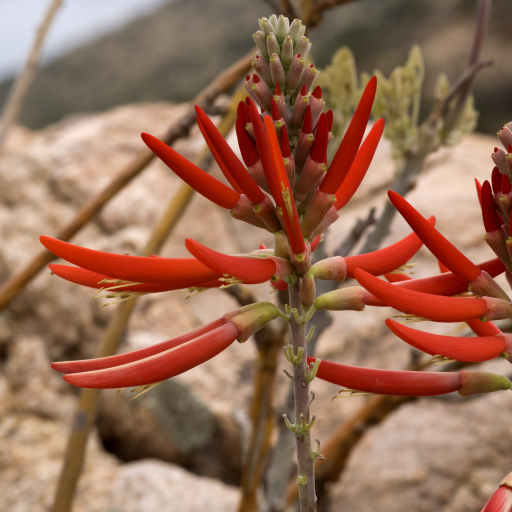
Often called the Southwestern Coral Bean or Chilicote, this desert survivor is a master of drama. In late spring, it produces leafless stalks tipped with fiery red, tubular flowers that look like glowing embers against the arid landscape. Native to the rocky slopes of the American Southwest and Mexico, it is a favorite for high-desert gardeners looking for a bold, architectural statement that requires almost no water once established.
🔍 How to Identify
- 🪭 The Foliage: Its specific name, flabelliformis, refers to its fan-shaped leaflets. The leaves are "trifoliate" (growing in groups of three) and have a distinct, broad, triangular appearance.
- 🔥 The Blooms: Stunning, 2-to-3-inch long tubular flowers in a brilliant scarlet or coral-red. These appear on woody spikes, often before the leaves fully emerge for the season.
- 🌵 The Stem & Seeds: The branches are armed with sharp, curved thorns. After flowering, it produces large, woody pods that zip open to reveal shiny, "lipstick red" beans.
🏡 In Your Garden
- 🏜️ Hardy Resilience: This plant thrives in "neglect." It loves rocky, well-draining soil and intense sun. It is a caudiciform plant, meaning it develops a thick, woody base (caudex) that stores water, allowing it to survive extreme droughts.
- 💤 Seasonal Moods: Don't panic if it looks like a collection of dead sticks in the winter or during a severe dry spell. It is "drought-deciduous," dropping its leaves to conserve moisture, only to explode back into life when the rains return.
- 🐦 Pollinator Magnet: The long, tubular shape of the coral flowers is perfectly evolved for hummingbirds, who serve as the plant's primary pollinators.
⚠️ Safety & Toxicity
- 🚫 High Toxicity: The beautiful, bright red seeds are highly poisonous if ingested. They contain potent alkaloids (like erythroidine) that can affect the nervous system and muscles.
- 🐾 Pets & Children: Because the seeds look like candy or beads, this plant should be positioned away from play areas. Always wear gloves when pruning to avoid the sharp thorns, which can cause skin irritation or puncture wounds.
✨ Fun Fact
The vibrant red seeds have been used for centuries in indigenous jewelry and as "good luck" charms. However, because they are so hard, they often have to be boiled or drilled with power tools to be strung—a dangerous hobby given their toxic nature!

Detailed Care Instructions
To grow Erythrina flabelliformis plant, follow these steps:
- Select a suitable outdoor location: Erythrina flabelliformis plants prefer a sunny location with well-draining soil. Choose an area that receives at least 6 hours of direct sunlight per day.
- Prepare the soil: Ensure the soil is rich and well-draining. If the soil is heavy clay, amend it with organic matter or sand to improve drainage. Erythrina plants also prefer slightly acidic to neutral soil.
- Planting: Dig a hole that is slightly larger than the root ball of the plant. Place the plant in the hole, ensuring that the top of the root ball is level with the soil surface. Backfill the hole with soil, gently firming it around the roots.
- Watering: Water the plant thoroughly after planting and keep the soil evenly moist while the plant establishes. Once established, Erythrina flabelliformis can tolerate short periods of drought, but it is best to keep the soil slightly moist throughout the growing season.
- Mulching: Apply a layer of organic mulch around the base of the plant to help conserve moisture, suppress weeds, and regulate soil temperature. Leave some space around the stem to prevent rotting.
- Fertilizing: Erythrina flabelliformis plants benefit from regular fertilization. Use a balanced, slow-release fertilizer according to the manufacturer's instructions. Feed the plant every 2-3 months during the growing season.
- Pruning: Prune the plant in late winter or early spring to remove any dead, damaged, or diseased branches. This will help maintain a healthy and attractive shape.
- Protection: If you live in a region with frost or temperatures below freezing, protect the plant by covering it with a frost blanket or bringing it indoors during winter.
Remember, Erythrina flabelliformis plants are native to arid and subtropical regions, so they may require extra care in cooler or wet climates.

Place in a bright room that is sun drenched almost all day. Or directly in a south-facing window.

To water this particular plant, you should first determine the moisture level of the soil. Stick your finger about an inch deep into the soil to feel for moisture. If the soil feels dry, it is time to water.
When watering, give the plant enough water to saturate the soil, but do not allow it to sit in water. Watering too frequently can lead to root rot and other issues, so it is important to only water when necessary.
You can also provide some humidity for the plant by misting it with water from a spray bottle a few times a week. This will help keep the plant hydrated and healthy.
Overall, it is important to monitor the plant's moisture levels and water it as needed to ensure it stays healthy and vibrant.
To fertilize this plant, use a balanced fertilizer with an NPK ratio of 10-10-10 or 20-20-20. Apply the fertilizer once a month during the growing season, and reduce frequency during the dormant period. Water thoroughly after each fertilization. Be careful not to over-fertilize, as it can harm the plant.
When it comes to growing the plant that goes by the scientific name Erythrina Flabelliformis, it is important to choose the right type of soil. This plant prefers soil that is nutrient-rich, well-draining, and has a slightly acidic to neutral pH level. A good choice of soil would be a mix of garden loam or topsoil, compost, and coarse sand or perlite to increase drainage. The soil should also be free from any heavy clays or compacted soil, as this can lead to poor root development. It's important to maintain proper moisture levels in the soil, avoiding excessive dryness or water-logging, and providing sufficient aeration to the roots. Overall, a well-draining, nutrient-rich soil mix with good aeration will help promote healthy growth and development of the Erythrina Flabelliformis plant.
The propagation of this plant can be done through seed or cuttings. If propagating through seed, it is important to scarify the seeds by nicking or scratching the seed coat to improve germination rates. The seeds should then be soaked in water for 24 hours before planting.
If propagating through cuttings, select healthy green stems and make a clean cut about 4-6 inches from the tip. Remove all but the top few leaves and dip the cut end into rooting hormone. Plant the cutting in a well-draining soil mix and keep it moist until roots develop.
In both cases, it is important to provide bright, indirect light and warm temperatures to encourage growth. Once the plant has established roots or germinated from seed, it can be transplanted to a larger pot or planted in the ground.








