Plant Overview
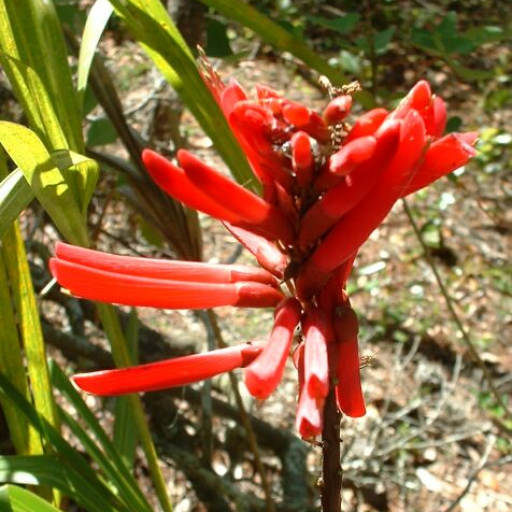
Known as the "Cardinal Spear" or "Cherokee Bean," Erythrina herbacea is a master of drama in the landscape. This native of the southeastern United States and Mexico is famous for its tall, torch-like spikes of crimson flowers that look like glowing embers. While it appears soft and lush from a distance, it is a rugged survivor perfectly adapted to heat, sandy soils, and even coastal salt spray.
🔍 How to Identify
- 🍃 Spade-Shaped Leaves: The foliage is "trifoliate," meaning leaves grow in groups of three. Each leaflet is distinctively arrowhead or spade-shaped, often with a glossy green finish.
- 🧨 Cigar-Shaped Blooms: The flowers are long, slender, and tubular, clustered along a vertical stalk. They are a deep, saturated red and look more like narrow spears or cigars than typical open petals.
- 🫛 Contrast-Rich Pods: In late summer, the plant produces dark, leathery pods. When these pods dry and split open, they reveal brilliant, "lacquer-red" seeds that look like tiny polished beads.
🏡 In Your Garden
- 🪵 The Permanent Resident: The Coral Bean develops a massive, woody root system and a deep taproot. This makes it incredibly resilient against drought and even wildfires, but it also means it hates being transplanted. Once you put it in the ground, it is there to stay!
- ❄️ Seasonal Shapeshifter: In colder climates (Zone 8), it behaves like a perennial, dying back to the ground in winter and re-emerging in spring. In frost-free tropical zones, it can grow into a substantial woody shrub or small tree.
- 🌵 Low Maintenance: It prefers "lean" soil and doesn't need much fertilizer. Over-watering can actually lead to root rot, so it’s best for those who prefer a "set it and forget it" approach to gardening.
⚠️ Safety & Toxicity
- 🚫 Lethal Seeds: WARNING. The beautiful red seeds are highly toxic. They contain potent alkaloids that can cause paralysis and even death if ingested. Keep this plant away from curious children and pets who might be tempted by the bead-like seeds.
- ⚔️ Hidden Spines: Do not let the pretty flowers fool you; the stems and even the undersides of the leaf ribs are armed with small, sharp, curved prickles. Always wear thick gardening gloves when pruning.
✨ Fun Fact
🐦 Hummingbird Magnet: The Coral Bean has a "special deal" with hummingbirds. Because the flowers are so narrow and tubular, most bees can't reach the nectar inside. This leaves the sugary prize exclusively for hummingbirds, who serve as the plant's primary pollinators.

Detailed Care Instructions
You can place a coral bean plant in your garden among other shrubs. Make sure your plant has adequate sunlight to grow properly.
What are coral bean alternatives?
Due to the high toxicity of coral bean, you may want to seek an alternative if you're concerned about children or pets around the plant. Another brightly colored, narrow-flowered, non-toxic shrub option is the butterfly bush (Buddleja davidii).
Does coral bean have a scent?
Coral bean is not considered to have a distinct scent. Although you may want to put your face close to the plant to smell, close contact is dangerous.
| Color | Red |
| Soil Ph | 5.4-7.6 |
| Humidity | Normal |
| Lighting | Part Sun |
| Toxicity | Toxic |
| Soil Type | Sandy, Well-Draining Soil |
| Bloom Time | Spring |
| Difficulty | Medium |
| Plant Type | Perennial Shrub |
| Hibernation | Cold Period |
| Mature Size | 8-10' Tall |
| Native Area | United States, Mexico |
| Sun Exposure | Direct Sun, Part Shade |
| Hardiness Zones | 8-11 |
To grow Erythrina herbacea, also known as the Coral bean or Cherokee bean, you can follow these steps:
- Climate and location: Erythrina herbacea is native to the southeastern United States and thrives in warm, subtropical regions. It prefers full sun to partial shade, so select a location that receives at least 6 hours of direct sunlight per day.
- Soil preparation: Erythrina herbacea prefers well-draining soil with a pH range of 6.0 to 7.5. Prepare the soil by loosening it and removing any weeds or debris. You can amend the soil with organic matter like compost or peat moss to improve drainage and enrich nutrient content.
- Planting: Plant the seeds or young seedlings in early spring or fall. If you have seeds, scarify them to improve germination by nicking or sanding the seed coat lightly. Soak the seeds in warm water for 24 hours before planting. Sow the seeds at a depth of 1-2 inches in the prepared soil, or plant the seedlings at the same depth. Space the plants at least 3-4 feet apart to allow for their eventual size.
- Watering: Keep the soil evenly moist but not waterlogged. On average, water the plants once a week during dry periods. Avoid overwatering, as Erythrina herbacea is relatively drought-tolerant once established.
- Mulching and weed control: Apply a layer of organic mulch, such as wood chips or straw, around the base of the plant to help retain moisture, suppress weeds, and maintain a more stable soil temperature.
- Fertilizer: Erythrina herbacea generally does not require heavy fertilization. However, you can apply a balanced slow-release fertilizer once or twice a year in spring or early summer to promote healthy growth.
- Pruning: Light pruning may be necessary to shape the plant and remove dead or damaged branches. Prune after the plant has finished flowering.
- Pests and diseases: Erythrina herbacea is relatively pest and disease resistant. However, it can occasionally be attacked by aphids or spider mites. Monitor the plant regularly for any signs of pests or diseases and take appropriate measures, such as using insecticidal soap or neem oil, if required.
- Propagation: Erythrina herbacea can also be propagated through stem cuttings taken in late spring or early summer. Plant the cuttings in a well-draining potting mix, keep them warm and moist, and provide some shade until they develop roots.
Remember to check local regulations regarding the planting and cultivation of Erythrina herbacea, as it can be invasive in some regions.

Place in a bright room that is sun drenched almost all day. Or directly in a south-facing window.

Erythrina Herbacea is a plant that prefers well-draining soil and requires regular watering. The plant should be watered deeply, at least once per week, as it does not tolerate drought well. However, it is important not to overwater the plant, as this can lead to root rot. Before watering, it is important to check the soil moisture level by inserting a finger into the soil. If the soil is dry to a depth of at least 2 inches, it is time to water the plant. When watering, ensure that the water reaches the root zone of the plant, which is typically around 6-8 inches below the surface. To avoid wetting the foliage, water at the base of the plant. During the summer months, when temperatures are high, the plant may require more frequent watering. It is also important to ensure that the plant is not standing in water, as this can lead to root rot. Finally, it is recommended to mulch around the plant to help retain soil moisture and keep the roots cool.
For best results, fertilize this plant during its active growing season using a balanced fertilizer with equal amounts of nitrogen, phosphorus, and potassium. Apply the fertilizer at half strength every two weeks, being careful not to over-fertilize, as this can lead to burned roots and foliage. Additionally, this plant benefits from regular applications of organic matter, such as compost or well-rotted manure, which can be incorporated into the soil around the base of the plant. Finally, be sure to water the plant thoroughly before and after fertilization to help the nutrients penetrate the soil and reach the roots.
The ideal soil for this plant should be well-draining and have good air circulation to prevent waterlogging. It should have a slightly acidic to neutral pH of around 6.0-7.0. The soil should be rich in organic matter and have good nutrient content, with a mix of nutrients such as nitrogen, phosphorus, and potassium. A mix of sandy loam and composted organic matter is ideal for this plant's growth. Avoid using heavy clay soils as they retain too much water and may not provide adequate drainage. Regular fertilization and proper watering are also important for the health of this plant.
Erythrina Herbacea plant can be propagated by taking cuttings from the mature plant. Select a mature stem from the plant, preferably with several leaves, and make a clean cut below a node (the spot where leaves grow from the stem). Remove the lower leaves to expose the node. Dip the cut end of the stem in rooting hormone to encourage root growth. Place the cutting in a container with moist potting soil and cover with a plastic bag to create a humid environment. Place the container in indirect light and keep the soil moist. Roots should begin to grow after a few weeks. Once the cutting has established roots, it can be transplanted to its permanent location and cared for like a mature plant.
Common pests of the coral bean include Scale insect, spider mites, thrips, larvae. Make a habit of checking your coral bean frequently for pests so that any infestations can be caught and managed early.








