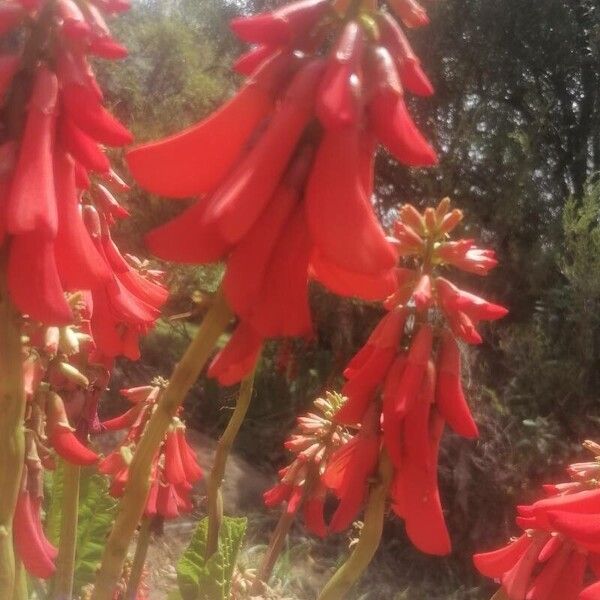
Plant Overview
Known famously as the Ploughbreaker (or Ploegbreker in Afrikaans), this resilient South African native is a botanical masterpiece of survival. It earned its name from early farmers whose wooden ploughs would literally snap when hitting the massive, woody underground "trunk" of this plant. Despite its rugged reputation, it produces some of the most spectacular scarlet blossoms in the grassland regions.
🔍 How to Identify
- 🌿 The Leaf Shape: Features large, leathery, trifoliate leaves (leaflets in groups of three). The midribs and stems are often armed with small, sharp prickles to discourage grazing animals.
- 🌺 The Flowers: Produces dense, upright spikes of brilliant crimson or "hot red" tubular flowers that resemble parrot beaks or corkscrews.
- 🌱 Growth Habit: Unlike its taller cousins in the Erythrina family, this is a "dwarf" species. It looks like a small shrub above ground, but this hides a massive, woody rootstock buried safely beneath the soil.
🏡 In Your Garden
- 🧱 The "Forever" Spot: Because of its enormous underground caudex (root system), the Ploughbreaker hates being moved. Choose a permanent spot with deep soil where it can expand its roots without hitting pipes or foundations.
- 🔥 Veld Survivor: This plant is evolutionarily designed to survive frost and grassland fires. In winter, the top growth will die back completely, retreating into its underground fortress until the spring rains arrive. It is incredibly drought-tolerant once established.
⚠️ Safety & Toxicity
- 🚫 Status: Toxic if ingested.
- 🐾 Details: Like many members of the Erythrina genus, the seeds (bright red "lucky beans") contain alkaloids that can be harmful to humans and pets if swallowed. The sharp prickles on the leaves and stems can also cause physical scratches, so wear gloves when pruning.
✨ Fun Fact
The Ploughbreaker is technically considered an "underground tree." While the visible plant is small, the biomass hidden beneath the soil is so massive that it functions like a full-sized tree trunk, protecting the plant from the harsh extremes of the African Highveld.

Detailed Care Instructions

Place in a bright room that is sun drenched almost all day. Or directly in a south-facing window.

The presence of a dry surface layer of soil does not indicate that the plant requires water. Instead, stick your finger 1-2" (3-5 cm) deep in the soil to feel dampness or moisture content. If the soil seems dry, it's time to water your greens. If the soil is still moist, however, it is better not to water your plant and instead wait a day or two. Overwatering or waterlogging raises the risk of root rot. So if the soil takes longer than a week to dry, check the light conditions because it's likely that the plant isn't getting enough light. It's fine if the upper layer of soil is dry between waterings, but the deeper soil layer should always have some moisture.







