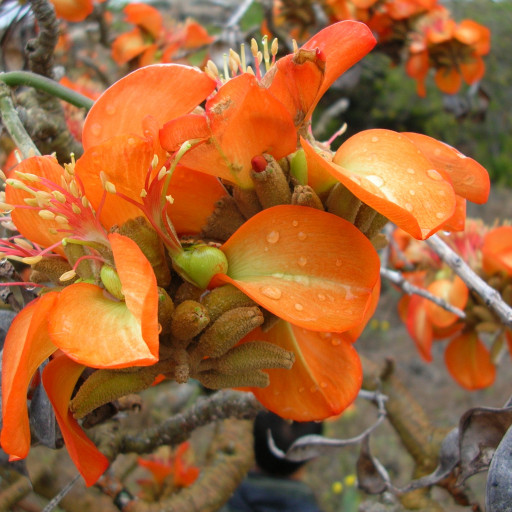
Plant Overview
The Erythrina, famously known as the "Coral Tree" or "Flame Tree," is a show-stopping giant of the tropical world. Known for its fiery, claw-shaped blossoms that ignite the canopy in shades of scarlet and orange, it carries a certain mystique across many cultures—from being a symbol of resilience in South Africa to a "herald of the rainy season" in parts of the Caribbean.
🔍 How to Identify
- 🪸 Vibrant Blooms: Most species produce dense clusters of tubular or "sword-like" flowers in intense reds or corals, often appearing dramatically on bare branches before the leaves emerge.
- 🍃 Trifoliate Foliage: The leaves are typically arranged in groups of three (trifoliate), often broad and heart-shaped, providing a lush green contrast to the fiery flowers.
- 🌵 Prickly Armor: Many Coral Trees feature sharp, black or tan prickles along their trunks and branches, acting as a natural deterrent to climbing animals.
🏡 In Your Garden
- ☀️ Sun-Loving Giants: These trees are "light-hungry" and require full sun to produce their iconic blooms. Because they have deep taproots, they are remarkably drought-tolerant once established, but they generally dislike "wet feet" or consistently soggy soil.
- 💨 Brittle Beauty: While they grow quickly, their wood can be surprisingly soft and brittle. It is best to plant them away from walkways or driveways, as heavy winds or the sheer weight of a massive bloom can occasionally cause branches to snap.
⚠️ Safety & Toxicity
- 💊 Toxic Seeds: The seeds, often called "Lucky Beans" due to their bright red and black coloration, contain potent alkaloids. If ingested, they can cause symptoms ranging from vomiting to more serious neurological issues.
- 🐾 Safety Assessment: Highly toxic to pets and humans if eaten. Additionally, the sharp thorns on the trunk and branches can cause physical injury, so they should be handled with thick gloves and planted away from high-traffic areas.
✨ Fun Fact
The name Erythrina comes from the Greek word erythros, meaning "red." The flowers are specifically engineered for "heavy-duty" pollinators; they are so sturdy that they act as a "perch and drink" station for large birds like sunbirds and parrots, which are strong enough to trigger the flower's pollen mechanism!

Detailed Care Instructions

Place in a bright room that is sun drenched almost all day. Or directly in a south-facing window.

Erythrina is a plant that requires regular watering to keep it healthy. To water the plant, one must first check the soil for dryness. This is done by inserting a finger into the soil up to the second knuckle. If the soil feels dry, it is time to water the plant.
When watering, it is important to use room temperature water, as extreme temperatures can shock the plant. Water should be poured gently onto the soil around the base of the plant, avoiding getting water on the leaves. The soil should be watered until it is moist, but ensure there is no standing water around the plant.
During hot and dry seasons, Erythrina may require more frequent watering to prevent the soil from drying out completely. On the other hand, when the weather is cool or damp, less water may be needed.
Overall, it is important to monitor the moisture around the plant and adjust watering according to its needs, avoiding overwatering or allowing the soil to dry out completely.
For growing the plant Erythrina, it is recommended to use a well-draining soil that is rich in organic matter. The soil should have a slightly acidic to neutral pH level and should be loose enough to allow for proper root growth and water drainage. It is best to avoid heavy clay soils or soils that are prone to waterlogging. Additionally, the soil should be fertilized regularly with a balanced fertilizer to provide the necessary nutrients for healthy growth. It is important to ensure that the soil is not too compacted or too dry, as this can stunt growth and lead to root rot. Proper soil preparation and maintenance are essential for the health and vitality of the Erythrina plant.







