Plant Overview
Known affectionately as the White Trout Lily or Fawn Lily, Erythronium albidum is a delicate herald of spring. These "spring ephemerals" race to bloom in deciduous forests before the tall trees grow their leaves and block out the sun. Their fleeting appearance makes them a prized sight for hikers and woodland gardeners alike.
🔍 How to Identify
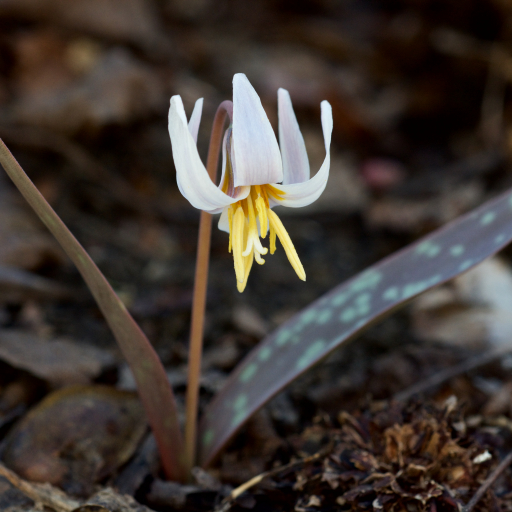
- 🌸 The Bloom: A single, nodding white flower with six petals that elegantly recurve (curl backward), exposing bright yellow or cream-colored anthers.
- 🍃 The Foliage: Typically features two smooth, lance-shaped leaves heavily dappled with grey-green and maroon splotches, reminiscent of a trout’s scales.
- 📏 Stature: A diminutive plant, rarely growing taller than 6 inches, often found growing in large, carpet-like colonies on the forest floor.
🏡 In Your Garden
- 🌳 Woodland Roots: This plant requires "woodland" conditions to thrive—meaning rich, loamy soil high in organic matter and consistent moisture during the spring months.
- ⏳ The Disappearing Act: Because it is an ephemeral, the entire plant will turn yellow and vanish by mid-summer. Do not dig up the area thinking the plant has died; it is simply retreating into its underground bulb to sleep until next spring.
- 🐌 Colony Growth: They spread slowly via underground runners (stolons). If you have a patch, avoid tilling the soil, as this can damage the delicate network of "droppers" the plant uses to establish itself.
⚠️ Safety & Toxicity
- 🐾 Mildly Toxic: The plant, particularly the underground bulb (corm), contains tuliposides and other alkaloids.
- 🤢 Effects: While not usually life-threatening, ingestion by curious pets or children can cause vomiting, diarrhea, and general stomach distress. It is best treated as an ornamental "look but don't touch" species.
✨ Fun Fact
A single Trout Lily plant can live for decades, but it is a slow starter; it often takes 7 to 10 years for a seedling to develop a large enough bulb to produce its very first flower!

Detailed Care Instructions
To grow Erythronium albidum (White trout lily) plants, follow these steps:
- Choose a suitable location: Erythronium albidum prefers partial shade to full shade. Select an area with dappled sunlight or shade from trees. Ensure the soil is moist, well-draining, and rich in organic matter.
- Prepare the soil: Amend the soil with compost, leaf mold, or well-rotted manure to improve its organic content and drainage. Erythronium albidum thrives in slightly acidic to neutral soil, so adjust the pH if necessary.
- Propagation: Erythronium albidum can be propagated from bulbs or seeds. Bulbs are the easiest and most common method. Plant bulbs in the fall, about 2-3 inches deep and 4-6 inches apart. If planting seeds, sow them in a cold frame in late summer or fall. Keep them slightly moist and allow them to overwinter before planting them in the desired location.
- Watering: Keep the soil consistently moist but not waterlogged, especially during the growing season in spring and early summer. Avoid letting the soil dry out completely, which can be detrimental to the plants.
- Mulching: Apply a layer of organic mulch, such as shredded bark or leaf mold, around the plants to help retain moisture and suppress weed growth. Mulching also helps protect the bulbs during winter.
- Feeding: Erythronium albidum benefits from a light application of a balanced, slow-release fertilizer in early spring or late winter when new growth emerges. Follow the package instructions for proper dosage.
- Maintenance: Remove any dead or yellowing leaves as they occur. After the foliage dies back in late spring or early summer, reduce watering and allow the plant to rest.
- Pest and disease control: Erythronium albidum is generally resistant to pests and diseases. However, slugs, snails, and deer can occasionally cause damage. Use organic pest control methods or physical barriers to protect the plants if necessary.
- Dormancy: Erythronium albidum has a dormant period during summer, where the plant remains dormant and underground. This period is crucial for the plant's growth cycle, so avoid disturbing or transplanting the bulbs during this time.
By following these steps, you can successfully grow Erythronium albidum and enjoy its beautiful white flowers in early spring.

Place in a window with dappled sun or a spot in the middle of a room. Or directly in a window facing west or east.

Erythronium Albidum is a type of flowering plant that requires an adequate amount of water to grow and thrive. Watering this plant is crucial, especially during the growing season. To water the plant, it is important to keep the soil moist but not soaking wet. Overwatering can lead to root rot and other fungal diseases.
One way to water Erythronium Albidum is to water it thoroughly once a week, especially during the warmer months when the soil tends to dry out quickly. This allows the water to penetrate deep into the soil and reach the plant's roots. The best time to water the plant is in the early morning or late afternoon when temperatures are cooler.
Another way to water the plant is to use a drip irrigation system. This method delivers water slowly and evenly to the soil, providing the plant with a consistent supply of moisture. Drip irrigation also reduces water waste and ensures that the water reaches the plant's roots.
It is important to avoid getting water on the plant's leaves, as this can lead to fungal diseases. Instead, water the soil around the plant's base and keep the foliage dry.
Overall, it is important to monitor the plant's soil moisture level and adjust the watering frequency accordingly. With proper watering, Erythronium Albidum can thrive and produce beautiful blooms.
To fertilize this plant, wait until the soil has warmed up in the spring. Apply a balanced fertilizer with equal parts nitrogen, phosphorus, and potassium. Use a rake or hoe to lightly incorporate the fertilizer into the top inch of soil. Water thoroughly after fertilizing. Avoid over-fertilizing, as it can damage the plant.
Erythronium albidum requires a well-draining and nutrient-rich soil for optimal growth. The ideal soil for this plant should have a pH range from slightly acidic to neutral and should consist of a mix of organic matter such as compost, leaf mold, and well-rotted manure.
The texture of the soil should be loose and porous to allow for good drainage, as this plant does not tolerate waterlogged soil. It is best to avoid heavy, clay soils that retain moisture for extended periods of time.
Before planting, it is recommended to mix in a slow-release fertilizer to provide a steady supply of nutrients throughout the growing season. It is also important to maintain consistent moisture levels, as this plant prefers evenly moist soil but does not tolerate overly wet conditions.
Erythronium albidum is a perennial plant that can be propagated through seed or bulb division.
To propagate through seed, collect the ripe seeds in the late summer or early fall. Clean the seeds and allow them to dry for a few days. Plant them in a well-draining soil mix in a container or directly in the ground in the fall, covering them with a thin layer of soil. Keep the soil moist and the container in a cool, shaded area until the seeds sprout in the spring.
To propagate through bulb division, dig up the bulbs in the fall, once the leaves have died back. Separate the small bulbs from the main bulb and plant them in a well-draining soil mix in a container or directly in the ground. Plant the bulbs at the same depth they were originally planted and keep the soil moist until new growth appears in the spring.
Overall, Erythronium albidum is a delicate plant that requires a little extra care and attention during the propagation process. But with the right care, this beautiful plant will produce new growth and thrive in the garden for years to come.








