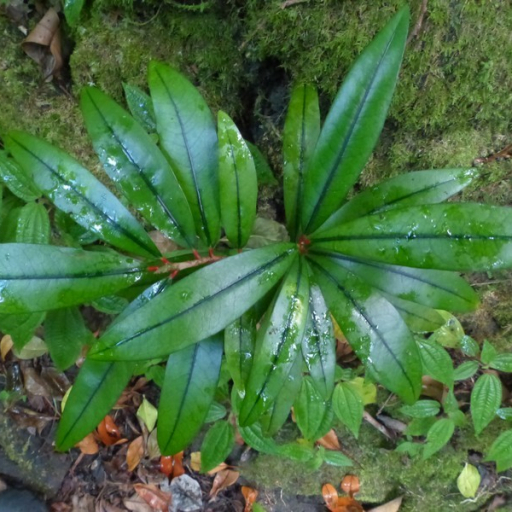
Plant Overview
Known as the "Bois de Laurier" in its native Mascarene Islands, Erythroxylum laurifolium is a graceful evergreen that carries the elegance of a laurel with the botanical intrigue of the coca family. While it shares a genus with the famous South American coca plant, this species is a unique treasure of the Indian Ocean, often found clinging to the lush, volcanic hillsides of Mauritius and Réunion. It is prized by collectors for its polished appearance and its status as a rare, endemic gem.
🔍 How to Identify
- 🍃 Lush Foliage: The leaves are the standout feature—deep green, remarkably glossy, and elliptical. They are stiff to the touch and closely resemble the leaves of a classic Bay Laurel.
- 🌸 Delicate Blooms: It produces tiny, inconspicuous white or cream-colored flowers. These star-shaped blossoms often hide tucked away in the leaf axils, appearing in small clusters.
- 🍒 Ruby Berries: After flowering, the plant develops small, oblong fruits (drupes). These turn a vibrant, waxy red when ripe, providing a beautiful visual contrast against the dark canopy.
🏡 In Your Garden
- 🏝️ Island Vibes: This plant thrives in high humidity and consistent warmth. It is best suited for conservatories or tropical landscape zones where it can mimic the breezy, moist air of the Mauritian uplands.
- ⛰️ Volcanic Roots: In the wild, it grows in rocky, volcanic soil. In a home or garden setting, it demands excellent drainage. It hates "wet feet" and will quickly suffer from root rot if the soil stays soggy for too long.
- ⏳ Slow & Steady: Don't expect a growth spurt! This is a slow-growing woody shrub. Because of its steady pace, it is excellent for those who want a "set and forget" structural plant that won't outgrow its space in a single season.
⚠️ Safety & Toxicity
- 🛑 Caution Advised: As a member of the Erythroxylum genus, this plant contains various alkaloids. While it is not the species used for commercial or illicit drug production, these compounds can still be bioactive.
- 🐾 Pet & Child Safety: The bright red berries can be tempting to curious children or pets. Ingestion of the leaves or fruit may cause stomach upset, nausea, or localized numbing. It is best kept as an ornamental plant out of reach of nibblers.
✨ Fun Fact
In its native Mauritius, Erythroxylum laurifolium was historically used in local folk medicine as a "restorative" and to treat kidney stones. However, today it is more famous among botanists for being a "living relic" of the unique evolutionary history of the Indian Ocean islands!

Detailed Care Instructions
To water this plant, make sure to use room temperature water and allow it to fully drain from the bottom of the pot before placing it back in a saucer or tray. Water should be given when the top inch of soil is dry to the touch, and be careful not to over-water as this can lead to root rot. It may be helpful to monitor the moisture levels with a moisture meter or by testing the soil with your finger. It is also important to make sure the plant has adequate drainage and is not sitting in standing water.
The soil type that is suitable for Erythroxylum Laurifolium plant should be well-draining with good fertility and a pH level between 5.5 and 7.0. The soil should preferably be a mixture of organic and inorganic materials to provide both the necessary nutrients and aeration for the plant's roots. The soil must also have adequate moisture retention capacity to prevent the plant from drying out, but not waterlogged to prevent root rot. The plant prefers soil that is slightly acidic and nutrient-rich, with adequate organic matter content. One can add compost, vermicompost, and other organic amendments to improve the soil quality. The addition of perlite, sand, or gravel can help improve drainage and prevent soil compaction. One can also use a commercial potting mix that is specifically formulated for tropical plants.








