Plant Overview
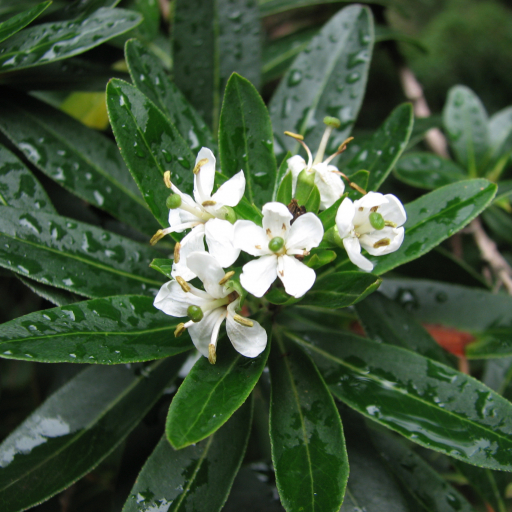
Known as the Cloven-leaf Escallonia or sometimes "White Escallonia," this Brazilian native is a champion of the coastal garden. It is beloved for its fountain-like growth habit and its ability to transform into a snowy white pillar of blossoms during the late summer heat. In many cultures, it is nicknamed the "Butterfly Magnet" because of the sheer volume of pollinators it attracts.
🔍 How to Identify
- 🌸 The Flowers: Produces large, terminal clusters (panicles) of pure white, star-shaped flowers. Unlike some other Escallonias that lean toward pink, Bifida is prized for its clean, snowy appearance.
- 🍃 The Foliage: The leaves are dark green, glossy, and leathery. If you look closely at the tips, you will see a tiny notch or "cleft," which is where it gets the name bifida.
- 🌳 The Form: This is a vigorous grower that can reach the size of a small tree if left unpruned. Its branches often arch gracefully under the weight of summer blooms.
🏡 In Your Garden
- 🛡️ Coastal Hero: This plant is incredibly salt-tolerant, making it the "gold standard" for seaside windbreaks. It can handle harsh sea breezes that would wither other shrubs, acting as a protective shield for more delicate plants.
- ✂️ The Pruning Puzzle: Because it grows so fast, it can become "leggy" or sparse at the bottom. The secret is to prune it immediately after the flowers fade; this encourages a bushier, denser shape for the following year.
- 🦋 Pollinator Paradise: If you want a garden full of life, this is your plant. The honey-scented nectar is a primary food source for butterflies and honeybees during the mid-to-late summer lull.
⚠️ Safety & Toxicity
- ✅ Status: Generally considered non-toxic and safe.
- 🐾 Pets & Kids: There are no known records of Escallonia bifida being poisonous to dogs, cats, or humans. However, as with any ornamental shrub, ingesting large amounts of the leathery foliage can cause mild stomach upset in curious pets.
✨ Fun Fact
The name bifida literally translates from Latin to "split into two." This refers specifically to the apex (tip) of the leaf, which looks like it has been slightly snipped with a pair of scissors—a tiny detail that helps botanists tell it apart from its many pink cousins!

Detailed Care Instructions

Place in a bright room that is sun drenched almost all day. Or directly in a south-facing window.

Some plants require more regular watering than others, which should be done every few days. It's critical to maintain the soil moist all of the time. The water requirements of the same plant placed in pots with varying sizes will differ. Because the water in the smaller pot evaporates faster than the water in the larger pot, it will require more watering. Regardless of pot size, the surface should constantly be maintained moist.








