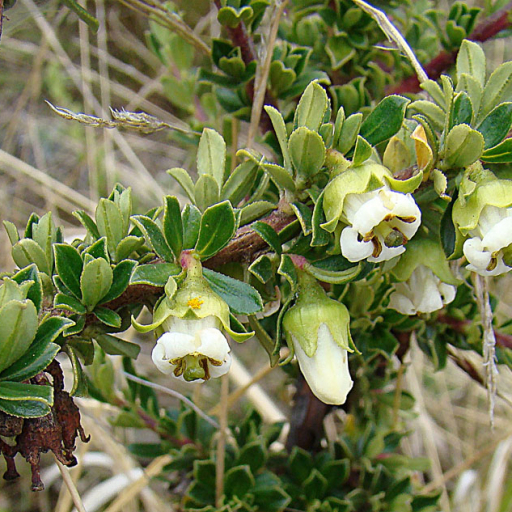
Plant Overview
Hailing from the high-altitude winds of the Andean mountains, Escallonia myrtilloides is a resilient beauty often called the Myrtle-leaf Escallonia. With its tiny, polished leaves and delicate bell-shaped blooms, it looks like a fragile ornamental, but it possesses the "mountain-tough" DNA needed to thrive where other shrubs might falter. Whether used as a dense hedge or a standalone specimen, it brings a touch of South American misty highlands to your landscape.
🔍 How to Identify
- 🍃 The Foliage: Small, dark green, and oval-shaped leaves that closely resemble those of the Myrtle plant. They are thick, glossy, and arranged densely along the stems.
- 🌸 The Flowers: Tiny, five-petaled flowers that are usually white or tinged with a faint pink. They appear in small clusters at the tips of the branches, looking like miniature stars.
- 🌿 Growth Habit: A slow-growing, evergreen shrub that naturally forms a bushy, upright shape. Its bark often turns a rich reddish-brown as the plant matures.
🏡 In Your Garden
- 🌬️ Wind Resistance: Because it evolved in the gusty Andes, this plant is incredibly wind-tolerant. It is a fantastic choice for "shelterbelts" or coastal gardens where salty breezes punish softer plants.
- ✂️ Pruning & Shape: It responds beautifully to shearing. If you want a formal look, you can clip it into a tight hedge, but leaving it unpruned allows its natural, slightly arching elegance to shine.
- 💧 Soil Preferences: While it isn't too picky, it absolutely demands good drainage. It hates "wet feet," so avoid planting it in heavy clay or spots where water pools after rain.
⚠️ Safety & Toxicity
- ✅ Status: Non-toxic and generally safe.
- 🐾 Details: There are no known reports of Escallonia myrtilloides being poisonous to dogs, cats, or humans. However, because of its dense growth, it can sometimes harbor spiders or insects, so keep an eye out when pruning!
✨ Fun Fact
In its native South American habitat, this plant is a key resident of the Páramo—a unique alpine tundra ecosystem. It plays a vital role in preventing soil erosion on steep mountain slopes and provides a nectar source for high-altitude hummingbirds!

Detailed Care Instructions
To grow Escallonia Myrtilloides (Gouda Escallonia), you can follow these steps:
- Choose a suitable location: Gouda Escallonia thrives in full sun or partial shade, so select a spot in your garden that receives at least 4-6 hours of direct sunlight per day.
- Prepare the soil: Escallonia prefers well-draining soil with a pH level between 6.5 and 7.5. Improve the soil's drainage by adding organic matter like compost or well-rotted manure. This will help the plant establish and grow well.
- Planting: Dig a hole that is slightly larger than the root ball of the Escallonia. Place the plant in the hole, ensuring the top of the root ball is level with or slightly higher than the soil surface. Backfill the hole, gently firming the soil around the plant. Water thoroughly after planting.
- Watering: Keep the soil consistently moist but not waterlogged, especially during the plant's establishment period. Once established, escallonia is somewhat drought-tolerant, but regular watering during dry periods will promote healthier growth.
- Mulching: Apply a layer of organic mulch around the base of the plant, leaving a gap around the stem to prevent rot. Mulch helps retain moisture in the soil, suppresses weed growth, and provides insulation to the roots in extreme temperatures.
- Pruning: Escallonia Myrtilloides benefits from pruning to maintain an attractive shape and encourage bushier growth. Prune lightly after flowering, trimming back any straggly or dead branches. Avoid heavy pruning as it may affect flowering.
- Fertilizing: Apply a balanced, slow-release fertilizer in early spring to provide essential nutrients for healthy growth. Follow the instructions on the fertilizer package.
- Pests and diseases: Monitor the plant for common pests like aphids, spider mites, and scale insects. Treat any infestations promptly using suitable insecticidal sprays or natural remedies like neem oil. Escallonia is generally resistant to diseases, but it can be susceptible to root rot if grown in overly wet conditions.
Remember to regularly inspect your Escallonia Myrtilloides for signs of stress, pests, or disease, and take appropriate action as needed. With proper care, this plant can grow into a beautiful addition to your garden, providing bright flowers and attractive foliage.

Place in a bright room that is sun drenched almost all day. Or directly in a south-facing window.

To properly water Escallonia Myrtilloides, it is important to consider the specific needs and environmental conditions of the plant. It is recommended to check the moisture level of the soil regularly, as the plant prefers a consistently moist but well-draining soil. Over-watering can lead to root rot and other issues, so it is important not to let the soil become waterlogged.
When watering, it is best to do so deeply and infrequently rather than frequent shallow watering. This encourages the roots to grow deeper and promotes a healthier, more robust plant. The frequency of watering may vary depending on environmental factors such as temperature, humidity, and wind.
It is also important to water the plant at the base rather than directly on the foliage, as wet leaves can lead to fungal issues and disease. A soaker hose or drip irrigation system is ideal for delivering water directly to the soil.
Overall, providing consistent and appropriate watering is a key aspect of promoting healthy growth and vibrant foliage in Escallonia Myrtilloides.
To fertilize this plant, you should use a balanced, slow-release fertilizer in the early spring, once new growth begins. Apply it according to the instructions on the packaging, being careful not to over-fertilize. Water the plant deeply after fertilizing to help distribute the nutrients throughout the soil. Repeat the application in late summer or early fall, as needed. Avoid fertilizing during the winter months, as the plant is dormant and may not be able to take up the nutrients.
The ideal soil for this plant is a well-draining soil that is rich in organic matter. It should have a neutral to slightly acidic pH level, between 6.0 and 7.5. Avoid using heavy clay soils, which can retain too much moisture and cause root rot. A sandy loam soil is preferred, as it allows for good drainage. Adding compost or other organic matter to the soil can improve its structure and fertility, as well as providing beneficial microorganisms for the plant. It is important to ensure that the soil remains moist but not waterlogged, as this can also lead to root rot.
To propagate this plant, take a 4-6 inch cutting from a healthy stem. Strip the leaves from the bottom 2 inches of the stem and dip it into rooting hormone powder. Plant the cutting into a well-draining potting mix or soil mixture in a container with drainage holes. Water and keep the soil moist and place the container in indirect sunlight. Cover the container with a plastic bag to create a humid environment. After 4-6 weeks, new roots should have formed and the plant can be transplanted into a larger pot or into the ground.








