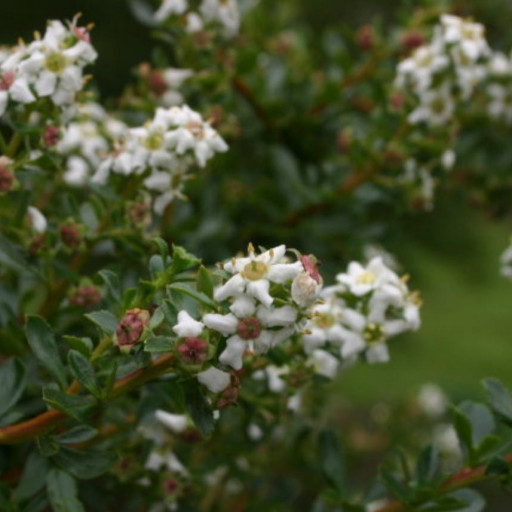
Plant Overview
Known for its elegant, arching stems, Escallonia virgata is a graceful wanderer from the cool, damp regions of the Andes in Chile and Argentina. Unlike many of its evergreen cousins, this shrub is deciduous, shedding its leaves in winter to reveal a skeletal, "wand-like" beauty that defines its botanical name. It is a favorite for gardeners seeking a hardy, honey-scented hedge that can withstand even the toughest coastal breezes.
🔍 How to Identify
- 🌿 Wand-Like Stems: True to its name (virgata means "twiggy" or "wand-shaped"), the plant features long, slender branches that arch gracefully toward the ground like a botanical fountain.
- 🌸 Summer Stars: In early to mid-summer, the shrub is smothered in small, five-petaled white flowers. These blossoms grow tucked into the leaf axils, lining the stems in a snowy display.
- 🍃 Fine Foliage: The leaves are notably small, narrow, and glossy green. Because it is deciduous, these leaves often take on a subtle bronze hue before dropping in late autumn.
🏡 In Your Garden
- 🌬️ Coastal Champion: This species is exceptionally tough against salt spray and high winds. It is often used as a "first line of defense" hedge in seaside gardens where other plants might be scorched by the salt air.
- ✂️ The Pruning Window: Because it produces flowers on the previous year's wood, you should only prune it immediately after the flowers have faded. Pruning too late in the year will accidentally cut off next summer's flower buds!
- 🐝 Honey Scent: The blooms emit a delicate, sweet fragrance that acts as a magnet for honeybees and butterflies, making it an excellent choice for a wildlife-friendly landscape.
⚠️ Safety & Toxicity
- ✅ Safe Status: Escallonia virgata is generally considered non-toxic to humans, dogs, and cats.
- 🧤 User-Friendly: It lacks thorns or irritating sap, making it a safe choice for planting near walkways or in gardens where children and pets frequently play.
✨ Fun Fact
Escallonia virgata is the "secret ingredient" behind many popular garden hybrids. It was crossed with Escallonia rubra to create the famous Escallonia x langleyensis, passing down its extreme cold hardiness to its offspring so they could survive in chillier northern climates.

Detailed Care Instructions
To grow Escallonia virgata, the following steps should be followed:
- Select a suitable planting location: Choose a spot that receives full sun to partial shade (about 6 hours of direct sunlight) to ensure healthy growth.
- Prepare the soil: Ensure that the soil is well-draining and rich in organic matter. Amend heavy clay soils with compost or peat moss to enhance drainage.
- Dig a hole: Dig a hole that is slightly larger than the root ball of the Escallonia plant.
- Plant the Escallonia: Take the plant out of its container and gently loosen the roots before placing it in the hole. Position the plant at the same depth it was in the nursery container. Backfill the hole with soil, gently firming it around the base of the plant.
- Water thoroughly: After planting, water the Escallonia thoroughly to settle the soil and eliminate any air pockets. Maintain regular watering during the first year to establish a strong root system.
- Mulch the base: Apply a layer of organic mulch, such as wood chips or compost, around the base of the plant. This helps retain moisture, suppress weeds, and regulate soil temperature.
- Prune regularly: Escallonia responds well to regular pruning. Trim back any dead, damaged, or overgrown branches to maintain a neat and compact shape. Pruning can be done after flowering, typically in late spring or early summer.
- Fertilize appropriately: Apply a balanced, slow-release fertilizer formulated for shrubs in early spring. Follow the package instructions for dosage and frequency. Avoid excessive fertilization, which can lead to weak growth and nutrient imbalances.
- Monitor for pests and diseases: Keep an eye out for common pests like aphids, scale insects, and whiteflies. Regularly inspect the leaves for signs of disease such as leaf spot or powdery mildew. Treat any issues promptly with appropriate organic pesticides or consult a professional if needed.
- Provide winter protection if necessary: In regions with severe winters, protect the Escallonia plant by covering it with burlap or applying a thick layer of mulch around the base to insulate the roots.
By following these steps, you can encourage healthy growth and maintain a beautiful Escallonia virgata plant.

Place in a bright room that is sun drenched almost all day. Or directly in a south-facing window.

To properly water this plant, make sure to first check the moisture level of the soil by sticking your finger about an inch deep into the soil. If the soil feels dry, it's time to water.
When watering, water the soil around the base of the plant rather than the leaves or flowers. Use a watering can or hose with a gentle stream to avoid damaging the plant. Water until the soil is moist, but not waterlogged.
During hot and dry spells, you may need to water more frequently. However, be careful not to overwater and cause waterlogging, which can lead to root rot.
Additionally, it's important to consider the location of the plant when determining watering frequency. If it's in a hot and sunny area, it will likely need to be watered more often than if it's in a cooler, shadier spot.
Overall, the key is to ensure that the soil stays consistently moist and never fully dries out.
To fertilize this plant, you should apply a balanced fertilizer with equal parts nitrogen, phosphorus, and potassium. Do this once per month, starting in the spring and continuing through the fall. Be sure to follow the instructions on the fertilizer package for the correct amount to apply. Additionally, you may want to add a slow-release fertilizer to the soil around the base of the plant, which will release nutrients over a longer period of time. Avoid over-fertilizing, as this can lead to excessive foliage growth and reduced flowering.
Escallonia Virgata plant prefers a well-draining soil that is rich in nutrients. It can grow in a wide range of soil types, including loamy, sandy, and clay soils, but it requires adequate drainage to prevent waterlogging. It is recommended to use a mixture of soil and organic compost to provide necessary nutrients and improve soil structure. The pH level of the soil should be between 6.0 and 7.5, which is slightly acidic to slightly alkaline. It is important to avoid using heavy soils, such as peat moss, which can retain too much water and cause root rot. Adequate soil preparation before planting can ensure the plant's healthy growth and development.
Escallonia Virgata is a shrub that can be propagated through stem cuttings. Here are the steps to propagate this plant:
- Choose healthy stems from the parent plant that are about 4-6 inches long and have at least two sets of leaves.
- Use pruning shears or a sharp knife to make a clean cut just below a leaf node.
- Remove the leaves from the lower half of the stem.
- Dip the cut end of the stem into rooting hormone powder.
- Prepare a pot with well-draining soil and make a hole in the center using a pencil or similar object.
- Insert the stem into the hole, burying the lower half of the stem in soil.
- Water the cutting well and cover the pot with a plastic bag or clear plastic container to create a humid environment.
- Place the pot in a warm and bright location, but avoid direct sunlight.
- Mist the cutting daily to keep the humidity high.
- After about 4-6 weeks, check for roots by gently tugging on the stem. If there is resistance, the roots have formed.
- Once rooted, remove the plastic covering and transplant the new plant into a larger pot or directly into the garden.
By following these steps, you can successfully propagate Escallonia Virgata and grow new plants from your existing one!
Common pests of the escallonia virgata include Scale insect, spider mites, whiteflies. Make a habit of checking your escallonia virgata frequently for pests so that any infestations can be caught and managed early.








