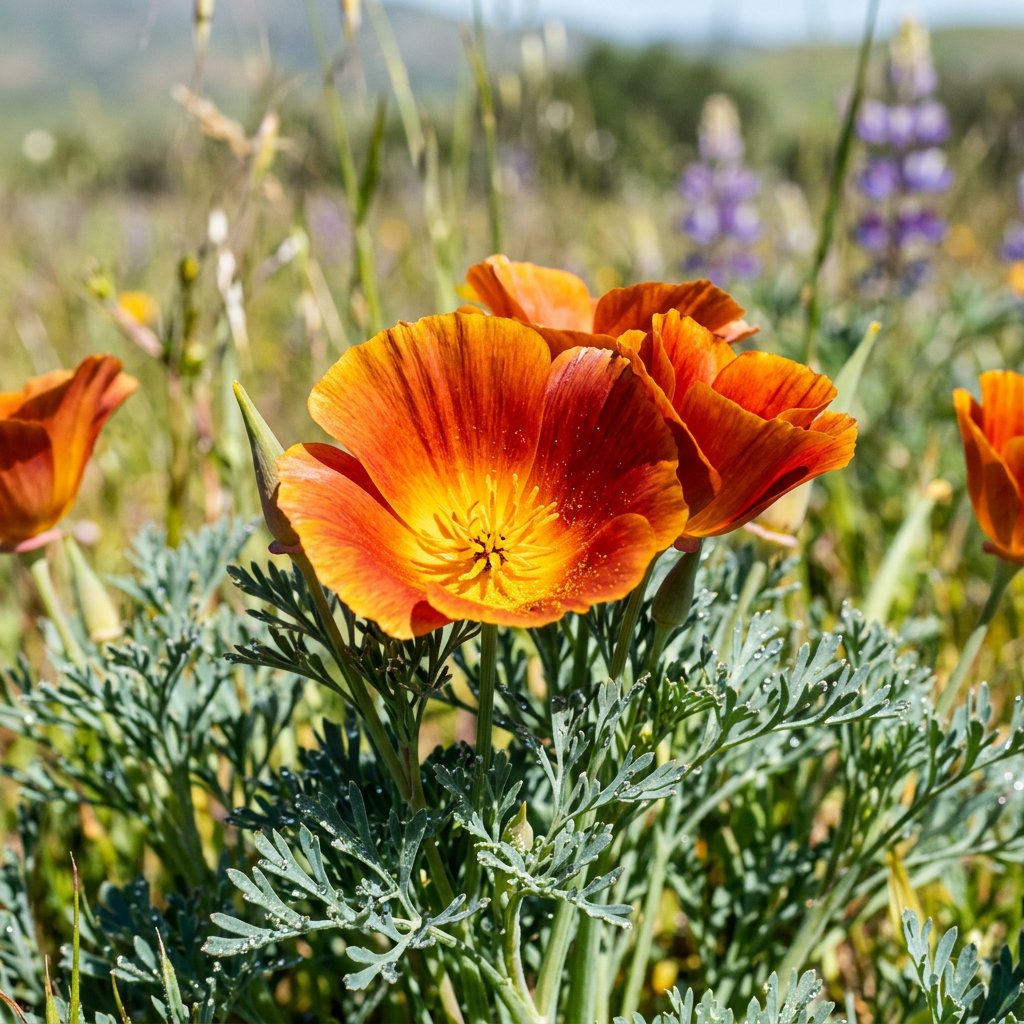
Plant Overview
Often called the "Cup of Gold" or "Flame Flower," the California Poppy is a sun-worshipping symbol of the American West. These resilient wildflowers are famous for transforming dry hillsides into rolling waves of orange during the spring. Spanish explorers were so captivated by their brilliance that they reportedly nicknamed the California coast "Tierra del Fuego" (Land of Fire) after seeing the hillsides shimmering from their ships.
🔍 How to Identify
- 🌼 The Bloom: Brilliant orange or golden-yellow petals with a silky, satiny texture. The flowers are cup-shaped and typically have four petals.
- 🌿 The Foliage: Delicate, feathery, blue-green leaves that are deeply "dissected," giving them a lacy appearance similar to carrot tops.
- 🖋️ The Seed Pod: After the flower fades, it produces a long, slender, pointed green capsule that eventually turns brown and "pops" to scatter seeds.
🏡 In Your Garden
- ☀️ The Sun Worshipper: These flowers are highly sensitive to light; they require full sun to open their petals and will remain tightly closed on cloudy days or during the night.
- 🚫 Don't Move Me: Because they develop a long, sensitive orange taproot, they hate being transplanted. It is best to sow seeds directly into the soil rather than starting them in pots.
- 🏜️ Drought Warrior: Once established, they require very little water and thrive in poor, sandy, or well-draining soil where more "fussy" garden flowers might fail.
⚠️ Safety & Toxicity
- 🐾 Mildly Toxic: While used historically in traditional herbalism for its sedative properties, the plant contains alkaloids that can be toxic if ingested in large quantities.
- 🐱 Pet Warning: It is considered toxic to dogs, cats, and horses. Ingestion can lead to digestive upset, lethargy, or more serious neurological symptoms in high doses.
✨ Fun Fact
California Poppies are "nyctinastic," which is a fancy scientific way of saying they go to sleep! Every evening as the sun sets, the petals roll up tightly to protect their pollen from the dew, only unfurling again when the morning sun provides enough warmth.

Detailed Care Instructions
| Color | Orange, Yellow, Pink, White |
| Soil Ph | 6.6 To 7.5 |
| Humidity | Normal |
| Invasive | Weed |
| Lighting | Full Sun |
| Toxicity | Toxic |
| Soil Type | Average To Poor |
| Bloom Time | Spring |
| Difficulty | Easy |
| Plant Type | Tender Perennial |
| Mature Size | 12 Inches |
| Native Area | Western United States |
| Temperature | 18°C - 24°C |
| Sun Exposure | Full Sun |
| Hardiness Zones | Usda Growing Zones 8-10 As A Perennial; Annual Everywhere |
To grow Eschscholzia Californica (California poppy) plants, follow these steps:
- Choose the right planting location: California poppies prefer full sun but can tolerate light shade. They thrive in well-draining soil that is not overly fertile.
- Prepare the soil: Loosen the soil with a garden fork or cultivator and remove any rocks or debris. Add organic matter like compost or well-rotted manure to improve soil fertility and drainage if needed.
- Sow the seeds: California poppies can be grown from seeds. Sow the seeds directly in the garden in early spring or fall. Scatter the seeds evenly on top of the soil and gently press them into the soil without covering them completely. Keep the seeds moist until germination, which usually takes about two weeks.
- Watering: Water the plants regularly, especially during dry spells, but be careful not to overwater them as it can cause root rot. Aim to keep the soil consistently moist but not waterlogged.
- Thin the seedlings: Once the seedlings are about two inches tall, thin them out to prevent overcrowding. Space the plants about 8-10 inches apart.
- Mulching: Mulch around the base of the plants to help retain moisture and suppress weeds.
- Maintenance: California poppies are relatively low-maintenance. Deadhead the faded flowers to encourage more blooming and prevent self-seeding. If desired, you can collect seeds for future plantings.
- Pests and diseases: These plants are usually not prone to major pest or disease issues. However, keep an eye on aphids, slugs, and snails. If infestations occur, use organic pest control methods to protect your plants.
By following these steps, you can successfully grow Eschscholzia Californica plants and enjoy their beautiful, vibrant flowers in your garden.

Place in a bright room that is sun drenched almost all day. Or directly in a south-facing window.

To water this plant, you should first observe its soil to determine if it is dry. Use your finger or a moisture meter to check the soil moisture levels. If the soil feels dry up to a depth of about 1 inch, it is time to water the plant.
When watering this plant, do not allow water to pool on the surface. Instead, water slowly and evenly around the base of the plant until the soil is moist but not waterlogged. Avoid getting water on the foliage if possible, as this can encourage fungal diseases.
Water this plant deeply but infrequently. It is important to allow the soil to dry out between watering to prevent root rot. The frequency of watering will vary based on the climate, soil type, and other environmental factors. In general, this plant should be watered once or twice a week during dry weather and less frequently during rainy periods.
In addition to watering, maintain proper drainage around the plant by ensuring the soil around the rootball does not become waterlogged. This plant prefers well-draining soil and may suffer from root rot if it is subjected to standing water for prolonged periods.
To fertilize this plant, you should apply a balanced fertilizer with equal parts nitrogen, phosphorus, and potassium. Avoid using excessive amounts of fertilizer, and make sure to follow the manufacturer's instructions regarding the amount and frequency of application. Additionally, it is recommended to use organic fertilizers, such as compost or fish emulsion, to improve soil quality and promote healthy growth. Avoid fertilizing during periods of drought or excessive heat, as this can damage the roots and cause the plant to wilt.
Eschscholzia Californica prefers a well-draining soil that is loose and sandy. The soil should not be too heavy or contain too much clay, as this can lead to poor water drainage and root rot. It is important to ensure that the soil is fertile and nutrient-rich, as this plant can benefit from regular applications of fertilizer or compost. Ideally, the pH of the soil should be slightly acidic to neutral, ranging between 6.0 and 7.5. Overall, the most important factor to consider when selecting soil for Eschscholzia Californica is whether it can provide proper drainage and aeration to support healthy root growth.
To propagate this particular plant, you will need to collect mature seed pods from the parent plant after they have withered and turned brown. The seeds inside the pods should be dried and stored in a cool, dry place until ready to plant.
To plant the seeds, you will need to prepare the soil by loosening it and removing any debris or weeds. The soil should be fertile, well-draining, and slightly acidic. Scatter the seeds over the soil surface, and then gently press them down with your fingers, ensuring that they are in good contact with the soil.
Next, you will need to water the soil lightly, using a fine mist or a gentle stream of water. Cover the planted seeds with a layer of mulch, such as shredded leaves or straw, to help retain moisture and protect the seeds from birds and other animals.
Finally, you will need to monitor the seedlings and provide them with adequate water and sunlight. Once the seedlings have grown a few inches tall, you can transplant them to their permanent location in the garden.








