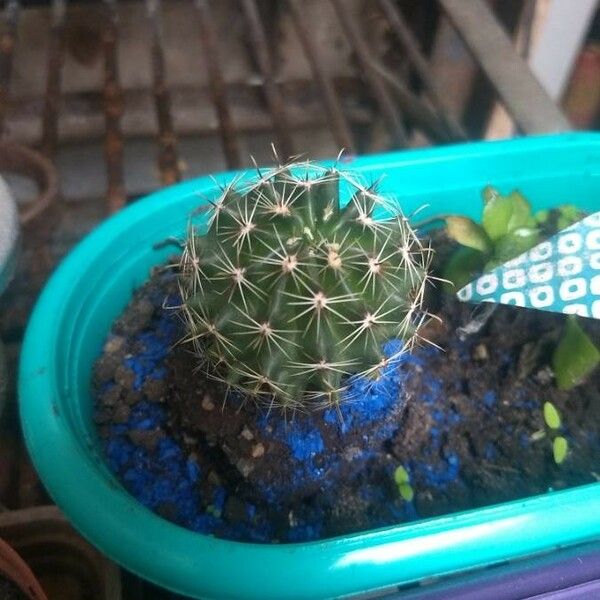
Plant Overview
Commonly known as Robert’s Pincushion or the Emskoetter Beehive Cactus, this charming desert dweller hails from the rugged landscapes of Southern Texas and Northern Mexico. It is a favorite among succulent collectors for its ability to form dense, woolly "neighborhoods" of small, globose stems. While it might look like a soft dusting of snow from a distance, it is a resilient survivor built for the heat of the Rio Grande Valley.
🔍 How to Identify
- 🌵 Growth Habit: This cactus is a "clumper," meaning it starts as a single ball but quickly produces many small offsets to form a low-growing mound.
- 🪡 Spine Texture: It is densely covered in fine, needle-like spines that range from white to greyish-tan, giving the plant a fuzzy or bristly appearance that obscures the green body underneath.
- 🌸 Fringed Blooms: The flowers are small and delicate, often appearing in shades of pale yellow, pinkish-tan, or lavender with distinctively fringed or "shredded" petal edges.
🏡 In Your Garden
- 🏜️ The Gritty Requirement: Unlike tropical plants, this cactus has a sensitive root system that hates "wet feet." It thrives best in a mineral-heavy substrate (think more pumice and grit, less peat) to mimic the limestone crevices of its native habitat.
- ☀️ Light & Winter Rest: While it loves bright, direct sunlight to keep its spines dense and white, it requires a strictly dry "winter nap." If kept bone-dry during the cold months, it is surprisingly hardy, but even a little moisture in low temperatures can cause it to rot overnight.
⚠️ Safety & Toxicity
- 🟢 Non-Toxic: This species is generally considered non-toxic to both humans and household pets like cats and dogs.
- 🩹 Physical Hazard: While not poisonous, the spines are very sharp and numerous. They can easily puncture the skin or become lodged in a pet's paw or a child's hand, so it is best kept on a high shelf or a protected rockery.
✨ Fun Fact
- 🕰️ Old Soul Names: This plant has a bit of an identity crisis in the botanical world! It has been moved between the genera Escobaria, Coryphantha, and Mammillaria over the decades, making it a classic "collector's puzzle" for plant historians.

Detailed Care Instructions
To successfully grow Escobaria emskoetteriana, also known as the spinystar cactus, you can follow these steps:
- Climate and sunlight: Escobaria emskoetteriana usually thrives in a desert-like climate. Ensure your plant receives at least 6 hours of direct sunlight each day. If you live in a region with a colder climate, it is advisable to grow the cactus indoors or in a greenhouse.
- Soil: Use well-draining soil for your spinystar cactus. A cactus or succulent-specific potting mix works well. If your soil is heavy and retains water, it is recommended to add some coarse sand, perlite, or pumice to increase drainage.
- Watering: As a desert cactus, Escobaria emskoetteriana requires infrequent but deep watering. Water the plant only when the soil is completely dry, typically once every 2-3 weeks during the growing season (spring and summer). Reduce watering in the winter to mimic dormancy. Overwatering can cause root rot, so ensure the soil has dried out before watering again.
- Temperature and humidity: The ideal temperature range for Escobaria emskoetteriana is between 70-90°F (21-32°C) during the growing season. These cacti can tolerate cooler temperatures in the winter but should not be exposed to frost. They prefer low to medium humidity levels, so high humidity environments may not be suitable.
- Pot and container: Choose a pot or container that has drainage holes to prevent waterlogging. A shallow container is better suited for this cactus as it has a spread out root system rather than a deep taproot. Consider repotting when the pot becomes too small for the plant.
- Fertilizing: Escobaria emskoetteriana does not require frequent fertilization but can benefit from a diluted cactus fertilizer during the active growing season. Apply the fertilizer according to the package instructions, usually every 4-6 weeks.
- Propagation: This cactus species can be propagated through various methods such as seeds, offsets, or cuttings. Seeds can be sown in well-draining soil, and offsets can be separated from the mother plant once they have developed their own root system. Cuttings can be taken from healthy growth, left to callous for a few days, and then planted in well-draining soil.
Remember, Escobaria emskoetteriana is a slow-growing cactus, so don't expect rapid growth. Patience and proper care will help ensure its long-term success.

Place in a bright room that is sun drenched almost all day. Or directly in a south-facing window.

Escobaria emskoetteriana is a drought-tolerant plant that requires minimal watering. It is best to water it infrequently but deeply to encourage its roots to grow deep and strong.
To water the plant, use a watering can or a hose with a gentle spray nozzle. Water around the base of the plant, avoiding the leaves and stem to prevent rot and fungal diseases.
Before watering, check the soil moisture level by inserting your finger 1-2 inches deep into the soil. If the soil feels dry to the touch, it needs watering. If it is damp, wait a few more days before checking again.
During the growing season, water once a week, or less frequently depending on the weather conditions and soil type. During the winter months, the plant goes dormant and requires even less water.
Always ensure that excess water drains away from the pot or planting area to prevent waterlogging. Overwatering can lead to root rot and ultimately kill the plant.
In summary, to water Escobaria emskoetteriana, water infrequently but deeply around the base of the plant, avoid watering the leaves and stem, check soil moisture before watering, water once a week during the growing season or less frequently, allow excess water to drain away, and avoid overwatering.
To fertilize this plant, use a cactus or succulent fertilizer diluted to half strength. Apply the fertilizer in the early spring when new growth starts to appear. Water the plant thoroughly before fertilizing and only fertilize every two months during the growing season. Avoid fertilizing during the dormant winter months.
Escobaria emskoetteriana plant requires well-drained soil with a slightly acidic to neutral pH range. The soil should not contain excessive amounts of clay or sand. A mixture of loamy soil, sand, and perlite or pumice is ideal for this plant. The soil should be kept slightly moist but not waterlogged. It is important to avoid overwatering and to allow the soil to dry out slightly between watering. Adding some organic matter, such as compost, to the soil can help improve its moisture retention capacity. Fertilization should be done sparingly, as this plant thrives in nutrient-poor soil. A cactus or succulent-specific fertilizer can be used once every 2-3 months during the growing season.
Escobaria emskoetteriana is a small cactus plant that can be propagated by seed or by offsets. To propagate by offsets, wait until the plant has produced new growth or offsets around its base. Gently remove the offsets from the parent plant using a sharp, clean knife, being careful not to damage the roots. Allow the offsets to dry for a day or two and then plant them in a pot filled with well-draining soil. Water the soil lightly and place the pot in a warm, bright location, avoiding direct sunlight. Allow the plant to establish itself for several weeks before watering again and wait until new growth appears before fertilizing. With proper care, the offsets should grow into full-sized plants within a year.








