Plant Overview
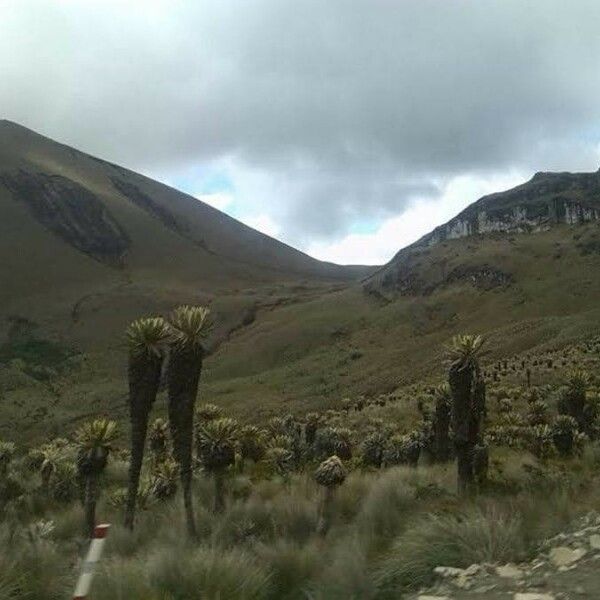
Known as the "Big Monk" of the Andes, Espeletia pycnophylla is a surreal-looking sentinel of the high-altitude páramo. These architectural wonders are more than just plants; they are vital "water factories" that sustain entire ecosystems. Draped in soft, silvery velvet, they stand stoically in the mist, looking like ancient guardians of the mountain peaks.
🔍 How to Identify
- 🧶 Woolly Foliage: Long, lance-shaped leaves that are densely covered in thick, silver-gray hairs, giving the plant a soft, felt-like texture.
- 🧥 The "Skirt": A thick, sturdy trunk that remains covered in a "shag" of dead, dried leaves. This acts as a natural puffer jacket to protect the core from freezing temperatures.
- 🌻 Golden Crowns: Bright yellow, daisy-like flowers that bloom in clusters atop long, fuzzy stalks emerging from the central rosette.
🏔️ Habitat & Ecology
- ☁️ Mist Catchers: These plants are masters of hydration. Their fuzzy leaves trap moisture from passing clouds and fog, dripping it down into the soil to feed Andean streams and rivers.
- 🐢 Glacial Growth: Resilience takes time. A Frailejón typically grows only about one centimeter per year, meaning a person-sized plant could be well over 150 years old.
- 🌋 Volcanic Soil: They thrive in the acidic, nutrient-poor, and water-logged soils of the high Andes, where few other large plants can survive the intense UV rays and nightly frosts.
⚠️ Safety & Toxicity
- ✅ Harmless Sentinel: The Frailejón is non-toxic and safe to be around. Its velvet-soft leaves are often tempting to touch, which is perfectly safe for humans.
- 🛡️ Protected Status: While safe to touch, they are incredibly fragile and ecologically precious. In many regions, it is illegal to harvest or disturb them because they are critical for regional water security.
✨ Fun Fact
The name "Frailejón" translates to "Big Monk." Early Spanish explorers, wandering through the thick mountain fog, often mistook the tall, upright silhouettes of these plants for groups of friars walking across the páramo!

Detailed Care Instructions
To grow Espeletia pycnophylla, also known as the Cojedes Páramo, follow these steps:
- Climate and Conditions: Espeletia pycnophylla is native to the high-altitude páramos of Venezuela, so it requires cool temperatures and high-altitude conditions to thrive. It prefers temperatures between 10°C to 18°C (50°F to 64°F) and a humidity range of 60-80%.
- Seeds: Obtain Espeletia pycnophylla seeds from a reputable seed supplier or botanical garden. Fresh seeds are best for germination, so try to get seeds that are as recent as possible.
- Soil: Prepare a well-draining soil mix for your Espeletia pycnophylla plants. A mix of equal parts peat moss, sand, and perlite is suitable. Ensure the pH of the soil is slightly acidic to neutral (around 6.0-7.0).
- Germination: Sow the Espeletia pycnophylla seeds on the soil surface without covering them, as they require light for germination. Keep the soil consistently moist, but not overly saturated. Maintain a temperature of around 15°C (59°F) for successful germination, as this mimics the páramos environment.
- Light: Espeletia pycnophylla thrives in full sun but can also tolerate partial shade. Place the seedlings in a location where they will receive at least 6-8 hours of direct sunlight per day.
- Watering: Water the plants regularly, ensuring the soil remains evenly moist but not waterlogged. Avoid overwatering, as it can lead to root rot. In the growing season, watering twice a week should be sufficient, but adjust according to the moisture needs of your specific plant.
- Fertilizer: Espeletia pycnophylla typically grows in nutrient-poor páramo soils. However, you can apply a slow-release balanced fertilizer (10-10-10) once or twice during the growing season to provide the plants with necessary nutrients. Follow the package instructions for application rates.
- Mulching: Apply a layer of organic mulch around the base of the plants to retain moisture and suppress weed growth. This will help to mimic the natural páramo environment and protect the delicate roots from extreme temperatures.
- Pruning and Maintenance: Regularly remove any dead or damaged leaves to maintain plant health and appearance. Espeletia pycnophylla often benefits from pruning to remove old flower stalks and encourage bushier growth.
Remember that growing Espeletia pycnophylla can be challenging outside its native habitat due to specific climate requirements. It is recommended for experienced gardeners or those residing in high-altitude regions with similar cool, mountainous climates.
Espeletia Pycnophylla plant should be watered regularly, but not excessively, as it prefers moist but well-drained soil. It is important to allow the soil to dry out slightly between waterings to prevent root rot. The plant can also benefit from occasional misting with a spray bottle to increase humidity. It is best to water the plant at the base rather than directly on the leaves to prevent fungal diseases. Overall, the watering schedule will depend on the specific environmental conditions and the size of the plant, so it is important to monitor the soil moisture and adjust watering accordingly.
To fertilize this plant, use a balanced fertilizer with equal amounts of nitrogen, phosphorus, and potassium. Apply the fertilizer once a month during its growing season, which is typically in the spring and summer. Make sure to water the plant before and after applying the fertilizer to avoid burning the roots. Also, avoid over-fertilizing as it can cause damage to the plant.
Espeletia Pycnophylla plant is native to high-altitude regions and requires a well-draining soil mix to thrive. The ideal soil mix for this plant contains peat moss, perlite, and sand in equal proportions to create a porous and moisture-retaining soil. It is also important to ensure that the soil has a pH level between 6.0 and 7.0, which is slightly acidic to neutral.
The soil mix should be sterile, which means free from pests, diseases, and weed seeds. You can either use a commercially available potting mix or create your own by mixing the above ingredients thoroughly. Additionally, it is recommended to add organic matter such as compost or aged manure to the soil mix to improve its fertility.
Espeletia Pycnophylla plant prefers to grow in a humid environment, so regular misting is essential to maintain the moisture level in the soil and around the leaves. It is also important to avoid overwatering, as the plant can be susceptible to root rot. When watering, wait until the top inch of soil has dried before watering again.
Overall, the key to growing a healthy Espeletia Pycnophylla plant is to provide it with a well-draining, slightly acidic to neutral soil mix that is rich in organic matter and moist but not waterlogged.
Espeletia Pycnophylla is a plant species that is indigenous to a specific region. To propagate this plant, it is recommended to collect the seeds during the period of fruiting, which usually occurs during the warmer months of the year. Once the seeds have been collected, they should be stored in a dry, cool, and dark location until ready to plant. Before sowing the seeds, prepare the soil, making sure it is well-draining and has adequate nutrients to support plant growth. Plant the seeds in shallow holes, covering them with just a thin layer of soil, and water them regularly to keep the soil moist. After a few weeks, the seeds should germinate, and you can then transplant the seedlings to their permanent location in the ground. It is important to monitor and care for the young plants, particularly during their initial growth stages, to ensure they are healthy and strong enough to continue growing.








