Plant Overview
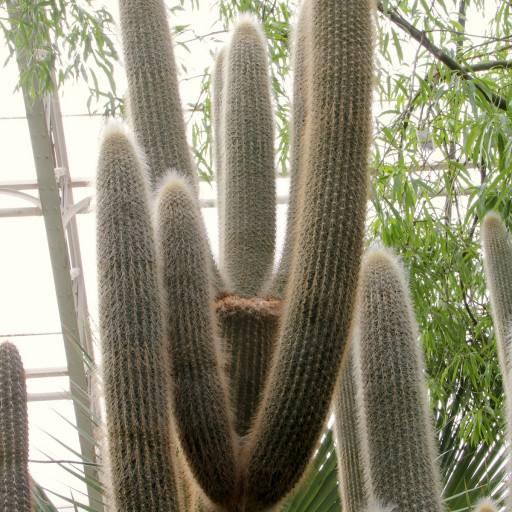
Often called the "Red-spined Woolly Torch," this Bolivian native looks like it’s wearing a fuzzy, golden-red coat to protect itself from the mountain chill. It is a striking columnar cactus that adds vertical drama and a unique texture to any desert-themed collection. As it ages, it develops a distinctive "beard" on one side, making it look like a wise, glowing sentinel of the Andes.
🔍 How to Identify
- 🌵 Columnar Shape: It grows as a tall, upright cylinder that can eventually reach several feet in height, often branching out from the base as it matures.
- ✨ Bristly Spines: The plant is densely covered in short, needle-like spines that range in color from a pale straw yellow to a deep, rusty reddish-orange.
- ☁️ Woolly Coating: Between the spines, the plant produces fine, hair-like white or golden wool that softens its appearance and helps regulate its temperature.
🏡 In Your Garden
- ☀️ Sunscreen Hair: That signature "wool" isn't just for decoration; it acts as a built-in sunscreen. To keep the wool thick and vibrant, the plant needs very bright light. In low light, the hair will become thin and the plant will lose its luster.
- 🏜️ Sensitive Roots: This cactus prefers a "gritty" lifestyle. It requires a very porous, mineral-heavy soil mix. Because it is adapted to rocky slopes, it is highly susceptible to root rot if left in standing water or heavy potting soil.
⚠️ Safety & Toxicity
- 🌵 Physical Hazard: While the Espostoa guentheri is not chemically toxic or poisonous to touch, its spines are numerous and sharp. They can easily lodge in the skin and are difficult to remove.
- 🐾 Pet & Child Safety: It is generally considered non-toxic to cats and dogs if ingested, but the physical danger of the spines makes it a high-risk plant for curious pets or toddlers. It should be placed in an inaccessible spot.
✨ Fun Fact
As the plant reaches maturity (usually over 10 years old), it grows a "Cephalium." This is a specialized, extra-woolly patch that runs down one side of the stem. This "beard" is the only place where the plant's creamy, bell-shaped flowers will emerge, blooming exclusively at night!

Detailed Care Instructions
| Lighting | Full Sun |
To grow an Espostoa Guentheri plant, also known as Peruvian Old Man Cactus, you can follow these steps:
- Choose the right location: Place your Espostoa Guentheri plant in a location that receives bright, indirect sunlight. Avoid placing it in direct sunlight as it can scorch the plant.
- Potting and soil: Select a well-draining pot with drainage holes. Fill it with a cactus and succulent potting mix or make your own by combining regular potting soil with sand and perlite. This will ensure good drainage for the plant.
- Planting: Gently remove the Espostoa Guentheri from its nursery pot and place it into the new pot. Fill the remaining space with the potting mix, ensuring the plant is stable and upright.
- Watering: Espostoa Guentheri plants are drought-tolerant, so be careful not to overwater. Water thoroughly but allow the soil to dry out completely between waterings. It's better to underwater than overwater this plant, as excessive moisture can lead to root rot.
- Temperature and humidity: Espostoa Guentheri prefers average room temperatures ranging from 65°F to 80°F (18°C to 27°C). It can tolerate lower temperatures down to 45°F (7°C) for short periods. It doesn't require high humidity, but some moisture in the air is beneficial.
- Fertilizing: Feed the Espostoa Guentheri with a balanced, diluted cactus fertilizer during the growing season (spring and summer) according to the package instructions. Avoid fertilizing in winter when the plant goes dormant.
- Pruning: This plant doesn't require regular pruning. However, you can remove dead or yellowing stems using clean and sharp pruning shears.
- Propagation: Espostoa Guentheri can be propagated through stem cuttings. Allow the cut end to dry for a few days, and then plant it in well-draining cactus soil. Keep the soil slightly moist until roots develop.
- Maintenance: Periodically check for pests such as mealybugs or spider mites. Gently wipe the affected areas with a cotton swab dipped in rubbing alcohol to remove them.
- Monitor growth: Espostoa Guentheri is a slow-growing cactus, so do not expect rapid growth. Be patient and provide proper care to ensure its healthy growth.
Remember to research and understand any specific care requirements for your Espostoa Guentheri, as preferences may vary slightly among individual plants.

Place in a bright room that is sun drenched almost all day. Or directly in a south-facing window.

The Espostoa Guentheri plant should be watered thoroughly but infrequently. Water it only when the soil is completely dry, and make sure to soak the soil deeply. Avoid getting water on the body of the plant, as it can cause rot or fungus. Use a watering can or a watering system that allows for gentle, precise watering. Maintain a consistent watering schedule, but be sure to adjust it based on the plant's environment, such as temperature and humidity levels. During the winter months, reduce watering to prevent overwatering and encourage a dormant period.
To fertilize this plant, you should use a balanced fertilizer with an equal ratio of nitrogen, phosphorus, and potassium. Apply the fertilizer in the spring and summer months, but avoid fertilizing during the dormant winter season. Dilute the fertilizer according to the instructions on the packaging and apply it evenly to the soil around the base of the plant. Avoid getting the fertilizer on the leaves or stem of the plant, as this could cause damage. For best results, water the plant lightly after fertilizing to help distribute the nutrients throughout the soil.
The optimal soil for Espostoa Guentheri plant is composed of a mixture of well-draining soil, perlite, and sand. This combination creates an environment that is conducive to root growth while also allowing for proper water drainage to prevent root rot. The pH range for this soil should be between 6-7.5 to maintain proper nutrient uptake. Additionally, Espostoa Guentheri plants prefer a soil that is rich in organic matter, which helps to promote overall plant health. It is recommended to fertilize with a balanced fertilizer during the growing season to provide the necessary nutrients for optimal growth.
To propagate this plant, you will need to take a stem cutting. First, identify a healthy stem near the bottom of the plant that has several nodes. Use a sharp, clean knife to make a clean cut at a 45-degree angle. Make sure the cutting is at least 4 inches long.
Next, let the cutting dry out for a few days in a dry and shaded location. Once the wound has healed, you can plant the cutting in a pot filled with well-draining soil. Water sparingly until the cutting has rooted and new growth appears.
It is important to keep the cutting in a warm location with bright, indirect light until it has rooted. After it has rooted, you can gradually introduce it to more direct sunlight and water as you would a mature Espostoa Guentheri plant.
Common pests of the woolly cactus include Scale insect, mealybugs, spider mites. Make a habit of checking your woolly cactus frequently for pests so that any infestations can be caught and managed early.








