Plant Overview
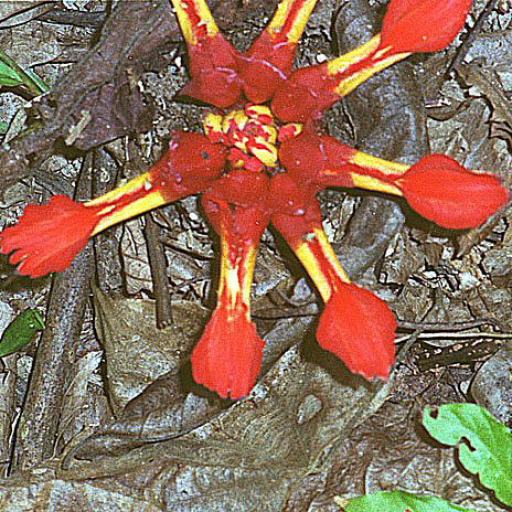
Often called the "Rose of Siam" or the "Earth Rose," Etlingera coccinea is a botanical masterpiece that defies expectations. Unlike most plants where flowers bloom at the tips of branches, this wild ginger produces stunning, waxy red blossoms that emerge directly from the soil. It is a tropical showstopper that brings a sense of prehistoric mystery and vibrant color to any jungle-style landscape.
🔍 How to Identify
- 🌹 The Flower: A deep crimson or vibrant red inflorescence that sits low to the ground. The petals are thick, waxy, and arranged in a tight, rose-like spiral with a bright yellow or white margin.
- 🍃 The Foliage: Tall, arching "pseudostems" (formed by leaf sheaths) can reach heights of 10 to 15 feet. The leaves are long, lance-shaped, and deep green, creating a lush canopy above the ground-level blooms.
- 🌱 Growth Habit: It grows from thick, aromatic underground rhizomes. The flowers appear on separate, very short stalks that barely clear the leaf litter.
🏡 In Your Garden
- ☁️ Humidity is Key: This plant is a true child of the rainforest. It thrives in high humidity and consistently damp soil. If the air is too dry, the leaf edges will quickly turn brown and crispy, signaling distress.
- 🪴 Space and Spread: Give it plenty of room to roam. Because the "roses" pop up from the ground around the base of the tall stalks, you need a wide area of clear soil or mulch for the flowers to be visible and appreciated.
- ☀️ Dappled Light: It prefers "filtered" sunlight, mimicking the environment under a tropical forest canopy. Harsh, direct midday sun can scorch the foliage and cause the ground-level flowers to wilt prematurely.
⚠️ Safety & Toxicity
- ✅ Non-Toxic: Etlingera coccinea is generally considered safe for humans. In fact, in many Southeast Asian cultures, the young flower buds and inner shoots are harvested for use in traditional salads and spicy dishes.
- 🐾 Pet Safety: It is not known to be toxic to cats or dogs. However, the fibrous nature of the large leaves can cause mild stomach upset or vomiting if a curious pet decides to ingest a large amount.
- 🛡️ Physical Handling: The plant is safe to touch, though the stalks are very sturdy and fibrous; always use sharp shears when pruning to avoid tugging on the sensitive rhizome system.
✨ Fun Fact
The flowers of the Rose of Siam are so incredibly waxy and durable that they are often used as "everlasting" decorations. In their native habitats, they are sometimes used as natural hair ornaments or tabletop decor because they can look fresh for days even without being submerged in water!

Detailed Care Instructions

Place in a window with dappled sun or a spot in the middle of a room. Or directly in a window facing west or east.

Some plants require more regular watering than others, which should be done every few days. It's critical to maintain the soil moist all of the time. The water requirements of the same plant placed in pots with varying sizes will differ. Because the water in the smaller pot evaporates faster than the water in the larger pot, it will require more watering. Regardless of pot size, the surface should constantly be maintained moist.








