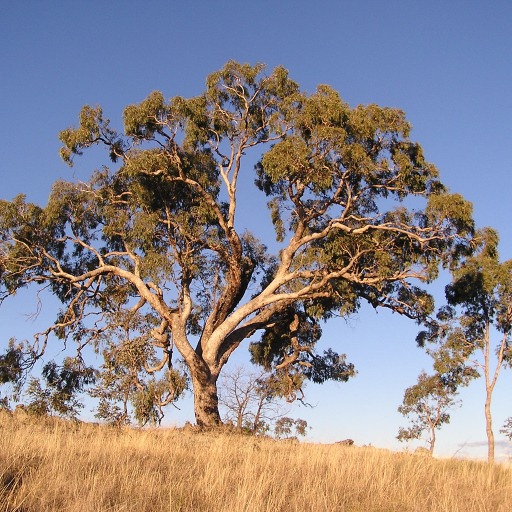
Plant Overview
Known affectionately as the "Apple Box" or "But But" by locals in its native Australia, Eucalyptus bridgesiana is a stately evergreen that brings a touch of the wild bushland to larger landscapes. Its common name stems from its crumbly, fibrous bark which bears a passing resemblance to the rough texture of an old apple tree. This tree is a rugged survivor, standing tall against heavy frosts and poor soils while providing a vital nectar buffet for local honeyeaters and bees.
🔍 How to Identify
- 🍎 The "Apple" Bark: The trunk is covered in thick, grey, tessellated bark that feels fibrous or "box-like" to the touch, usually persisting all the way up to the smaller branches.
- 🍃 Heart-Shaped Youth: One of its most charming features is the juvenile foliage; young leaves are heart-shaped (cordate), silvery-blue, and grow in pairs directly opposite each other on the stem.
- 🌼 Creamy Clusters: During late summer and autumn, the tree erupts in clusters of about seven small, white or cream-colored flowers that look like delicate, fuzzy pom-poms.
🏡 In Your Garden
- 🌳 The Need for Space: This isn't a plant for a small suburban patio; it is a fast-growing giant that needs significant room for its sprawling canopy and a deep root system that dislikes being confined.
- 💪 Tough as Nails: Unlike many delicate Eucalyptus varieties, the Apple Box is exceptionally hardy against frost and can thrive in "heavy" or clay-based soils that would typically cause root rot in other species.
- 🦜 Wildlife Hub: If you have the acreage to plant one, you are essentially installing a skyscraper for nature; its high nectar production makes it a premier refueling station for migrating birds and beneficial insects.
⚠️ Safety & Toxicity
- 🐾 Pet & Child Caution: Like most members of the Eucalyptus family, the leaves contain concentrated essential oils (eucalyptol) that are toxic if ingested.
- 🤢 Ingestion Risks: Keep curious cats, dogs, and toddlers away from fallen leaves or low-hanging branches, as chewing them can cause vomiting, depression, or digestive upset.
✨ Fun Fact
While many people believe koalas will eat any gum tree they find, they are actually incredibly picky eaters; however, the Apple Box is one of the rare "secondary" food trees they will happily munch on when their favorite primary species aren't available!

Detailed Care Instructions

Place in a bright room that is sun drenched almost all day. Or directly in a south-facing window.

Some plants require more regular watering than others, which should be done every few days. It's critical to maintain the soil moist all of the time. The water requirements of the same plant placed in pots with varying sizes will differ. Because the water in the smaller pot evaporates faster than the water in the larger pot, it will require more watering. Regardless of pot size, the surface should constantly be maintained moist.








