Plant Overview
Known affectionately as the "Silver Princess," Eucalyptus caesia is widely considered one of the most beautiful and ornamental trees in the world. Native to the granite outcrops of Western Australia, it is famous for its "weeping" habit and a ghostly, white waxy powder that covers its stems and buds. Whether in bloom or not, its architectural silhouette adds a touch of ethereal elegance to any landscape.
🔍 How to Identify
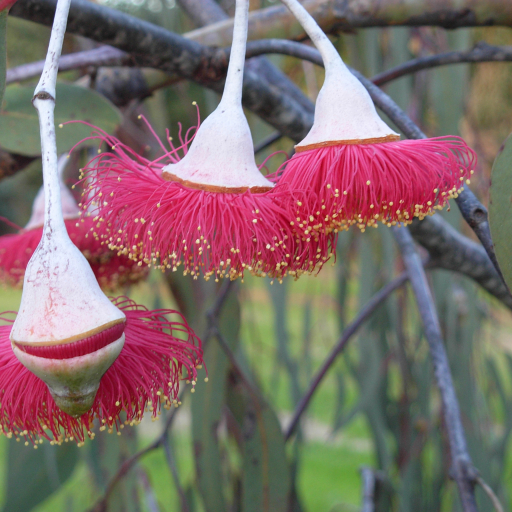
- ❄️ Silvery Coating: The most striking feature is the thick, white waxy powder (known as "bloom") that coats the reddish stems, flower buds, and fruit, giving the tree a frosted, silver-blue appearance.
- 💗 Lantern Blooms: It produces large, pendulous clusters of pink to deep red flowers tipped with bright yellow anthers. These heavy blossoms often cause the branches to arch gracefully toward the ground.
- 🪵 Minni Ritchi Bark: On younger branches, the bark peels back in small, reddish-brown curls to reveal light green wood underneath—a distinctive texture known as "Minni Ritchi" bark.
🏡 In Your Garden
- 🏜️ The Drainage Rule: Because this tree evolved on rocky granite outcrops, it has a specialized root system that cannot tolerate "wet feet." It requires extremely well-draining soil; if your garden has heavy clay, it is best to plant it on a mound or in a large pot.
- 🌬️ Wind Sensitivity: Due to its slender, weeping habit and heavy flower loads, the "Silver Princess" can be vulnerable to snapping in high winds. Planting it in a spot protected by a fence or other hardy shrubs will help keep its delicate limbs intact.
⚠️ Safety & Toxicity
- ✅ Human Safety: The tree is generally safe to touch and handle. The aromatic oils are pleasant but should not be consumed.
- 🐾 Toxic to Pets: Like most Eucalyptus species, the leaves contain macrocarpals and essential oils that are toxic to dogs, cats, and horses if ingested. Keep an eye on curious pets who might try to chew on fallen leaves, as it can cause vomiting or lethargy.
✨ Fun Fact
🎨 Nature’s Paint: The white powder on the stems isn't just for looks; it acts as a natural sunscreen and a moisture barrier, helping the tree survive the intense heat and dry winds of the Australian outback.

Detailed Care Instructions

Place in a bright room that is sun drenched almost all day. Or directly in a south-facing window.

Some plants require more regular watering than others, which should be done every few days. It's critical to maintain the soil moist all of the time. The water requirements of the same plant placed in pots with varying sizes will differ. Because the water in the smaller pot evaporates faster than the water in the larger pot, it will require more watering. Regardless of pot size, the surface should constantly be maintained moist.








