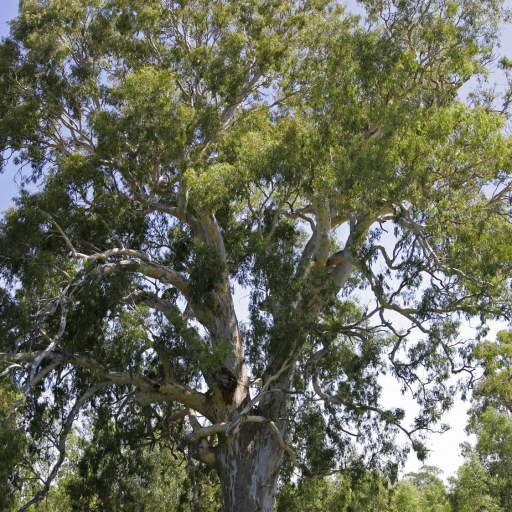
Plant Overview
Known affectionately as the River Red Gum, this tree is the quintessential icon of the Australian outback. It is most famous for its gnarled, majestic silhouette lining the banks of winding rivers, where its roots hold the earth together against the pulse of floods. In many cultures, it is regarded as a symbol of resilience and a provider of shade in the harshest of climates.
🔍 How to Identify
- ⚪ The Bark: It features smooth, mottled bark that peels away in irregular patches, revealing a mosaic of white, creamy grey, and burnt-red tones.
- 🍃 The Leaves: The adult leaves are narrow, lance-shaped, and often curved like a sickle. When crushed, they release a sharp, cooling menthol aroma.
- 🪵 The Fruit: Small, woody capsules known as "gumnuts" appear after flowering, characterized by distinct valves that poke out from the top like tiny teeth.
🏡 In Your Garden
- 🌳 Space Requirements: This is not a tree for small suburban plots. It possesses a massive, aggressive root system designed to find water at great depths, which can easily damage pipes or foundations if planted too close to home.
- 💧 Flood and Drought: In its natural habitat, it relies on occasional flooding to germinate. In a landscape setting, it appreciates deep, infrequent watering that mimics a river’s rise and fall, though it is incredibly drought-tolerant once established.
- ✂️ The "Widow-Maker": Gardeners should be aware of its habit of dropping large, heavy limbs without warning—a survival tactic to conserve water during dry spells—which earned it a somewhat spooky reputation.
⚠️ Safety & Toxicity
- 🐾 Pet Safety: The leaves and bark are toxic to dogs, cats, and horses. The concentrated eucalyptus oils can cause gastrointestinal upset, drooling, and lethargy if ingested.
- ✋ Skin Sensitivity: While the oil is used medicinally, direct contact with the sap or concentrated crushed leaves may cause minor skin irritation or dermatitis in sensitive individuals.
✨ Fun Fact
The River Red Gum produces a pale, clear honey that is world-renowned for its mild, "buttery" flavor. It is one of the most important trees for Australian honeybees, often sparking "honey rushes" among beekeepers when the white flowers bloom in summer!

Detailed Care Instructions
To grow Eucalyptus Camaldulensis plant, follow these steps:
- Choose the right location: Eucalyptus Camaldulensis prefers full sun and well-drained soil. Make sure the selected location provides enough sunlight and has good drainage.
- Obtain seeds or seedlings: You can either purchase Eucalyptus Camaldulensis seeds or seedlings from a nursery or collect them from existing trees if available.
- Germination: If you have seeds, soak them in water for about 24 hours before planting. This helps improve germination. If you have seedlings, skip this step.
- Prepare the soil: Ensure the soil is loosened and free of rocks, weeds, and other debris. Improve the soil's fertility by adding compost or well-rotted manure.
- Plant the seeds or seedlings: If you're using seeds, plant them in pots or directly in the ground. Sprinkle the seeds on the soil surface and lightly cover them with a thin layer of soil. For seedlings, dig a hole slightly larger than the root ball, place the seedling in the hole, and backfill with soil.
- Watering: Water the plant thoroughly after planting, and continue to keep the soil moist but not waterlogged. Avoid overwatering, as Eucalyptus Camaldulensis prefers slightly dry conditions once established.
- Mulching: Apply a layer of mulch around the base of the plant to help retain moisture and suppress weed growth. This also helps regulate soil temperature.
- Pruning: As the plant grows, regularly prune dead or diseased branches to maintain its health and shape. Prune during the dormant season, typically in late winter or early spring.
- Fertilizing: Eucalyptus Camaldulensis typically does not require much fertilizing. However, you can apply a balanced slow-release fertilizer in early spring to promote healthy growth.
- Pests and diseases: Monitor the plant for any signs of pest or disease infestation. Treat accordingly using appropriate insecticides or fungicides if necessary.
Remember that Eucalyptus Camaldulensis is a large tree that can grow up to 30 meters tall, so make sure you have enough space to accommodate its mature size.

Place in a bright room that is sun drenched almost all day. Or directly in a south-facing window.

To properly water this plant, you should consider the moisture level of the soil before watering. It is important to avoid over-watering, as excessively wet soil can lead to root rot and damage the plant. You should allow the soil to dry out slightly between watering sessions, but not to the point where it becomes completely dry.
When watering, slowly pour water into the soil around the base of the plant, being careful to avoid getting water on the leaves or trunk. A good rule of thumb is to water deeply, providing enough water that it runs out from the bottom of the pot or drains well from the soil, but not to the point where the plant is sitting in standing water.
When watering, you should also take into account the weather and season, as the plant's water needs may vary depending on the climate. During hot, dry weather, you may need to increase the frequency of watering, whereas in cooler or wetter weather, you may need to reduce the frequency of watering.
Overall, it's important to monitor the plant and adjust your watering routine as necessary to ensure that it is receiving adequate moisture without being over-watered.
To fertilize this plant, you should begin by selecting a slow-release fertilizer that is balanced in nitrogen, phosphorus, and potassium. Apply the fertilizer once a year during the plant's growing season, which typically starts in the spring and lasts through the summer. You can also add compost or organic matter to the soil around the plant to improve its overall nutrient content. Avoid applying too much fertilizer, as this can lead to nutrient burn and damage the plant. Instead, follow the manufacturer's instructions carefully and monitor the plant for signs of nitrogen deficiency, such as yellowing leaves.
Eucalyptus Camaldulensis prefers well-draining soil that is slightly acidic to neutral in pH. The soil should be rich in nutrients and organic matter, but not overly fertile or heavily compacted. A mix of sand, loam, and compost is ideal to provide both drainage and moisture retention. The soil should also be able to hold enough water to keep the plant hydrated during dry spells. It is important to avoid heavy clay soils that can become waterlogged and prevent the roots from getting enough oxygen. Overall, the soil should be loose, well-aerated, and free of any contaminants or chemical residues.
To propagate this plant, gather a mature stem cutting that is at least six inches long and has several nodes. Remove the leaves from the bottom half of the cutting and dip the cut end into rooting hormone powder. Plant the cutting into a container filled with well-draining soil and water thoroughly. Cover the container with a clear plastic bag or dome to create a humid environment for the cutting to root. Place the container in a bright location but out of direct sunlight. Mist the cutting regularly to keep it moist and wait for roots to develop. Once the cutting has established roots, it can be transplanted into a larger container or into the ground.








