Plant Overview
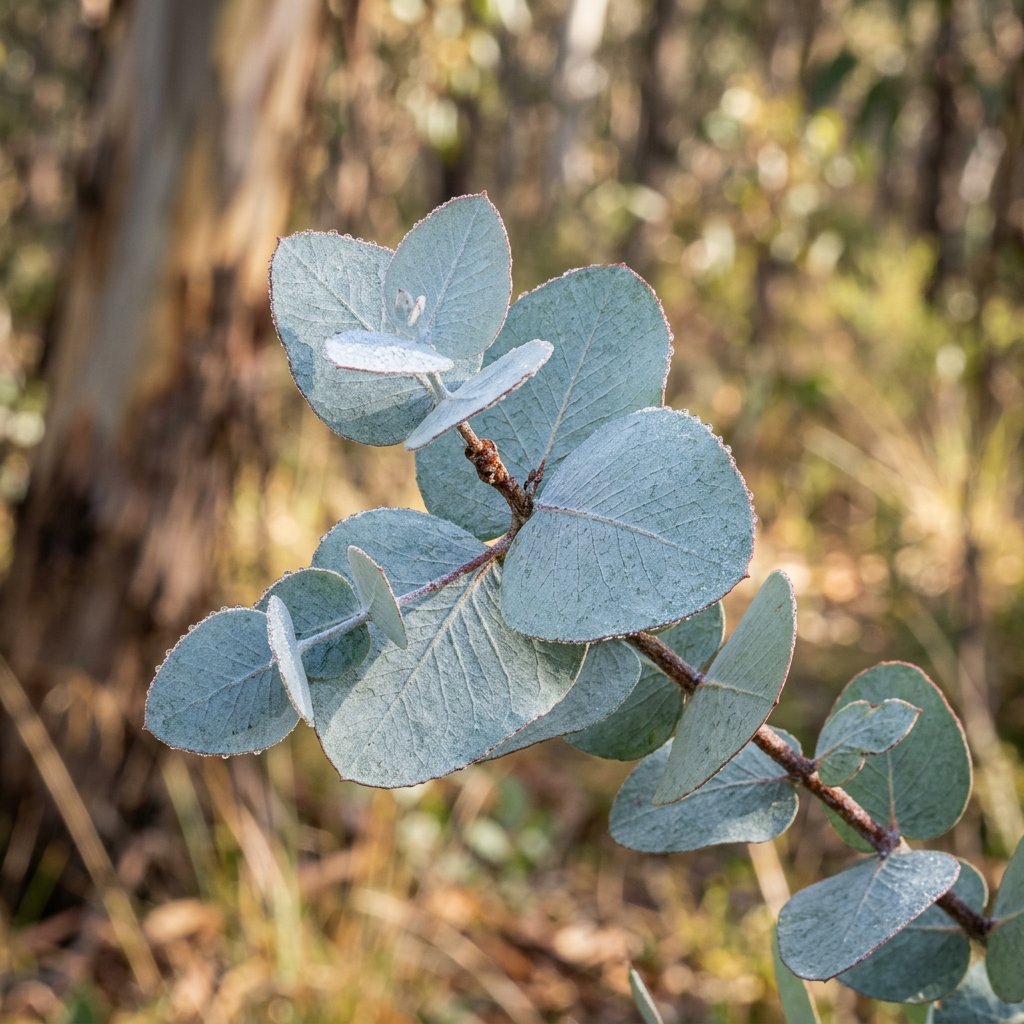
Known affectionately as the Silver Dollar Tree or the Argyle Apple, this Australian native is a showstopper in any landscape or floral arrangement. Its shimmering, coin-shaped leaves look as though they’ve been dusted with frost, giving the plant a cool, ethereal glow. Beyond its beauty, it is world-renowned for its refreshing menthol scent that can clear a room—and a stuffy nose—instantly.
🔍 How to Identify
- 🪙 Leaf Shape: Juvenile leaves are perfectly round or heart-shaped and grow in opposite pairs, often looking like they are threaded directly onto the stem.
- ❄️ Color & Texture: The foliage is a distinct glaucous (waxy) silvery-blue or pale teal, which helps the plant reflect intense sunlight.
- 🪵 Bark & Structure: While it starts as a shrubby plant, it matures into a tree with reddish-brown, fibrous bark that peels in long, touchable strips.
🏡 In Your Garden
- ✂️ The Pruning Trick: To maintain the iconic "silver dollar" leaf shape, many gardeners prune the plant back heavily (a technique called coppicing). This forces the tree to produce fresh juvenile growth rather than the longer, narrower leaves of an adult tree.
- ☀️ Sun & Drainage: This tree is a sun-worshiper and requires sharp drainage. It is highly drought-tolerant once established, making it perfect for "xeriscaping" or low-water gardens, but it dislikes having "wet feet" (soggy soil).
⚠️ Safety & Toxicity
- 🐾 Status: Toxic to dogs, cats, and horses.
- 👄 Details: The essential oils (specifically eucalyptol) found in the leaves can cause salivation, vomiting, and lethargy if ingested by pets. While the scent is heavenly to humans, keep the branches out of reach of curious nibblers.
✨ Fun Fact
The powdery white "dust" on the leaves is actually a layer of epicuticular wax. It acts as a natural sunscreen and prevents water loss, allowing the tree to thrive in the harsh, dry climates of southeastern Australia!

Detailed Care Instructions
Eucalyptus can be tricky to grow outside of its natural environment. But with enough sunlight and warmth, it can grow vigorously.
How fast does eucalyptus grow?
How long it takes to grow eucalyptus largely depends on how closely you can mimic its natural environment. In prime conditions, eucalyptus is a fast-growing tree and can gain several feet per year.
Can I plant eucalyptus outside?
Eucalyptus can grow outdoors in USDA hardiness zones 8 to 11. You also can keep a container outside during the warmer months and bring it inside to overwinter once temperatures dip below 50 degrees Fahrenheit.
Why should you not plant eucalyptus?
Even though they're not invasive, eucalyptus trees outside of their natural environment can compete with native plants for resources, throwing off the ecological balance. They also are toxic both to humans and pets.
| Color | White |
| Soil Ph | Neutral To Acidic |
| Humidity | Dry |
| Lighting | Full Sun |
| Soil Type | Sandy |
| Bloom Time | Rarely |
| Difficulty | Medium |
| Plant Type | Tree |
| Hibernation | Cold Period |
| Mature Size | 6–10 Ft. Tall, 2–4 Ft. Wide |
| Native Area | Australia |
| Sun Exposure | Full Sun |
| Hardiness Zones | 8-11 |
To grow Eucalyptus Cinerea plant, you can follow these steps:
- Choose the right location: Eucalyptus Cinerea plants prefer full sun and well-draining soil. Choose a spot in your garden that receives at least 6-8 hours of sunlight daily.
- Prepare the soil: Eucalyptus Cinerea plants prefer slightly acidic soil with a pH level between 5.5 and 7.0. Amend the soil with organic matter, such as compost, to improve drainage and nutrient content.
- Propagation: Eucalyptus Cinerea plants can be propagated from seeds or cuttings. If using seeds, soak them in warm water for 24 hours before planting. For cuttings, take them from a healthy, established plant and plant them in a well-draining potting mix.
- Planting: Dig a hole in the prepared soil that is slightly larger than the plant's root ball. Place the plant in the hole, ensuring the top of the root ball is level with the soil surface. Backfill the hole and gently firm the soil around the plant.
- Watering: Eucalyptus Cinerea plants require regular watering, especially during the first few months to establish roots. Water deeply to ensure the water reaches the roots. However, avoid overwatering, as this can lead to root rot.
- Mulching: Apply a layer of mulch around the plant to conserve moisture, suppress weed growth, and insulate the soil. Use organic mulch, such as bark chips or straw, and keep it a few inches away from the plant's stem to prevent fungal diseases.
- Pruning: Eucalyptus Cinerea plants generally don't require extensive pruning. However, if you want to maintain a particular shape or remove any damaged or crossing branches, trim the plant during late winter or early spring.
- Fertilization: Eucalyptus Cinerea plants are generally low-maintenance and don't require heavy fertilization. If desired, you can apply a slow-release balanced fertilizer once a year in early spring.
- Pest and disease control: Eucalyptus Cinerea plants are relatively resistant to pests and diseases. However, be on the lookout for common issues like leaf-eating insects or powdery mildew. Treat any problems with appropriate organic or chemical solutions.
- Protection from frost: If you live in an area with cold winters, consider protecting your Eucalyptus Cinerea plant from frost. Use fabric covers, straw, or mulch to insulate the roots and cover the plant during extreme cold spells.
By following these steps, you can successfully grow Eucalyptus Cinerea plants in your garden. Remember to provide proper care and maintenance throughout the growing season.

Place in a bright room that is sun drenched almost all day. Or directly in a south-facing window.

In general, Eucalyptus Cinerea plant requires regular watering to thrive. It is important to maintain consistent soil moisture, but avoid over-watering as it can lead to root rot. The frequency of watering will depend on various factors such as temperature, humidity, and soil type.
To water the plant, start by checking the top layer of soil. If the soil feels dry to the touch, it is time to water. Water the plant deeply, making sure to saturate the entire root zone. Allow the excess water to drain out of the pot or soil before moving it back to its desired location.
It is recommended to avoid getting water on the foliage or flowers of the plant, as this can cause damage or disease. Instead, aim for a slow and steady stream of water to go directly to the base of the plant.
During hot or dry weather, you may need to increase the frequency of watering to prevent the soil from drying out completely. It is also important to adjust watering based on the specific needs of your plant, as well as any environmental changes that occur throughout the year.
To fertilize this plant, use a slow-release fertilizer high in nitrogen during the growing season. Apply the fertilizer to the soil around the base of the plant, being careful not to let it touch the foliage or stem. Water the plant thoroughly after fertilizing.
For optimal growth and health of the plant identified as Eucalyptus Cinerea, it is recommended to use a specific type of soil. The soil used should be well-draining, as this plant does not tolerate waterlogged conditions. Additionally, the soil should have good aeration and be rich in nutrients, as this plant requires ample nutrition for healthy growth. One option for soil composition could include a mix of sand, loam, and organic materials such as compost or aged manure. It is important to avoid using heavy clay soils, as these can lead to poor drainage and root rot. Regular fertilization and occasional soil amendments may also be needed to maintain healthy soil for this plant.
Eucalyptus Cinerea is a plant species that can be propagated through various methods. Here are some steps to propagate Eucalyptus Cinerea:
- Collect fresh seeds from the tree during the fruiting season, which usually occurs in summer or autumn.
- Use a sharp blade or scissors to cut open the seed capsules and extract the small, black seeds inside. Discard any seeds that appear damaged or unhealthy.
- Fill a small container with seed-starting mix or a mixture of peat moss and sand. Moisten the soil with water until moist but not waterlogged.
- Sow the Eucalyptus Cinerea seeds about 1/4 inch deep in the soil. Cover the container with plastic wrap or a plastic bag to create a humid environment and retain moisture. Place the container in a warm, bright location, but avoid direct sunlight.
- Water the seeds regularly to keep the soil moist, but not soggy. Check the container daily to ensure the soil doesn't dry out.
- Wait for the seeds to germinate, which may take several weeks. Once seedlings emerge, remove the plastic wrap and continue to water them regularly.
- When the seedlings have developed strong roots and several sets of leaves, transplant them into larger containers or into the ground outdoors. Choose a location with well-draining soil, full sun, and good air circulation.
- Water the seedlings regularly during the first few months to help them establish in their new location. Once the plants are established, they will require less maintenance.
Common pests of the argyle apple include Scale insect, mealybugs, spider mites, aphids. Make a habit of checking your argyle apple frequently for pests so that any infestations can be caught and managed early.








