Plant Overview
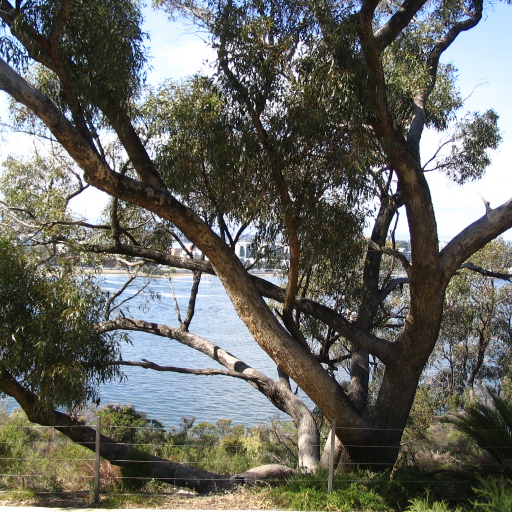
The Tuart tree is a coastal titan hailing from the limestone-rich plains of Western Australia. Often called the "Coastal Giant," it is one of the most structurally impressive species in the Eucalyptus family, known for its massive girth and incredibly dense timber. In the wild, these trees form the backbone of ancient woodlands, providing a vital sanctuary for endangered cockatoos.
🔍 How to Identify
- 🌳 The Bark: Unlike many "gum" trees that shed their skin, the Tuart keeps its bark. It is light grey, thick, and fibrous, with a distinctively "box-like" texture that persists all the way to the smaller branches.
- 🔨 The Flower Buds: The name gomphocephala translates to "nail-head." This refers to the unique shape of the flower buds, which look like tiny, ribbed clubs or rounded caps sitting atop a broader base.
- 🍃 The Foliage: The leaves are narrow, lance-shaped, and often curved like a sickle. They have a glossy, deep green finish that shimmers under the coastal sun.
🏡 In Your Garden
- 🧂 Coastal Warrior: This is one of the few Eucalyptus species that actively thrives in salt spray and alkaline, limestone-based soils. If you live near the ocean and struggle with sandy soil, the Tuart is a natural choice for a windbreak.
- 🏗️ Space Requirements: While beautiful, this is a massive tree that can reach heights of over 30 meters. It is unsuitable for small suburban yards as its root system is extensive and its canopy requires significant clearance from power lines and structures.
⚠️ Safety & Toxicity
- 🐾 Pet Warning: Like most Eucalyptus species, the leaves contain concentrated oils (eucalyptol) that are toxic to dogs, cats, and horses if ingested. Symptoms include drooling, vomiting, and lethargy.
- 🧒 Child Safety: While the fallen seed pods (gumnuts) are popular for crafts, ensure children do not chew on the leaves or bark, as the essential oils can cause stomach upset or skin irritation in sensitive individuals.
✨ Fun Fact
The wood of the Tuart is so incredibly hard and dense that it was historically used to build the frames of railway wagons and the hulls of ships. In the early 1900s, it was considered virtually indestructible!

Detailed Care Instructions
To grow Eucalyptus Gomphocephala, also known as Tuart or Gungurru, follow these steps:
- Climate and soil: Check if the plant is suited to your climate zone. Eucalyptus Gomphocephala generally grows well in Mediterranean or temperate climates. The soil should be well-drained and slightly acidic.
- Propagation: You can propagate the plant from seeds or cuttings. Seeds can be collected from mature trees or purchased from a reputable supplier. Cuttings should be taken from a healthy parent plant.
- Seed preparation: Soak the seeds in water for 24 hours to improve germination rates. Alternatively, seeds can be scarified (lightly scratched) or stratified (simulating natural winter conditions) to break dormancy.
- Planting: Choose a suitable location with full sun exposure. Prepare the area by removing weeds and loosening the soil. Plant the seeds/cuttings at a depth of 1-2 cm (0.4-0.8 inches) and water thoroughly.
- Watering and care: Water the plant regularly, especially during the establishment phase. Once mature, Eucalyptus Gomphocephala is generally drought-tolerant. Avoid overwatering to prevent root rot. Mulching around the base of the plant can help retain moisture and suppress weeds.
- Pruning: Prune the plant to maintain a desirable shape and remove any dead or damaged branches. This can also enhance airflow and reduce the risk of disease.
- Fertilization: Eucalyptus Gomphocephala generally doesn't require regular fertilization. However, you can apply a slow-release fertilizer specifically formulated for native plants, following the manufacturer's instructions.
- Pest and disease control: Monitor the plant for signs of pests or diseases. Common issues include eucalyptus gall wasps, borers, or fungal infections. Use appropriate insecticides or fungicides if necessary, following the instructions and recommendations of a local garden center or professional.
- Protection from frost: Young plants may require protection from frost during the winter months. Cover them with horticultural fleece or move potted specimens to a sheltered location.
- Patience and time: Eucalyptus Gomphocephala can take several years to reach maturity, so be patient and provide consistent care throughout the plant's growth.
Remember to research specific information regarding the Eucalyptus Gomphocephala species to ensure you meet its specific requirements.

Place in a bright room that is sun drenched almost all day. Or directly in a south-facing window.

To properly water this plant, you should first ensure that the soil has adequate drainage to prevent overwatering and root rot. Watering should be done deeply and infrequently to promote deep root growth and avoid shallow root systems. This can be achieved by letting the soil dry out slightly between waterings and then thoroughly saturating the soil. During periods of high heat or dry weather, additional watering may be necessary to keep the plant hydrated. When watering, avoid getting water on the leaves as this can lead to leaf spot and other fungal diseases.
To fertilize this plant, you should wait until the beginning of the growing season, then apply a slow-release, balanced fertilizer in a ring on the soil around the base of the plant. Water the fertilizer in well and avoid getting any on the leaves or stem. Repeat this process once a year. Additionally, you can add a layer of compost to the soil around the plant every few years for added nutrients.
The ideal soil type for the plant should be well-drained, with a slightly acidic pH level between 5.5 and 6.5. A sandy loam soil with a high organic matter content is ideal for the plant's growth and development. The soil should be able to hold moisture but not become waterlogged, as this may lead to root rot. Adding a layer of mulch around the plant can help maintain soil moisture and also protect the roots from extreme temperature fluctuations. It is also recommended to fertilize the soil with a slow-release fertilizer that contains essential nutrients for the plant's growth, such as nitrogen, phosphorus, and potassium.
Propagation of this plant can be done through the collection of seeds. The seeds should be collected from the plant when they are mature and dry. The collected seeds should be sown in a well-draining potting mix and covered lightly with soil.
The pot should be placed in a warm and bright location, and kept moist until the seedlings emerge. Once the seedlings have grown to a suitable size, they can be transplanted into individual pots, and placed in a shaded area.
Propagation can also be done through the use of cuttings taken from the plant. Cuttings should be taken from the firm and healthy branches, and the leaves should be removed from the lower part of the stem.
The cuttings should be dipped in rooting hormone powder and inserted into a medium of sand and perlite. The cuttings should be placed in a warm and bright location, and kept moist until roots form.
Once the cuttings have developed strong roots, they can be transplanted into individual pots, and placed in a shaded area until they are established.








