Plant Overview
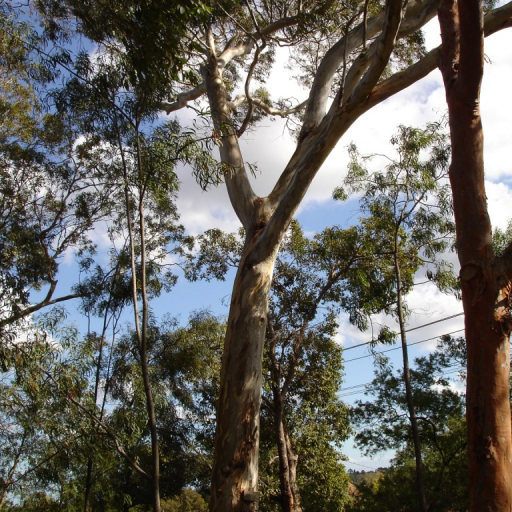
Often called the Yellow Gum or White Ironbark, Eucalyptus leucoxylon is a quintessentially Australian tree celebrated for its painterly bark and vibrant blossoms. It is a favorite among landscapers and nature lovers alike, not just for its rugged hardiness, but for its almost magical ability to turn a quiet backyard into a bustling sanctuary for nectar-loving birds.
🔍 How to Identify
- 🌳 The Bark: The trunk is a visual masterpiece, featuring smooth skin that transitions through shades of creamy white, pale yellow, and even blue-grey, shedding in thin flakes to reveal fresh colors beneath.
- 🍃 The Foliage: Its leaves are "pendulous," meaning they hang gracefully downward. They are lance-shaped and typically a soft, dull green or grey-green that shimmers in the breeze.
- 🌸 The Blossoms: Flowers emerge in clusters of three. While the wild species usually sports creamy white blooms, popular garden varieties like 'Rosea' are famous for their brilliant, fluffy pink or crimson stamens.
🏡 In Your Garden
- 🦜 A Bird Magnet: This tree is a "supermarket" for wildlife. It produces heavy amounts of nectar, making it an essential food source for honeyeaters, lorikeets, and native bees during its flowering season.
- 🏜️ Built for Resilience: It is exceptionally drought-tolerant once established. It prefers a "tough love" approach—meaning it thrives in well-drained soil and resents being over-watered or pampered with heavy fertilizers.
- ⛰️ Soil Versatility: Unlike many other Eucalyptus species that are picky about their feet, the Yellow Gum can tolerate alkaline soils and heavy clay, making it a reliable choice for difficult sites.
⚠️ Safety & Toxicity
- 🐾 Pet & Child Safety: Like most Eucalyptus species, the leaves contain concentrated essential oils that are toxic if ingested in large quantities. It is best to keep curious pets or toddlers from chewing on fallen leaves or seed pods.
- 🌿 Skin Irritation: The oils and sap can occasionally cause mild skin irritation or allergic reactions in sensitive individuals when pruning or handling broken branches.
✨ Fun Fact
Beekeepers prize the Yellow Gum above almost all other trees; it is famous for producing a very pale, exceptionally high-quality honey with a mild, sweet flavor that is a gold standard in Australian honey production.

Detailed Care Instructions
| Humidity | Normal |
| Lighting | Full Sun |
| Difficulty | Easy |
| Hibernation | Cold Period |
| Hardiness Zones | 10 - 11 |
Here are some steps you can follow to grow Eucalyptus Leucoxylon plant:
- Choose the right location: Eucalyptus Leucoxylon plants prefer full sun and well-draining soil. Ensure that the planting spot receives at least 6-8 hours of direct sunlight per day.
- Prepare the soil: Loosen the soil and remove any weeds or debris. Eucalyptus Leucoxylon prefers slightly acidic to neutral soil. If your soil is too alkaline, you can add some organic matter like compost or peat moss to lower the pH.
- Planting: Dig a hole that is slightly wider and deeper than the root ball of the plant. Place the plant in the hole, making sure the top of the root ball is level with the soil surface. Backfill the hole with soil and gently firm it around the plant.
- Watering: Water the plant thoroughly after planting to settle the soil around the roots. Eucalyptus Leucoxylon plants require regular watering, especially during the first year of growth. Water deeply once or twice a week, ensuring the soil remains moist but not waterlogged. However, established plants are drought-tolerant and can withstand temporary dry spells.
- Mulching: Apply a layer of organic mulch around the base of the plant to help conserve moisture, suppress weed growth, and regulate soil temperature. Keep the mulch a few inches away from the trunk to prevent root rot.
- Fertilizing: Eucalyptus Leucoxylon plants typically don't require regular fertilization. However, you can apply a slow-release, balanced fertilizer in spring to promote healthy growth. Follow the instructions on the fertilizer packaging for dosage and application.
- Pruning: Prune your Eucalyptus Leucoxylon plant in late winter or early spring to remove any dead, damaged, or crowded branches. Pruning will help maintain the plant's shape and promote better airflow.
- Protection from frost: If you live in an area with cold winters, protect your Eucalyptus Leucoxylon from frost by wrapping the trunk and lower branches with burlap or frost cloth. Mulching around the base can also help insulate the roots.
Remember to regularly monitor the plant for any signs of pests or diseases and take appropriate measures if necessary. Happy gardening!

Place in a bright room that is sun drenched almost all day. Or directly in a south-facing window.

To water this plant, you should first check the soil to see if it is dry. It is important to not overwater, as this can cause root rot. When watering, ensure that the water is evenly distributed around the root ball and that any excess water drains away from the plant. It is also important to avoid getting water on the foliage, as this can cause damage and promote fungal diseases. Watering frequency will depend on factors such as the soil type, temperature, and humidity levels, so it is important to monitor the plant closely and adjust watering accordingly.
- Choose a balanced fertilizer that contains equal parts nitrogen, phosphorus, and potassium.
- Apply the fertilizer evenly around the base of the plant, taking care not to let it touch the trunk.
- Water the plant thoroughly after applying the fertilizer to help it absorb the nutrients.
- Repeat the fertilization process every 2-3 months during the growing season.
- Avoid fertilizing during the winter months when the plant is dormant.
- Monitor the plant for any signs of over-fertilization, such as yellowing or wilting leaves, and adjust the fertilization schedule accordingly.
For optimal growth of this plant, it is recommended to use a well-draining soil that is able to retain adequate moisture without becoming waterlogged. Additionally, the soil should be moderately acidic, with a pH range between 5.5 and 6.5. A soil mixture consisting of a combination of peat moss, sand, and perlite would be suitable for this plant, as it provides adequate drainage and aeration while also retaining moisture. It's important to ensure that the soil is rich in nutrients, which can be achieved by adding organic matter such as compost or aged manure to the mixture. Overall, the ideal soil for Eucalyptus Leucoxylon should be nutrient-rich, well-draining, and able to retain moisture without becoming waterlogged.
Propagation of this plant can be done through several methods such as seed propagation and vegetative propagation. Seed propagation involves collecting seeds from mature plants, cleaning them, and sowing them in seedling trays or pots filled with quality potting mix. The trays should be placed in a warm and bright area to encourage germination. After the seedlings have emerged, they should be thinned out and transplanted into larger pots or the ground once they are large enough.
Vegetative propagation involves taking cuttings from the plant and rooting them in a suitable rooting hormone. Choose a healthy branch and cut it at a 45-degree angle just below a node. Remove any leaves from the lower half of the cutting and dip it in rooting hormone. Place the cutting in a pot filled with potting mix that has been moistened, and cover the pot with a clear plastic bag to create a humid environment. The cutting should be watered regularly and kept in a bright area but out of direct sunlight until it forms roots.
Another method of vegetative propagation is layering. This involves pegging down low hanging branches to the ground and covering them with soil or mulch. After a few months, roots should form and the new plant can be separated from the parent plant.
Overall, Eucalyptus Leucoxylon plant can be propagated both through seed and vegetative means, giving rise to new plants that are genetic copies of the parent plant.








