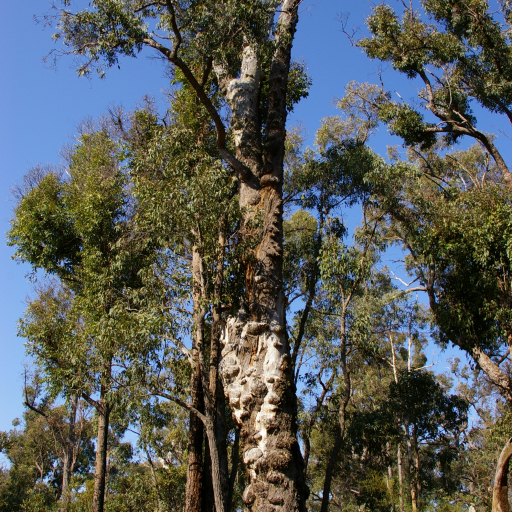
Plant Overview
Known across the globe as the legendary Jarrah, Eucalyptus marginata is one of the most iconic and slow-growing giants of the Australian bush. Historically nicknamed "Swan River Mahogany" because of its dense, dark red timber, this tree is a symbol of resilience, capable of living for over 500 years and surviving the fiercest forest fires.
🔍 How to Identify
- 🪵 Fibrous Bark: Unlike many "gum" trees with smooth skin, the Jarrah has rough, stringy bark that is deeply fissured and greyish-brown, persisting across the entire trunk.
- 🍃 Marginal Veins: The leaves are lance-shaped and dark green, but if you look closely at the edges, you’ll see a distinct vein running parallel to the leaf margin—which is exactly how it got its name, marginata.
- 🌸 Clustered Blooms: It produces delicate, creamy-white flowers arranged in clusters of 7 to 15, which provide a feast for local honeybees and nectar-loving birds.
🏡 In Your Garden
- 🌱 The Taproot Challenge: This tree develops a massive, deep taproot early in life to find water. Because of this, it is notoriously difficult to transplant; once it is in the ground, it does not want to be moved.
- 💧 Dry Land Specialist: Jarrah is incredibly drought-tolerant once established. It prefers ironstone or gravelly soils and can struggle in heavy clay or areas with "wet feet," as it is highly susceptible to Phytophthora (root rot).
⚠️ Safety & Toxicity
- 🐾 Pet Warning: Like most Eucalyptus species, the leaves contain concentrated essential oils that are toxic to dogs, cats, and horses if ingested. Symptoms include drooling, lethargy, and digestive upset.
- 🚫 Not for Consumption: While the flowers are a source of world-class honey, the leaves and bark are not edible for humans and may cause skin irritation in sensitive individuals.
✨ Fun Fact
Jarrah wood is so incredibly durable and resistant to rot that in the 19th century, the streets of London were actually paved with Jarrah blocks! Many of these blocks remained perfectly intact for decades under the heavy traffic of the city.

Detailed Care Instructions

Place in a bright room that is sun drenched almost all day. Or directly in a south-facing window.

Some plants require more regular watering than others, which should be done every few days. It's critical to maintain the soil moist all of the time. The water requirements of the same plant placed in pots with varying sizes will differ. Because the water in the smaller pot evaporates faster than the water in the larger pot, it will require more watering. Regardless of pot size, the surface should constantly be maintained moist.








