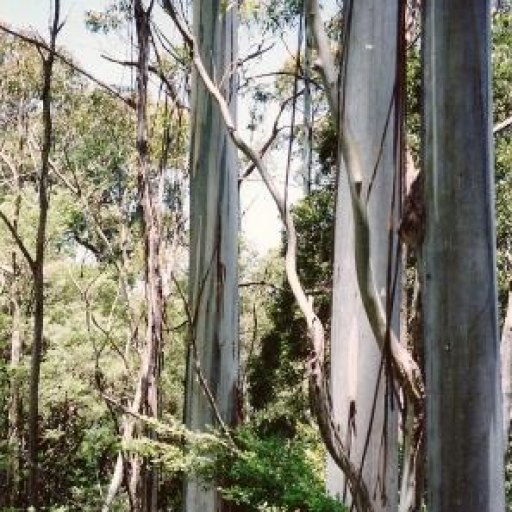
Plant Overview
Known as the "Shining Gum," this majestic giant hails from the high-altitude, cool-temperate rainforests of southeastern Australia. It earned its name from the lustrous, glossy sheen of its adult leaves and its smooth, silvery bark that catches the light. While it is a titan in the wild, it is often celebrated by hobbyists for its striking juvenile foliage and its incredible speed of growth.
🔍 How to Identify
- 🍃 Leaf Transformation: It features a dramatic "leaf puberty." Juvenile leaves are broad, silvery-blue, and heart-shaped, while adult leaves transition into long, dark green, glossy ribbons.
- 🪵 Ribbon Bark: The trunk is a masterpiece of smooth cream, grey, and yellow patches. As it grows, the bark peels away in long, decorative ribbons that often dangle from the branches.
- 🌼 Cruciform Buds: Look for small, green flower buds arranged in clusters of seven. When they bloom, they reveal delicate, creamy-white "starburst" stamens typical of the myrtle family.
🏡 In Your Garden
- 🚀 The Speed Demon: This is one of the fastest-growing trees in the world. While great for quick privacy screens or windbreaks, it requires significant space. Its aggressive root system means it should never be planted near pipes, foundations, or power lines.
- ❄️ Frost Specialist: Unlike many of its tropical cousins, the Shining Gum is exceptionally cold-hardy. It prefers deep, well-draining soil and can tolerate heavy frosts that would wither other Eucalyptus species.
⚠️ Safety & Toxicity
- 🐾 Toxic to Pets: Like most Eucalyptus species, the leaves contain concentrated essential oils (eucalyptol) that are toxic to dogs, cats, and horses if ingested.
- 👶 Child Safety: The leaves and fruit (gum nuts) are not edible. Ingestion can lead to stomach upset, dizziness, or muscle weakness. The fallen bark ribbons can also be a trip hazard in a manicured garden.
✨ Fun Fact
The Eucalyptus nitens is so efficient at producing biomass that it is a cornerstone of the global timber industry. It is grown in massive plantations across Chile, South Africa, and New Zealand to produce high-quality white paper and sustainable construction timber.

Detailed Care Instructions
To grow Eucalyptus nitens plants successfully, follow these steps:
- Climate and soil requirements: Eucalyptus nitens prefers a temperate climate with cool and moist conditions. The soil should be well-drained, slightly acidic to neutral in pH, and rich in organic matter.
- Seed selection and preparation: Obtain Eucalyptus nitens seeds from a reputable source. Before sowing, soak the seeds in water for 24 hours to aid in germination.
- Germination: Fill a seed tray or pots with seed-starting mix. Sow the seeds on the surface of the soil and lightly cover them with a thin layer of vermiculite or perlite. Keep the soil moist but not waterlogged. Place the tray in a warm and brightly lit area, but avoid direct sunlight.
- Transplanting: Once the seedlings have grown to about 10-15 cm in height, they can be transplanted into larger containers or directly into the ground. Choose a planting location with full sun or partial shade.
- Planting: Dig a hole in the prepared soil that is slightly larger than the root ball of the seedling. Place the seedling in the hole, ensuring that the base of the stem is level with the soil surface. Backfill the hole with soil, taking care not to cover the stem. Gently firm the soil around the plant and water thoroughly.
- Watering and maintenance: Eucalyptus nitens plants require regular watering until they are established. Water deeply but infrequently, allowing the soil to dry out slightly between waterings. Apply a layer of organic mulch around the base of the plant to help retain moisture and suppress weed growth.
- Pruning: Pruning is not necessary for Eucalyptus nitens plants unless you want to promote a specific shape or remove any dead or damaged branches. Prune during the dormant season to minimize stress on the tree.
- Pest and disease control: Eucalyptus nitens is generally resistant to pests and diseases. However, monitor the plants for any signs of pests such as aphids, scale insects, or eucalyptus gall wasps. Treat any infestations promptly using appropriate insecticides or organic methods.
- Harvesting: Eucalyptus nitens is primarily grown for its timber, which can be harvested after approximately 10-15 years of growth. Consult local regulations and guidelines for proper harvesting techniques and practices.
Remember to consult local gardening experts or extension services for specific advice and recommendations that cater to your specific location and conditions.

Place in a bright room that is sun drenched almost all day. Or directly in a south-facing window.

To water this particular plant, it is important to first consider the surrounding environment. It requires moderate watering and should not be allowed to dry out completely between waterings. The soil should remain moist, but not waterlogged, as this can lead to root rot. Watering should be done deeply and slowly to ensure that the water penetrates the soil and reaches the roots. It is best to water in the early morning or late evening to avoid water evaporation during the heat of the day. It is also important to avoid getting water on the leaves and branches of the plant to prevent fungal growth. Overall, a consistent watering routine is key to maintaining the health and growth of this plant.
For optimal growth, apply a balanced fertilizer with equal amounts of nitrogen, phosphorus, and potassium at the beginning of each growing season. Apply the fertilizer around the base of the plant, being cautious not to get it on the leaves. Water the plant thoroughly after fertilizing. Avoid over-fertilizing as it can lead to excessive growth and weak branches.
The recommended soil for Eucalyptus Nitens plants must be well-draining and fertile. It should have a pH level between 5.5-7.5. The ideal composition of the soil would be a mixture of sand, loam, and organic matter. The presence of nutrients such as nitrogen, phosphorus, and potassium is critical for the growth and development of the plant. Additionally, the soil should be free of any contaminants or pathogens that could harm the plant. Proper soil management practices such as regular fertilization, watering, and mulching can help maintain the soil properties.
To propagate this plant, you can take softwood cuttings in the early spring or hardwood cuttings in the late fall or winter. To take softwood cuttings, select healthy stems that are approximately 6 inches long, and make a clean cut just below a leaf node. Remove the leaves from the bottom half of the stem and dip the cuttings in rooting hormone. Plant the cuttings in moist, well-draining soil and place them in a warm, bright location. Keep the soil moist and mist the cuttings daily to prevent them from drying out. In 4-6 weeks, roots should begin to grow and the cuttings can be transplanted into larger containers or outside in a suitable location. To take hardwood cuttings, select healthy stems that are approximately pencil thickness and 8-12 inches long. Cut the stem into sections, each with at least 2 leaf nodes, and remove all but the top few leaves from each section. Dip the cut ends in rooting hormone and plant the cuttings in a well-draining soil mix. Cover with a plastic bag to keep the cuttings moist and in a bright location. In 6-8 weeks, roots should start to develop and the cuttings can be planted in their permanent location.








